Doctor Nguyen Van Duong, a level II specialist and head of the Structural Heart Disease Department at the Interventional Cardiology Center, Tam Anh General Hospital, Ho Chi Minh City, stated that Mr. Tien had severe progressive aortic stenosis complicated by stage three heart failure.
Aortic stenosis occurs when the valve leaflets do not open fully, narrowing the opening between the left ventricle and the aorta. This forces the heart to work harder to pump blood through the restricted opening. Over time, this strenuous effort causes the ventricular wall to thicken, the ventricular chamber to dilate, and the heart to weaken. Initially, the disease often progresses silently, but once symptoms such as chest pain, shortness of breath, fatigue, exhaustion, or fainting appear, patients may experience complications like heart failure, arrhythmia, and sudden death.
Professor Vo Thanh Nhan, Director of the Interventional Cardiology Center, Tam Anh General Hospital, Ho Chi Minh City, assessed that Mr. Tien, being elderly, presented with several underlying conditions: dyslipidemia, chronic coronary syndrome (narrowed coronary arteries reducing blood flow to the heart), type 2 diabetes, and chronic obstructive pulmonary disease. These factors made him unlikely to tolerate a prolonged open-heart surgery. His STS PROM score – a measure estimating the probability of mortality in adult cardiac surgery – was 19,5%. A score above 8% indicates high risk, and above 15% signifies very high risk, contraindicating surgery.
The medical team decided on a minimally invasive approach using transcatheter aortic valve implantation (TAVI) for Mr. Tien. However, the patient's arterial system showed severe calcification from the femoral artery to the valve, posing a risk of vascular damage, dissection, or rupture during the procedure. Furthermore, the patient's coronary ostia were low, meaning that when the artificial valve was deployed, the old valve leaflets could be pushed over and obstruct the entrance to the left coronary artery. This obstruction would reduce blood flow to the heart muscle, potentially causing acute myocardial infarction and leading to immediate death on the operating table.
 |
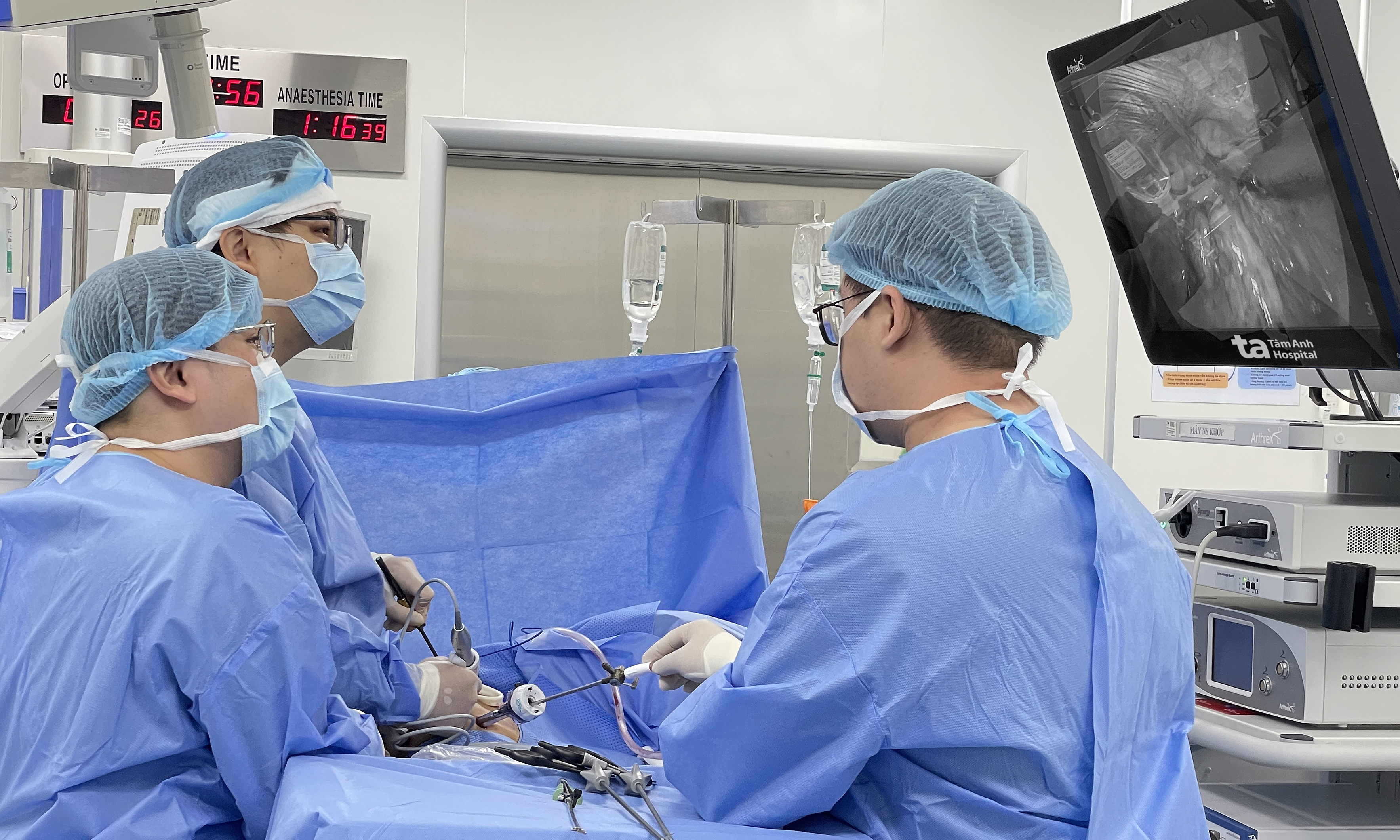
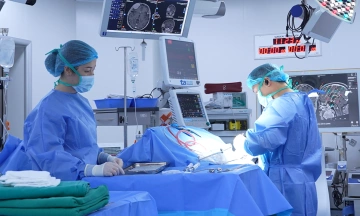
Professor Vo Thanh Nhan (far left) and the team performing transcatheter aortic valve replacement for the patient. Photo: Tam Anh General Hospital |
To overcome these challenges, the team meticulously analyzed pre-procedural CT images, assessing the extent of calcification, the anatomy of the valve annulus, and the risk of coronary obstruction. The team selected the Sapien 3 Ultra Resilia valve, a new generation in the Sapien valve series.
Guided by a digital subtraction angiography system, Professor Nhan threaded a catheter from the right femoral artery, carefully navigating through the heavily calcified arterial segments. The team then advanced the artificial valve to the narrowed heart valve and deployed it. The new valve was positioned correctly, anchored firmly, and remained stable, minimizing impact on blood flow to the coronary arteries.
Mr. Tien was able to sit up and perform light movements in bed just a few hours after the procedure, experiencing reduced shortness of breath and no pain. He was discharged after 3 days.
 |
Doctors performing a cardiac ultrasound on the patient on the third day after the transcatheter valve replacement. Photo: Tam Anh General Hospital |
TAVI is a minimally invasive heart valve replacement technique that does not require a sternotomy. The procedure involves only a small incision of about 6-8 mm in the thigh, which reduces blood loss, minimizes pain, and allows for early discharge. According to Professor Nhan, this is the optimal choice for patients with multiple chronic conditions, advanced age, and fragile health, such as Mr. Tien.
Following the intervention, Mr. Tien can resume normal activities and light work after about one to two weeks. He needs to take medication, attend regular follow-up appointments, maintain a healthy diet, exercise regularly, get sufficient sleep, and manage his underlying conditions to reduce the risk of re-stenosis.
To prevent and detect heart valve disease early, individuals should manage their weight, blood pressure, blood sugar, and cholesterol, and quit smoking. They should eat plenty of green vegetables and fruits, limit animal fats and organ meats. Additionally, it is recommended to exercise for at least 150 minutes each week, maintain oral hygiene, and undergo regular health check-ups at least once a year.
Thu Ha
* Patient's name has been changed
| Readers can submit cardiovascular disease questions here for doctors to answer. |