Nguyen Tien's semen analysis revealed no sperm, and blood tests showed abnormally high prolactin levels, a hormone produced by the pituitary gland. An MRI scan detected a 16x13x9 mm tumor in his pituitary gland, the master gland of the endocrine system. The couple traveled from Hanoi to the Center for Reproductive Assistance, Tam Anh General Hospital Ho Chi Minh City (IVF Tam Anh TP HCM), for infertility treatment.
Doctor Le Xuan Nguyen explained that the tumor could compress the pituitary stalk, blocking the inhibitory factor that regulates prolactin secretion to the hypothalamus, leading to uncontrolled high prolactin levels. Excess prolactin impacts the reproductive endocrine system, reducing gonadotropic hormones like GnRH, LH, and FSH. This results in decreased testosterone and sperm production by the testes. If this condition persists, testicular tissue may not receive adequate nourishment, leading to atrophy and loss of spermatogenic function. Examinations also revealed Nguyen Tien had varicocele, which increases pressure and temperature in the testes. These two conditions created a "double impact," exacerbating his azoospermia.
Doctor Nguyen convened a multidisciplinary consultation with specialists from the Neuroscience Center and the Department of Endocrinology and Diabetes. They determined the pituitary tumor was of medium size and not yet compressing nerves or affecting vision. Treatment options included surgery or medication. Nguyen Tien chose medical therapy with endocrine drugs to shrink the tumor, restore pituitary function, and help the testes regain sperm production capability.
After six months of medication, Nguyen Tien's semen analysis showed positive signs, with 1-2 motile sperm observed. Doctors collected and cryopreserved 5 samples. His wife underwent ovarian stimulation, yielding 18 mature eggs. Concurrently, Nguyen Tien provided additional fresh sperm samples. However, most fresh and cryopreserved samples were abnormal. Despite culturing them in an optimized time-lapse incubator system, all embryos ceased development at an early stage.
The couple had to pause treatment for six months. Upon returning to IVF Tam Anh, Nguyen Tien's prolactin levels had risen again. Doctors continued multidisciplinary collaboration, adjusting his endocrine regimen for more intensive prolactin control, establishing a stable foundation for the next IVF cycle.
Doctor Nguyen, along with Master, Doctor, Level II Specialist Duong Quang Huy, Head of the Andrology Unit, performed varicocele surgery on Nguyen Tien to improve blood supply to the testicular tissue. Six months after surgery, his semen analysis had not fully stabilized, but endocrine indicators improved and became more balanced. This signaled that the testes' sperm production capacity was gradually recovering.
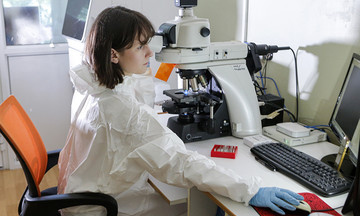
In early June, Nguyen Tien underwent micro-TESE microsurgery to retrieve sperm from his testes. Utilizing a modern surgical microscope with 30x magnification, doctors identified several active seminiferous tubules. Embryologists dissected the seminiferous tubule tissue samples and examined them under an inverted microscope with 200x magnification, finding 15 quality sperm. Fertilization and culture resulted in 3 day-5 embryos, two of which were of good quality.
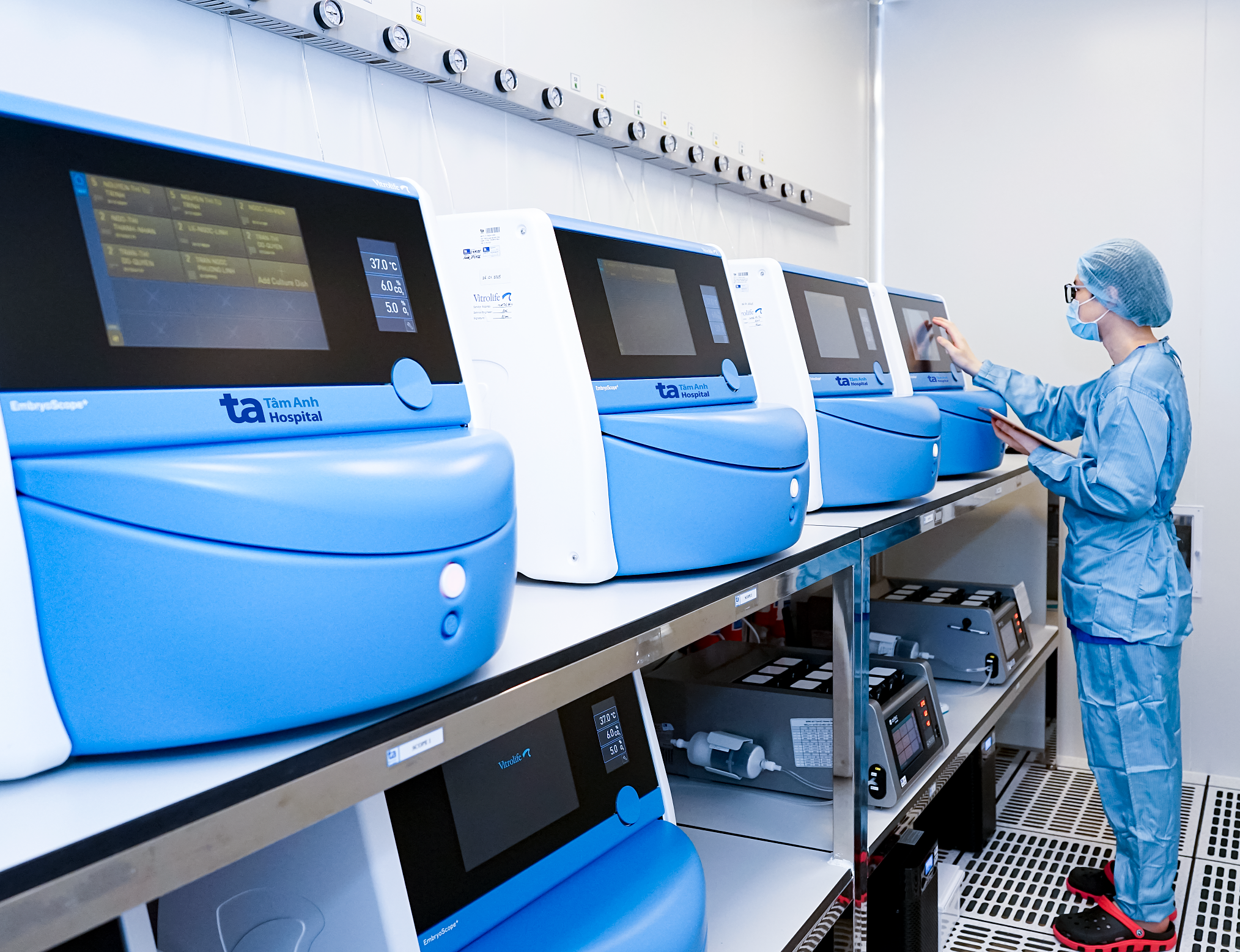 |
The embryo incubator in the ISO 5 "lab-in-lab" system at IVF Tam Anh TP HCM helps optimize embryo quality. *Photo: Thanh Luan* |
One high-quality embryo was transferred to the wife's uterus and successfully implanted. The pregnancy is currently 17 weeks and developing well. The remaining embryo was cryopreserved for future attempts to have more children.
Nguyen Tien continues follow-up appointments every six months for ongoing medication to suppress the pituitary tumor. If the tumor increases in size or affects his vision, doctors will consider surgical intervention.
Doctor Nguyen advises men experiencing symptoms such as decreased libido, erectile dysfunction, signs of hypogonadism, reduced vision, or genital abnormalities like pain, swelling, or atrophy to seek early medical attention to identify the cause and receive timely treatment.
Couples who have not conceived after one year of marriage should also undergo a comprehensive reproductive health check-up. Men typically receive semen analysis, hormone tests, genital examination, and genetic testing when necessary. Early detection of abnormalities helps doctors develop optimal treatment plans, increasing the chances of conception and reducing treatment costs for patients.
Hoai Thuong
*Patient's name has been changed