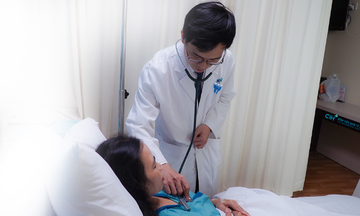
Dr. Vo Huy Tam, a Specialist Doctor Level One in Dermatology - Aesthetic Dermatology at Tam Anh General Hospital Ho Chi Minh City, diagnosed Ms. Thuy with a severe ingrown toenail, noting significant inflammation around the nail tissue. Her toe was swollen, painful, discharging fluid, and the nail was deeply embedded in the surrounding soft tissue.
Dr. Tam explained that ingrown toenails occur when the nail's edge curves or is cut too short, digging into the surrounding soft tissue, causing inflammation, pain, and susceptibility to infection. Repeatedly cutting the nail corners too deeply can cause bleeding and abrasions, especially if tools are not sterile, potentially worsening the injury. In such cases, topical medications or routine care are often insufficient, requiring early treatment to prevent further infection.
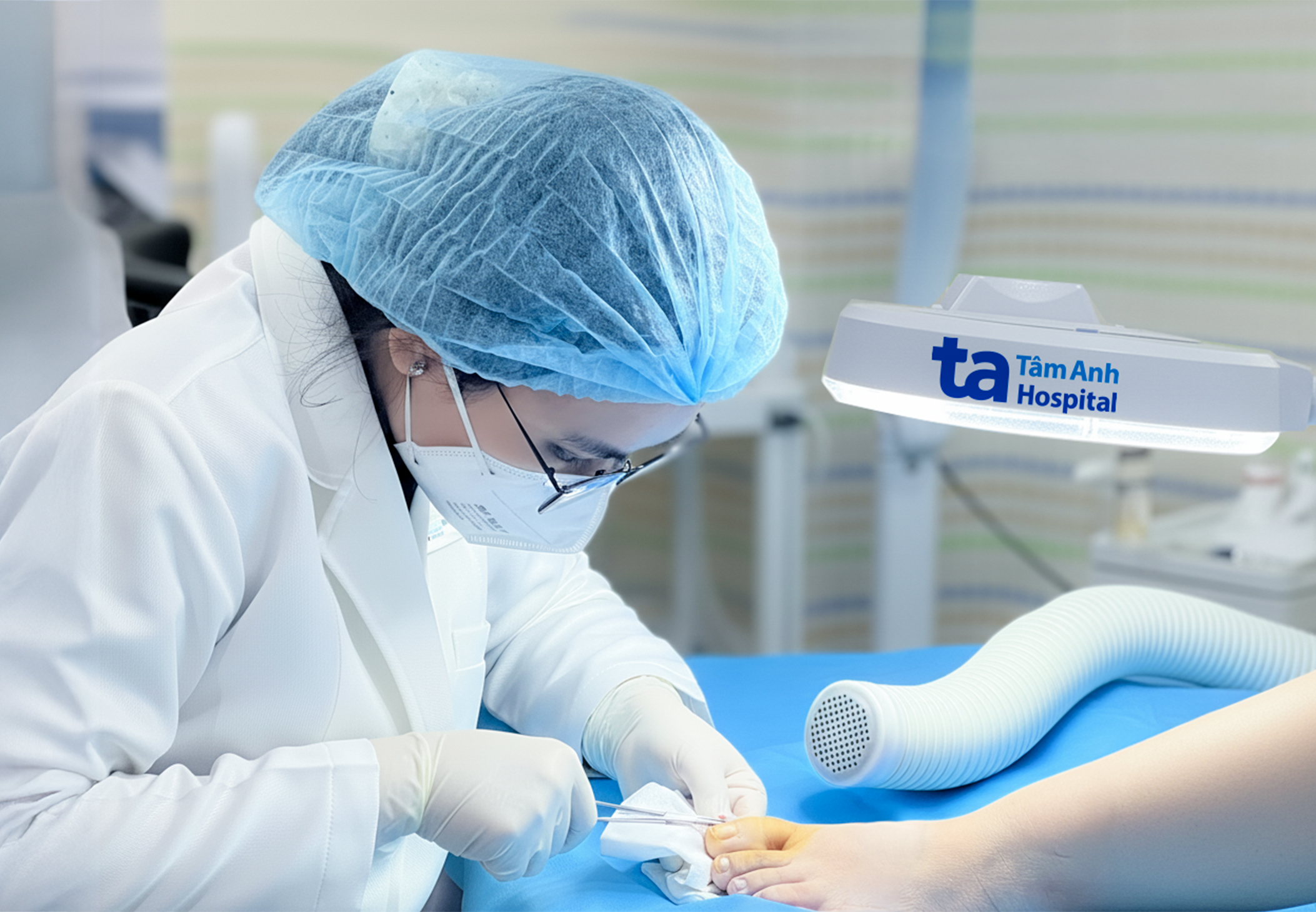 |
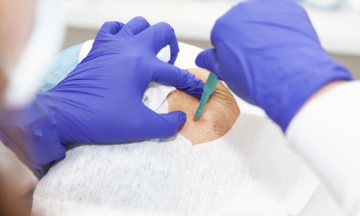
The doctor treating the infection and ingrown nail for Ms. Thuy. Photo: Tam Anh General Hospital
The doctor cleaned the infected area for Ms. Thuy, addressed the nail embedded in the soft tissue, and used a CO2 laser to destroy part of the nail matrix. Concurrently, the doctor removed the hyperplastic inflammatory tissue to control inflammation and reduce the risk of recurrence. Following the procedure, the nail area was dry and clean, and the inflammation was brought under control.
According to Dr. Tam, many people consider ingrown nails a minor issue and attempt self-treatment at home. However, ingrown toenails are highly prone to recurrence if the underlying cause is not properly addressed. Many cases reoccur even after surgical intervention because patients continue to cut their nails too short or trim the corners too deeply. When a nail already has a tendency to become ingrown, proper monitoring and care are crucial to limit repeated inflammation and avoid multiple interventions.
The doctor advised against cutting nails too short, especially toenails, and recommended limiting deep corner trimming or interfering with the nail edges. When getting a pedicure, it is essential to choose establishments that ensure sterile tools. If symptoms such as increased pain, redness, discharge around the nail, or difficulty walking appear, patients should visit a hospital with a Dermatology - Aesthetic Dermatology department for timely examination and treatment.
Minh Huong
* Patient's name has been changed