Mr. Tan had a persistent cough for about two months. Initially, doctors diagnosed pneumonia, but medication did not alleviate his symptoms. Recently, he experienced loss of appetite, severe fatigue, frequent shortness of breath, swelling in his face and limbs, and a 6 kg weight loss, prompting him to seek examination at Benh vien Da khoa Tam Anh, Ho Chi Minh City. A low-dose lung CT scan revealed a tumor measuring 47x61x63 mm in the upper right lung lobe. This mass appeared highly malignant and had invaded multiple organs and nearby lymph nodes. A large mediastinal lymph node was compressing the right pulmonary artery and the superior right pulmonary vein, causing arterial narrowing.
Dr. Tran Quoc Hoai, a first-degree specialist at the Center for Thoracic - Vascular Surgery, diagnosed Mr. Tan with stage T4N2M1 lung cancer. Due to the large and invasive nature of the tumor, a curative treatment was no longer an option. The primary goal of treatment is to slow the disease's progression, alleviate symptoms, and improve the patient's quality of life. New therapeutic approaches can extend the lifespan of patients with late-stage lung cancer by several years after diagnosis.
Mr. Tan received medication to reduce his cough and shortness of breath, along with nutritional supplements to improve his overall health before starting cancer treatment. Once his condition stabilizes, doctors will surgically remove the tumor. Following surgery, they will collaborate with oncologists to develop an adjuvant treatment plan, including chemotherapy, radiation therapy, immunotherapy, and targeted therapy.
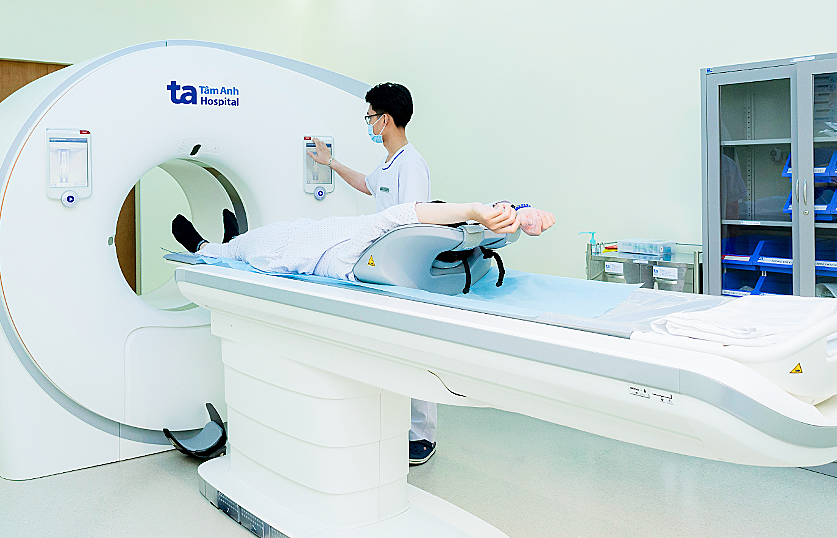 |
Low-dose lung CT scans aid in early lung cancer screening. *Illustration: Benh vien Da khoa Tam Anh* |
Dr. Nguyen Thi Nhung, from the Cardiology Department at the Cardiovascular Center, Benh vien Da khoa Tam Anh, Ho Chi Minh City, stated that Mr. Tan has a history of long-term smoking, placing him in a high-risk group. She explained that if he had undergone regular health check-ups and lung cancer screening, doctors could have detected the disease at an early stage, allowing for curative treatment. Early-stage lung cancer typically shows no symptoms. By the time the tumor grows and compresses surrounding organs, causing symptoms such as a persistent cough, coughing blood, shortness of breath, hoarseness, and weight loss, the disease has already progressed significantly.
Doctors advise that healthy individuals should undergo a general health check-up at least one time each year. For those at high risk, such as long-term smokers, individuals exposed to passive smoke, those working in environments with toxic chemicals, or with a family history of lung cancer, check-ups should occur every six months, with screening as advised by a doctor.
Thu Ha
*Patient's name has been changed
| Readers can submit questions about cancer here for doctors to answer. |