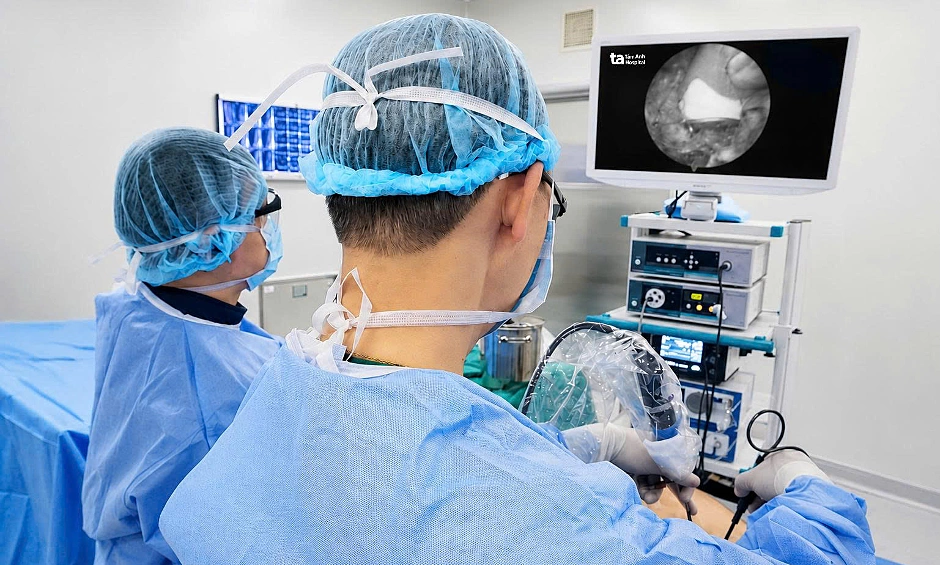
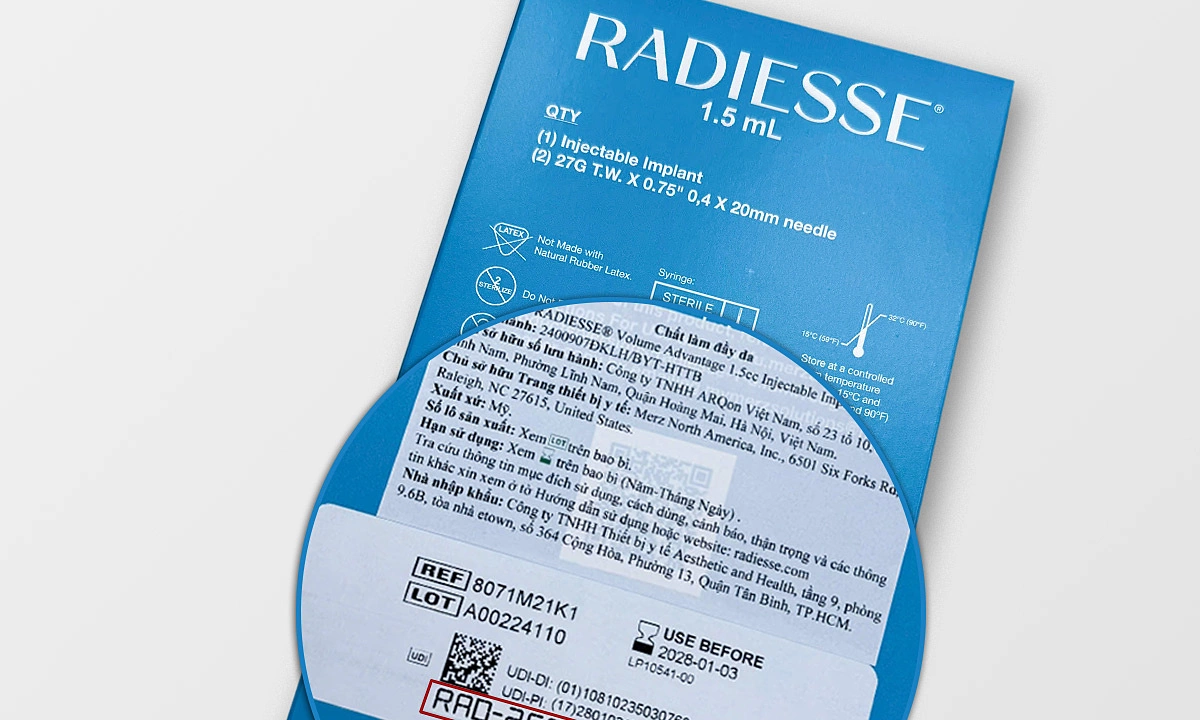
Lip tattooing does not directly cause hepatitis B, but it poses a risk for virus transmission. During the procedure, tattoo needles create thousands of micro-injuries on the lip surface, depositing ink into the superficial skin layer. These needles come into direct contact with blood and bodily fluids. If tattooing equipment is reused or not properly sterilized, and comes into contact with blood from an individual infected with hepatitis B virus (HBV), the virus can then enter another person's body.
Beyond the needles, other equipment such as machine heads, handles, tool trays, ink bottles, or the technician's gloves can also become sources of transmission if contaminated with HBV-infected blood and not properly disinfected.
 |
Doctor Oanh examines a patient. Photo: Tam Anh General Hospital
Hepatitis B virus (HBV) can survive in the environment for an extended period, remaining viable on dry surfaces for at least 7 days. It can cause infection if it enters the body through open wounds or mucous membranes. Consequently, any procedure involving needles, including lip tattooing, eyebrow tattooing, body tattooing, or piercing, carries a risk of hepatitis B transmission, particularly when strict sterilization protocols are not adhered to.
Unvaccinated individuals face a higher risk of infection due to a lack of protective antibodies. Furthermore, those with ulcers, inflammation, or lesions on their lips should avoid tattooing. In such cases, the natural protective barrier of the skin and mucous membranes is compromised, creating an entry point for pathogens.
To minimize infection risk, ensure you are fully vaccinated against hepatitis B before getting a lip tattoo. Choose a licensed aesthetic facility with clear infection control protocols. The facility should use single-use, properly sterilized needles and needle tips. Technicians must change gloves for each client, use sterile tools, and utilize individual ink pots, never sharing them between clients.
Hepatitis B is an infectious disease that can progress to chronic hepatitis, cirrhosis, and liver cancer if left untreated. Prevention strategies include: vaccination, practicing safe sex, avoiding the sharing of personal items, and exercising caution when handling blood.
Master Doctor Nguyen Hoang Oanh
Department of Gastroenterology
Tam Anh General Clinic, District 7
| Readers can submit questions about digestive diseases here for doctors to answer |