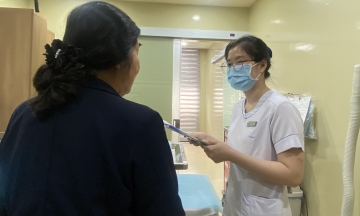
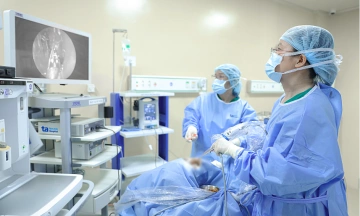
Doctor Dang Bao Ngoc, Specialist Level II, from the Neurosurgery - Spine Department at the Neuroscience Center, Tam Anh General Hospital, TP HCM, states that UBE is an endoscopic technique utilizing two small skin incisions, each measuring about 5-7 mm. One portal inserts an endoscopic camera to observe the affected area, while the other introduces surgical instruments to relieve nerve compression. The magnified images displayed on a screen allow surgeons to operate precisely within the spine's confined space.
Currently, UBE is indicated for treating various spinal conditions, including herniated discs, spinal stenosis, spondylolisthesis, spinal spurs, and certain cases of spinal tumors or injuries involving nerve compression.
A herniated disc occurs when the disc's nucleus pulposus protrudes, compressing nerve roots or the spinal cord. Patients often experience neck or lower back pain that radiates to the arms or legs, accompanied by numbness, tingling, and muscle weakness. If compression is prolonged, nerve damage can become irreversible, leading to paralysis or bladder dysfunction.
Spinal stenosis is common in older adults due to degenerative processes. Thickened ligaments, bone spurs, or bulging discs narrow the space within the spinal canal, causing pain when walking, leg numbness, leg weakness, and reduced mobility. Similarly, spondylolisthesis or spinal spurs can destabilize the spine, compress nerves, and cause chronic pain.
According to Doctor Ngoc, most patients are initially prioritized for conservative treatment, including medication, physical therapy, or lifestyle modifications. However, when prolonged pain does not improve, neurological symptoms progress, or muscle weakness and atrophy appear, surgery is indicated to address the underlying cause of compression.
Unlike open surgery, which requires extensive muscle dissection to access the spine, UBE uses two small incisions, minimizing damage to healthy tissues. The high-resolution endoscopic camera allows surgeons to clearly visualize nerves, blood vessels, and anatomical structures, enabling precise removal of the disc material, bone spurs, or ligaments causing compression.
Due to its minimally invasive nature, patients often experience less post-operative pain, reduced blood loss, and can begin early mobilization. This method is suitable for many elderly patients or those with chronic conditions, as it lowers the risk of delayed wound healing compared to open surgery.
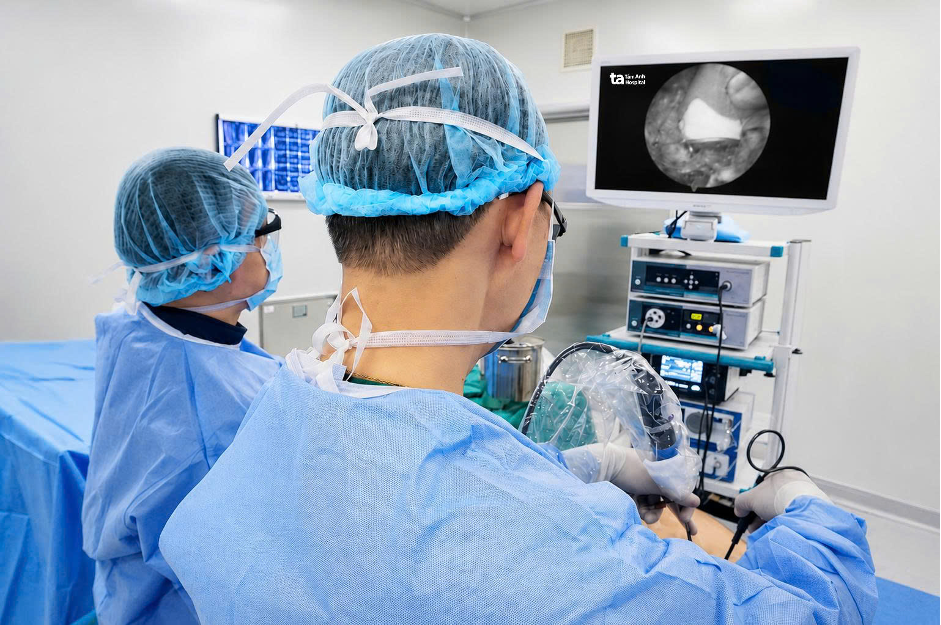 |
Doctors performing two-portal endoscopic spinal surgery (UBE) on a patient. Photo: Tam Anh General Hospital |
For complex spinal deformities or extensive lesions, doctors may recommend microsurgery or surgery assisted by modern technologies such as the AI K.Zeiss Kinevo 900 microsurgical microscope or Modus V Synaptive robot. These methods enhance precision and optimize the preservation of vital neural structures.
Doctor Ngoc advises individuals experiencing prolonged back pain, pain radiating to the arms or legs, limb numbness or weakness, difficulty walking, or bladder dysfunction to seek early consultation with a neurosurgery specialist. This helps prevent prolonged nerve damage that could impact mobility. Diagnostic tools such as MRI, CT, or X-rays assist doctors in identifying the cause and extent of nerve compression and selecting the appropriate treatment method.
Trong Nghia
| Readers can submit questions about neurological conditions here for doctors to answer |