Pterygium is a condition where conjunctival tissue grows from the white of the eye and gradually spreads onto the cornea. According to Verywell Health, it is one of the common causes of a raised tissue mass on the eye's surface. The condition typically progresses slowly and is not cancerous. In many cases, it only requires monitoring or the use of artificial tears to reduce irritation.
While pterygium is not always dangerous, it warrants attention. According to Medical News Today, many individuals experience almost no symptoms in the early stages. Some report only a gritty sensation as if there is a foreign body in the eye, along with redness, dryness, or tearing. When the pterygium is small and has not significantly encroached upon the cornea, it usually does not significantly affect vision. However, if pterygium continues to grow, patients risk developing vision problems and need to be monitored by an ophthalmologist.
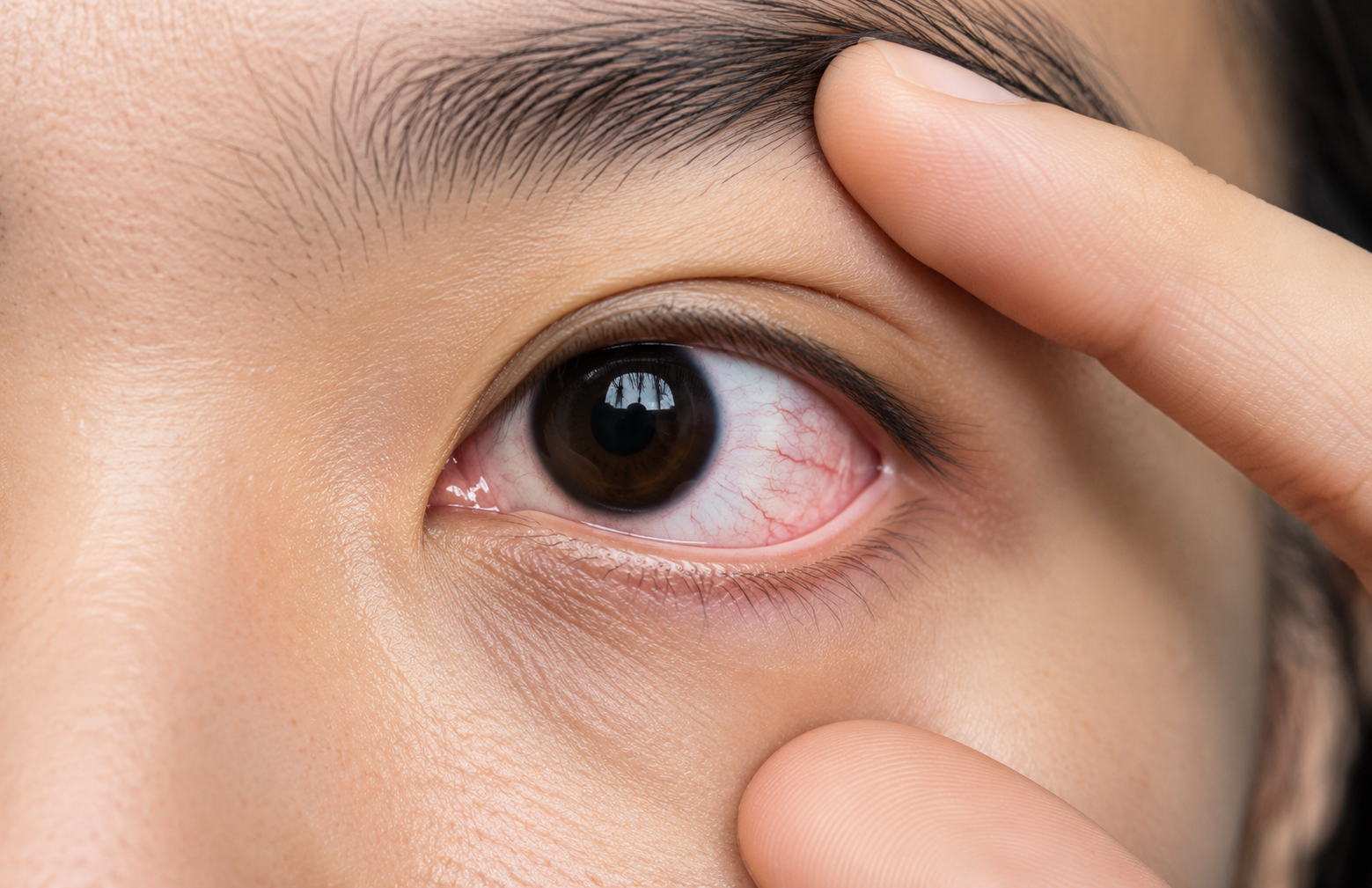 |
Pterygium is a condition where conjunctival tissue grows from the white of the eye and gradually spreads onto the cornea. *Image created by AI*
Signs indicating advanced pterygium:
A large pterygium can cause several eye problems:
Cornea encroachment: Pterygium tends to grow from the conjunctiva towards the center of the cornea. As this tissue spreads, the corneal surface can change, affecting the eye's ability to focus light.
Causing astigmatism: When pterygium stretches or alters the shape of the cornea, patients can develop astigmatism. This leads to gradually reduced vision, blurred vision, or distorted images, even if vision was previously clear.
Obstructing the visual axis: If a pterygium grows large and approaches or covers the pupil, light entering the eye will be obstructed, leading to a significant decrease in vision. This is one case where doctors may consider surgery to preserve visual function.
Recurrent inflammation: Pterygium can sometimes become red, swollen, and cause prolonged irritation, especially when the eye is exposed to wind, dust, or dry environments. Repeated inflammation causes discomfort and affects daily activities, requiring evaluation and appropriate treatment by an ophthalmologist.
Patients should seek medical attention if the pterygium grows rapidly, causes pain, blurred vision, restricted field of vision, or any unusual changes in the eye, to rule out other conditions.
Individuals susceptible to pterygium:
The exact cause of pterygium is not fully understood, but many studies indicate a link to prolonged exposure to ultraviolet (UV) radiation.
Outdoor workers such as farmers, construction workers, fishermen, or individuals who frequently play sports in the sun have a higher risk of developing the condition due to extensive eye exposure to sunlight.
Environments with a lot of wind, dust, sand, or smoke can also irritate the eye surface over time, increasing the risk of pterygium formation. Individuals with dry eye syndrome or those who regularly live and work in hot, dry environments are also more prone to this condition.
Wearing UV-protective sunglasses, wearing a wide-brimmed hat when exposed to the sun, limiting exposure to wind and dust, and keeping eyes hydrated can help reduce the risk of pterygium progression. If the growth enlarges quickly, causes blurred vision, or prolonged pain, patients should consult an ophthalmologist for appropriate evaluation and treatment.
*Bao Bao (compiled)*
| Readers can submit questions about ophthalmic diseases here for a doctor's response. |