Eng English
China 中国人

Eng English
China 中国人
  • News
  • World
  • Business
  • Entertainment
  • Sports
  • Law
  • Education
  • Health
  • Lifestyle
  • Travel
  • Science
  • Digital
  • Automobiles
  • Trở lại Thể thao
  • Health
Thursday, 9/7/2026 | 12:17 GMT+7

More dangerous pathogens due to global warming

Global climate change increases infectious diseases, fostering drug-resistant bacteria and making treatment increasingly difficult.

At the APAC-IRIDS 2026 international infectious diseases conference in Thailand on 8/7, Doctor Subramanian Swaminathan, director of the Department of Infectious Diseases and Infection Control at Gleneagles Global Hospital and vice president of the Clinical Infectious Diseases Society of India, warned that climate change has become a "new reality". This new reality brings more frequent heatwaves, floods, droughts, and extreme rainfall. These changes not only alter habitats but also create conditions for pathogens to survive, spread, and evolve.

"We do not own this world; microorganisms do. As the climate changes, pathogens adapt better than humans", he stated, adding, "Many people think we still have antibiotics for treatment. The scary thing is that common everyday bacteria are becoming increasingly difficult to treat".

Many regions worldwide have recently experienced consecutive record heatwaves. A warming climate impacts most disease transmission routes, from mosquito-borne illnesses like dengue and malaria to diseases spread through water, food, and air. Dengue has reached areas previously unaffected, while many types of intestinal bacteria are also increasing. For every one degree Celsius increase in ambient temperature, the number of Salmonella infections – a common cause of food poisoning – can rise by 5-10%.

More concerning, climate change also accelerates antibiotic resistance. Studies indicate that for every 10 degree Celsius increase in temperature, the drug resistance rate for E. coli can rise by approximately 4,2%, Klebsiella by 2,2%, and Staphylococcus aureus by 2,7%.

High temperatures, floods, droughts, and environmental pollution all facilitate faster exchange of resistance genes among bacteria. When soil dries out, natural antimicrobial compounds become concentrated, compelling bacteria to evolve resistant mechanisms to survive, thereby increasing drug-resistant strains.

Furthermore, the overuse of antibiotics in medicine and animal husbandry exacerbates this situation. Some agricultural chemicals may also contribute to this phenomenon, according to Doctor Subramanian Swaminathan.
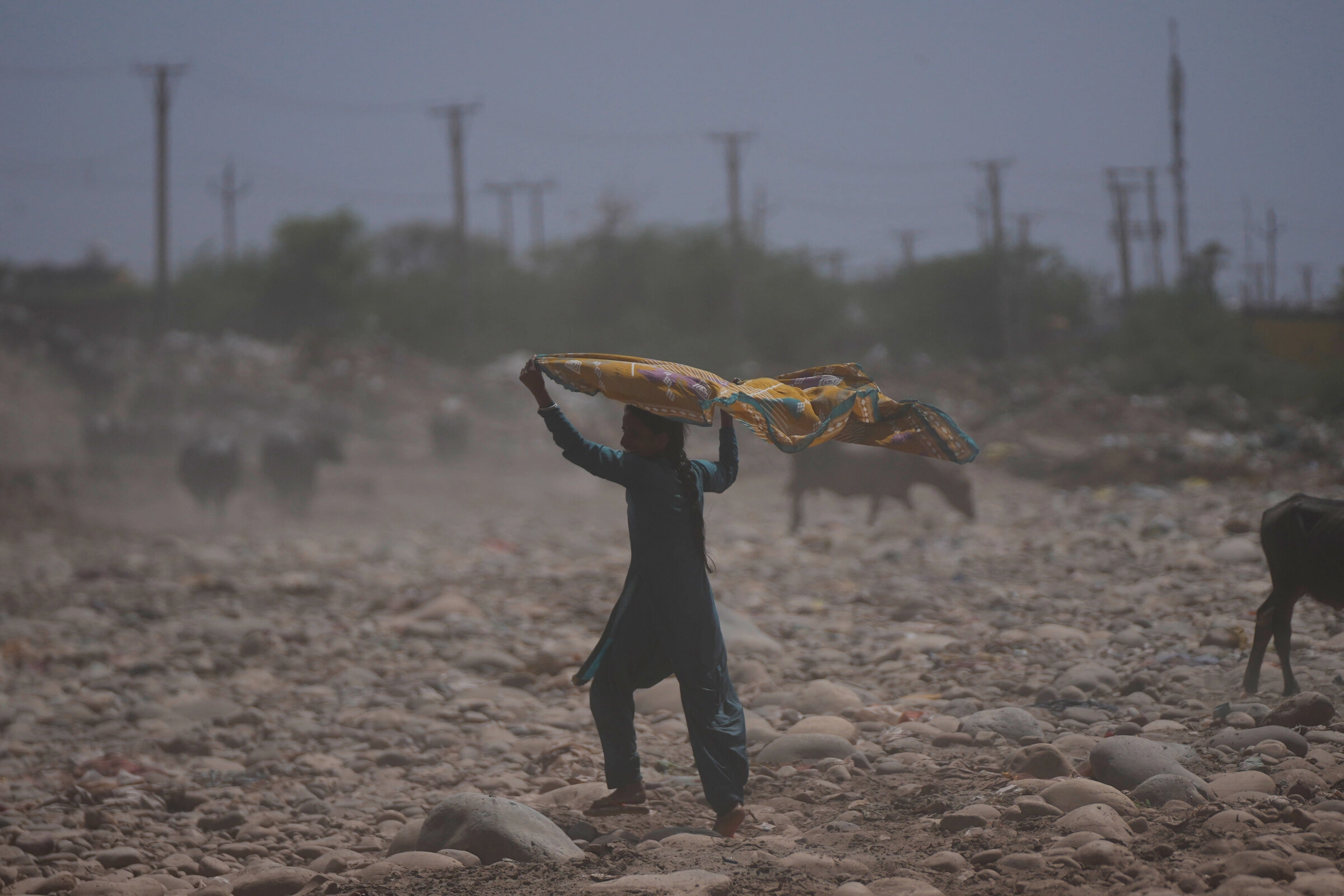
The girl uses a scarf to cover her head amidst intense heat in Jammu, India on 25/5, where daytime temperatures frequently exceeded 47 degrees Celsius. *Photo: AP*

Mihai Irimescu, general director of Roche Diagnostics Thailand, noted that the Asia-Pacific region, home to approximately 60% of the world's population, bears a particularly heavy burden of infectious diseases such as hepatitis, tuberculosis, HIV, and dengue. This region also confronts an increasingly severe antibiotic resistance crisis.

Diagnostic testing plays a pivotal role in addressing these challenges. Although accounting for only about 2-3% of total healthcare costs, test results influence approximately 70% of doctors' treatment decisions. Investing in early and accurate diagnosis will lead to more rational antibiotic use, limit drug misuse, and slow the rise of drug resistance, according to Mihai Irimescu.

Sharing this perspective, Associate Professor Piroon Mootsikapun, president of the Infectious Disease Association of Thailand, stated that close collaboration between clinicians and diagnostic systems will help detect diseases early, treat them more accurately, and preserve the effectiveness of antibiotics.

Experts agree that climate change, infectious diseases, and antibiotic resistance are closely related challenges that cannot be addressed in isolation. To mitigate their impact, countries need to strengthen epidemiological surveillance, manage water resources, use antibiotics judiciously, and adopt the "One Health" model – a coordinated approach among human health, animal health, and environmental sectors to control diseases at their source.

"Climate change will not disappear. The greater danger is that we recognize the problem but fail to act, allowing antibiotic resistance to continue accelerating", Swaminathan said.

Le Phuong

By VnExpress: https://vnexpress.net/mam-benh-nguy-hiem-hon-do-trai-dat-nong-len-5094983.html
Tags: infectious diseases climate change antibiotic resistance

News in the same category

Medical student performs chest compressions to save unconscious man by the roadside

Medical student performs chest compressions to save unconscious man by the roadside

Upon discovering a young man unconscious after a motorcycle accident by the roadside, Bui Truong Giang, 21, immediately rushed to check on him and continuously performed chest compressions.

Who is prone to knee osteoarthritis?

Who is prone to knee osteoarthritis?

Older adults, those with a history of knee injuries, heavy laborers, obese individuals, and those with underlying medical conditions are at risk of knee osteoarthritis.

How nicotine pouches harm user health

How nicotine pouches harm user health

Nicotine pouches, despite being marketed as "clean" products, contain concentrated levels of the addictive substance, which can damage oral mucosa, cause cardiovascular disorders, and harm the brains of young people, according to warnings from the Ministry of Health.

Is pterygium dangerous?

Is pterygium dangerous?

Pterygium is often benign and slow-growing, but if it continues to develop, it can cause astigmatism, reduced vision, and impact visual acuity.

Missing the "golden hour" for stroke emergency due to self-medication

Missing the "golden hour" for stroke emergency due to self-medication

A 70-year-old woman experienced sudden weakness on her left side, difficulty walking, and speech problems but did not go to the hospital, instead self-medicating at home. By the time she arrived at the hospital, she had missed the critical "golden hour" for stroke treatment.

Japanese doctor shares a squatting method to lower blood sugar after meals

Japanese doctor shares a squatting method to lower blood sugar after meals

According to a Japanese doctor, dedicating just two minutes to a slow squat exercise immediately after a meal can stimulate major lower limb muscles, preventing blood sugar from spiking.

Why drinking lemon water in the morning helps with weight loss?

Why drinking lemon water in the morning helps with weight loss?

Drinking lemon water in the morning can help keep the body hydrated, reduce sweet cravings, promote satiety, and support lower calorie intake.

Paroxysmal hypertension due to anxiety disorder

Paroxysmal hypertension due to anxiety disorder

Ms. Van, 46, experienced three episodes of paroxysmal hypertension after adrenal tumor surgery, with doctors identifying anxiety disorder as the cause.

6 chicken breast menus for fat loss, slim waist

6 chicken breast menus for fat loss, slim waist

Doctor Phan Thai Tan, a nutrition coach, suggests main meal menus featuring chicken breast that promote satiety, suitable for those looking to lose fat and maintain their physique.

Polycythemia detected from nosebleed symptoms

Polycythemia detected from nosebleed symptoms

Mr. Quynh, 45, experienced frequent nosebleeds; doctors discovered polycythemia of unknown origin.

Eng English
China 中国人
  • News
  • World
  • Business
  • Entertainment
  • Sports
  • Law
  • Education
  • Health
  • Lifestyle
  • Travel
  • Science
  • Digital
  • Automobiles
FPT Tower, 10 Pham Van Bach Street, Dich Vong Ward,
Cau Giay District, Hanoi, Vietnam
Email: contacts@vnportal.net
Tel: 028 7300 9999 - Ext 8556
Advertise with us: 090 293 9644
Register
© Copyright 2026 vnnow.net. All rights reserved.
Terms of use Privacy policy Cookies