Knee osteoarthritis is a chronic condition that occurs when cartilage and bone in the knee joint are damaged over time. The layer of cartilage covering the ends of the bones gradually wears down, causing the bone ends to rub directly against each other. This leads to pain, joint stiffness, and limited mobility.
Master, Doctor Hoang Thi Quynh Anh from the Musculoskeletal Department at Tam Anh Cau Giay General Clinic, explains that in the initial stage, patients experience dull pain during strenuous activity. The pain frequency and intensity increase as the condition progresses. If cartilage wears excessively, leg alignment may become crooked, causing constant pain. Patients can lose mobility and even become disabled if not treated promptly.
Doctor Quynh Anh identifies five groups of people prone to knee osteoarthritis:
Older Adults
Aging is a common cause of primary knee osteoarthritis. As people age, their ability to produce collagen that nourishes cartilage declines, failing to compensate for the wear and tear from daily activities. This accumulation leads to joint degeneration.
Typically, after the age of 55, signs of knee osteoarthritis become noticeable. This process progresses silently and gradually increases with age.
Individuals with Previous Knee Injuries
Ligament tears, cartilage damage, periarticular fractures, or dislocations alter anatomical structure, reduce knee joint stability, and cause uneven force distribution on the cartilage. These factors often accelerate the rate of knee osteoarthritis.
Individuals with previous knee injuries that were inadequately treated are at higher risk of earlier degeneration compared to healthy individuals. Many people develop knee osteoarthritis in their 30s and 40s due to sports injuries or traffic accidents.
Heavy Laborers
Occupations requiring carrying heavy loads, frequent squatting, or stair climbing subject the knee joints to heavy loads without adequate recovery time, leading to early degeneration.
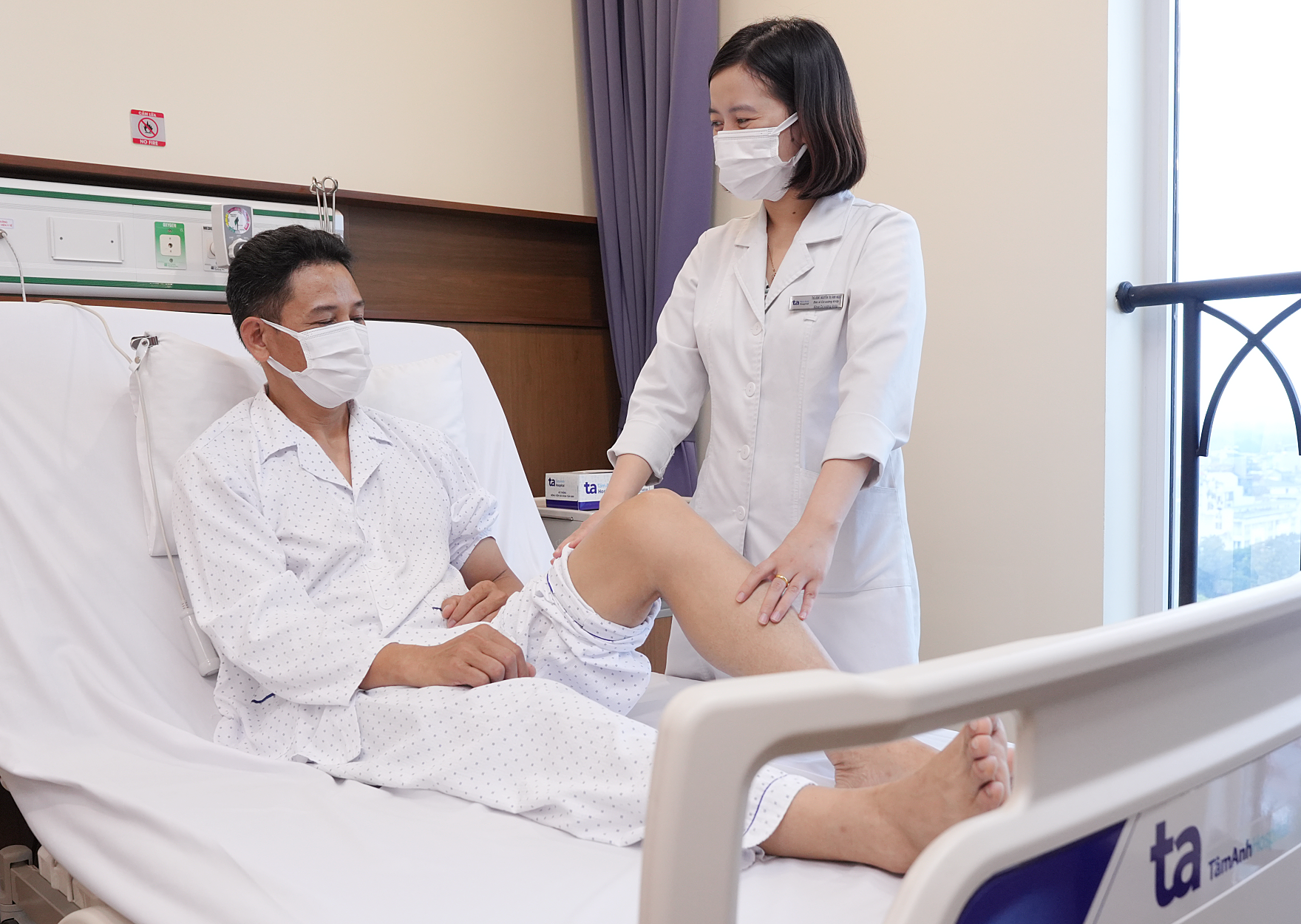 |
A doctor examines a patient's knee for degeneration. *Photo: Tam Anh General Hospital* |
Individuals with Certain Underlying Conditions
Metabolic diseases, such as: diabetes, cardiovascular disease, and hyperlipidemia, can promote endothelial inflammation, hardening blood vessels that nourish joints and cartilage, making knee joints more susceptible to degeneration. Autoimmune musculoskeletal diseases, such as: rheumatoid arthritis, ankylosing spondylitis, or psoriatic arthritis, can accelerate joint degeneration, including in the knees.
Overweight and Obese Individuals
The knee joint bears significant weight during walking, moving, and climbing stairs. Every extra kilogram on the body places greater pressure on the knee joints over many years, causing cartilage to wear down faster. Beyond mechanical factors, adipose tissue also secretes inflammatory substances, accelerating degeneration and worsening joint pain symptoms.
Doctor Quynh Anh advises that when experiencing signs of knee pain, such as: worsening with movement, sharp pain when going up or down stairs or changing posture suddenly, morning joint stiffness, or hearing creaking or grinding sounds during movement, patients should visit a specialized hospital for examination.
Depending on the condition, knee osteoarthritis can be treated conservatively with anti-inflammatory drugs, slow-acting anti-degenerative medications, and regenerative medicine therapies, such as: platelet-rich plasma injections, hyaluronic acid, and collagen. In severe cases, patients are indicated for artificial knee replacement to eliminate pain and restore mobility.
Doctor Quynh Anh recommends that everyone maintain a healthy weight, combine appropriate exercise with rest, effectively manage underlying conditions, and thoroughly treat injuries to help prevent knee osteoarthritis.
Thanh Long