A third-year medical student's quick thinking and training proved vital when he encountered an unconscious accident victim on the morning of 7/7 in the Ho Dinh Cong area. Bui Truong Giang, a student at the Vietnam National Institute of Traditional Medicine, was passing by when he heard cries for help. He stopped his vehicle to assist a young man after an accident. The victim was in critical condition, his face pale, lips and mucous membranes turning bluish-purple, with no pulse or breathing detected.
Recognizing these as typical signs of circulatory arrest, Giang immediately recalled his medical lessons on cardiac arrest, understanding the urgent need for emergency intervention to save the victim's life. Without hesitation, he and a woman at the scene knelt, taking turns performing chest compressions. Giang also removed the victim's shirt, loosened his belt, and helped lift his jaw to clear the airway, ensuring continuous resuscitation efforts.
After 30 minutes of continuous chest compressions, the young man began to show vital signs: his chest rose and fell with breathing, and he slowly opened his eyes. At this moment, Giang sighed with relief, slumping onto the road, exhausted and with numb, aching hands.
Giang admitted that facing such a real-life situation on the line between life and death was anxiety-inducing and caused hesitation. "But if given the choice again, I would still do my utmost to save the patient," Giang affirmed, highlighting his commitment.
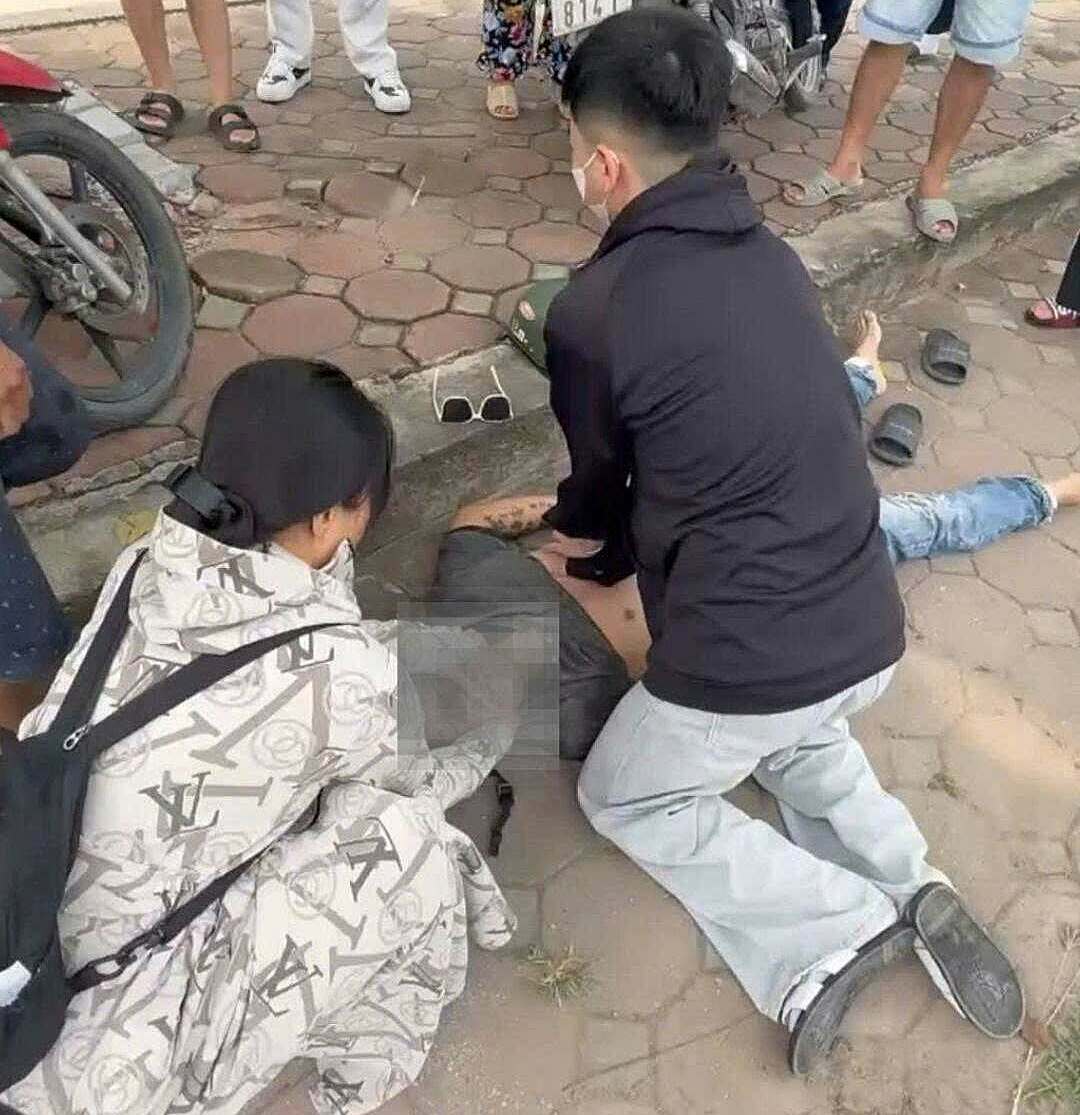 |
Giang continuously performed chest compressions on the unconscious young man. *Photo courtesy of subject* |
In emergency medicine, time is critical, as every minute without chest compressions significantly reduces a patient's chance of survival. A patient's survival rate decreases by 7% to 10% for each minute without intervention. If the brain lacks oxygen for more than 4 to 5 minutes, central nervous system damage becomes permanent and irreversible. Therefore, immediate bystander cardiopulmonary resuscitation (cpr) at the scene acts as the only "lifeline" to sustain the victim's life before professional medical personnel arrive.
 |
Bui Truong Giang, a third-year medical student at the Vietnam National Institute of Traditional Medicine. *Photo courtesy of subject* |
Cardiorespiratory arrest, encompassing cardiac and respiratory arrest, is the sudden cessation of the heart's pumping action, which prevents blood circulation to other body parts. Without timely emergency intervention, this condition leads to rapid death. The primary goal of cardiac arrest resuscitation is to maintain breathing and heart function, preventing brain inactivity and complications that damage other body parts. When in cardiorespiratory arrest, patients face the risk of organs lacking oxygenated blood, a leading cause of death or permanent brain damage within minutes. Early detection and prompt, correct emergency care can help patients escape these dangers.
By Thuy An