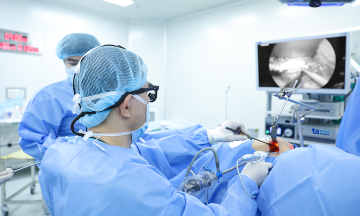
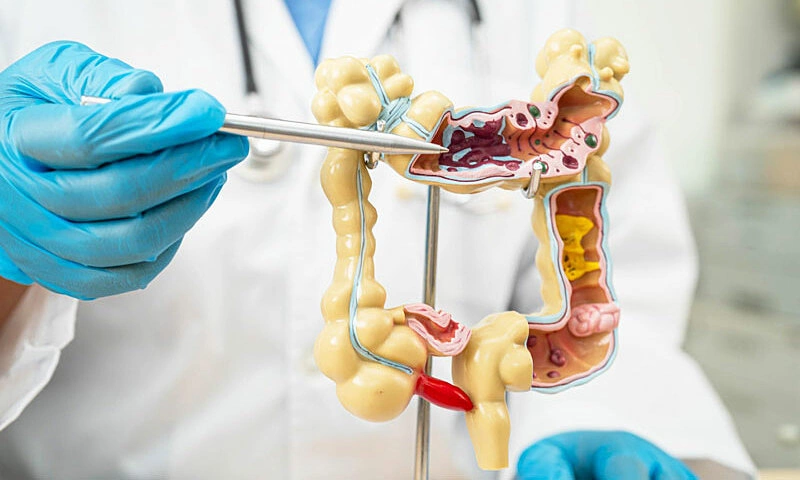
During an ultrasound at Tam Anh Cau Giay General Clinic, Linh, 30, was found to have a 5 cm cyst on her right kidney and a large 10 cm cyst on her left kidney, the latter being comparable in size to one adult kidney.
Doctor Tran Dinh Hung, from the Urology and Andrology Department, explained that the significant size indicated the cyst had developed silently over a long period. It was compressing the surrounding healthy renal parenchyma, as well as the renal pelvis and calyces. Prolonged compression of the renal parenchyma and calyces can gradually reduce blood flow to the kidney and impair the filtering capacity of renal units, increasing the risk of kidney dysfunction if not monitored and treated promptly.
Due to the cyst's large size, medical treatment was no longer effective. Aspiration and alcohol injection would lead to recurrence and posed risks of infection and ethanolic alcohol poisoning, according to Doctor Hung. As Linh had to return to Germany 5 days later, Associate Professor Doctor Tran Van Hinh, Head of the Urology and Andrology Department at Tam Anh General Hospital Hanoi, decided to perform a retroperitoneal endoscopic partial cystectomy of the large left kidney cyst. This procedure aimed to address the lesion while preserving as much renal parenchyma as possible. This method allowed direct access to the kidney without requiring an abdominal incision, thereby reducing patient pain, limiting blood loss, and shortening recovery time.
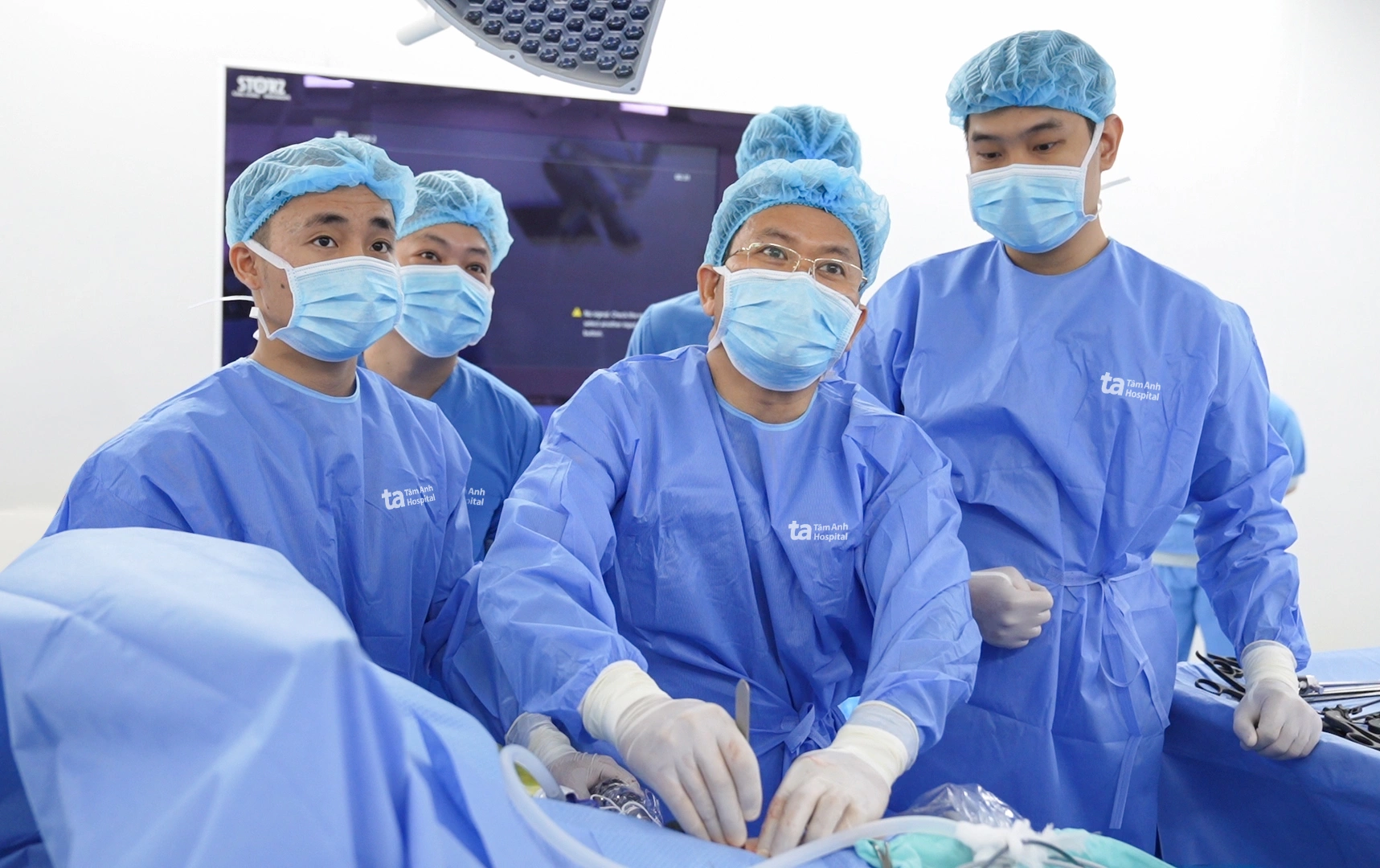 |
The team performing retroperitoneal endoscopic partial cystectomy for the patient. Photo: Tam Anh General Hospital |
Three days after surgery, Linh's condition was stable. She no longer experienced pain in her lower back, her kidney function and biochemical indicators were within safe limits, and she was discharged.
Doctors advised Linh to maintain a healthy lifestyle, drink enough water, limit alcoholic beverages, and undergo regular ultrasound check-ups to monitor the cyst on her right kidney. Her kidney function would need to be assessed, and timely intervention would be necessary if the cyst increased in size or if any abnormalities appeared.
According to Associate Professor Hinh, many kidney cyst cases present no clear symptoms and are only discovered incidentally during routine health check-ups or abdominal ultrasounds. Regular health screenings can detect underlying kidney conditions early, allowing for timely monitoring and management, preventing silent progression that could affect kidney function.
Thu Giang