The thyroid gland produces hormones regulating the body's metabolism. Dysfunctions like hypothyroidism or hyperthyroidism can lead to hormonal imbalances, affecting various systems including cardiovascular, nervous, digestive, and notably, the female reproductive system.
According to Doctor Dinh Nhu Quynh, from the Department of Endocrinology - Diabetes at Tam Anh General Hospital Hanoi, thyroid dysfunction can cause various menstrual cycle changes, such as:
Heavy menstrual bleeding
Heavy menstrual bleeding, or menorrhagia, is defined as menstrual periods lasting longer than 7 days. This condition often stems from an imbalance between estrogen and progesterone, leading to excessive growth and irregular shedding of the uterine lining, which results in prolonged bleeding.
Hypothyroidism, characterized by a deficiency in thyroid hormones, slows metabolism and disrupts overall endocrine balance. This imbalance can lead to elevated estrogen levels and reduced progesterone, contributing to a disorder of female sex hormones.
 |
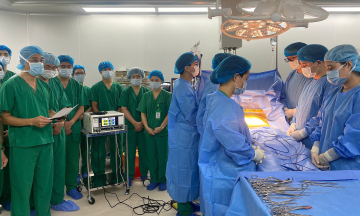
Blood tests for early detection of hypothyroidism. Photo: Tam Anh General Hospital
Early menstruation
Individuals with hypothyroidism may also experience more frequent periods. This manifests as an unusually short menstrual cycle, typically less than 21 days, compared to the normal range of 21-35 days. Early menstruation can also indicate ovarian endocrine-metabolic disorder syndrome, commonly known as polycystic ovary syndrome.
Scanty, short menstruation
Scanty and short menstrual periods, characterized by a significant reduction in menstrual blood volume per cycle, can be a warning sign of hyperthyroidism. Excess thyroid hormones stimulate the body to produce more sex hormone-binding globulin (SHBG). Elevated SHBG levels bind to a greater proportion of sex hormones, leading to lower free estrogen. This results in a thinner uterine lining and less tissue shedding during menstruation, manifesting as light and brief periods.
Irregular periods or amenorrhea
Doctor Quynh explains that both hypothyroidism and hyperthyroidism can lead to irregular menstrual cycles or amenorrhea (absence of periods). In cases of primary hypothyroidism, elevated thyrotropin-releasing hormone (TRH) stimulates the pituitary gland to overproduce thyroid-stimulating hormone (TSH) and prolactin. Increased prolactin can suppress the gonadal axis, diminishing estrogen production in the ovaries, which often results in anovulation, infrequent periods, or amenorrhea.
Conversely, in hyperthyroidism, excessive thyroid hormone levels boost hepatic production of sex hormone-binding globulin (SHBG), altering the concentration of free sex hormones in the bloodstream. Hyperthyroidism also disrupts the hypothalamic-pituitary-ovarian axis, leading to anovulation and various menstrual disorders. Patients may experience infrequent periods, light bleeding, or amenorrhea.
Thuy Duong
| Readers can submit questions about endocrine diseases here for a doctor's response. |