Mr. Duc, 66, recently underwent a successful mini-percutaneous nephrolithotomy (mini-PCNL) at Tam Anh General Hospital TP HCM to remove a large, complex coral kidney stone from his left kidney. The advanced laser procedure, performed through a small skin incision, completely cleared the stone in one go, offering a minimally invasive alternative to traditional open surgery.
According to Dr. Nguyen Tan Cuong, Deputy Head of Urology Department and Head of Urological Oncology Unit at the hospital's Urology - Nephrology - Andrology Center, Mr. Duc's left kidney coral stone measured 4x5 cm. Its hard, branched structure filled the middle and lower renal calyces, posing a significant risk of kidney damage if not addressed promptly.
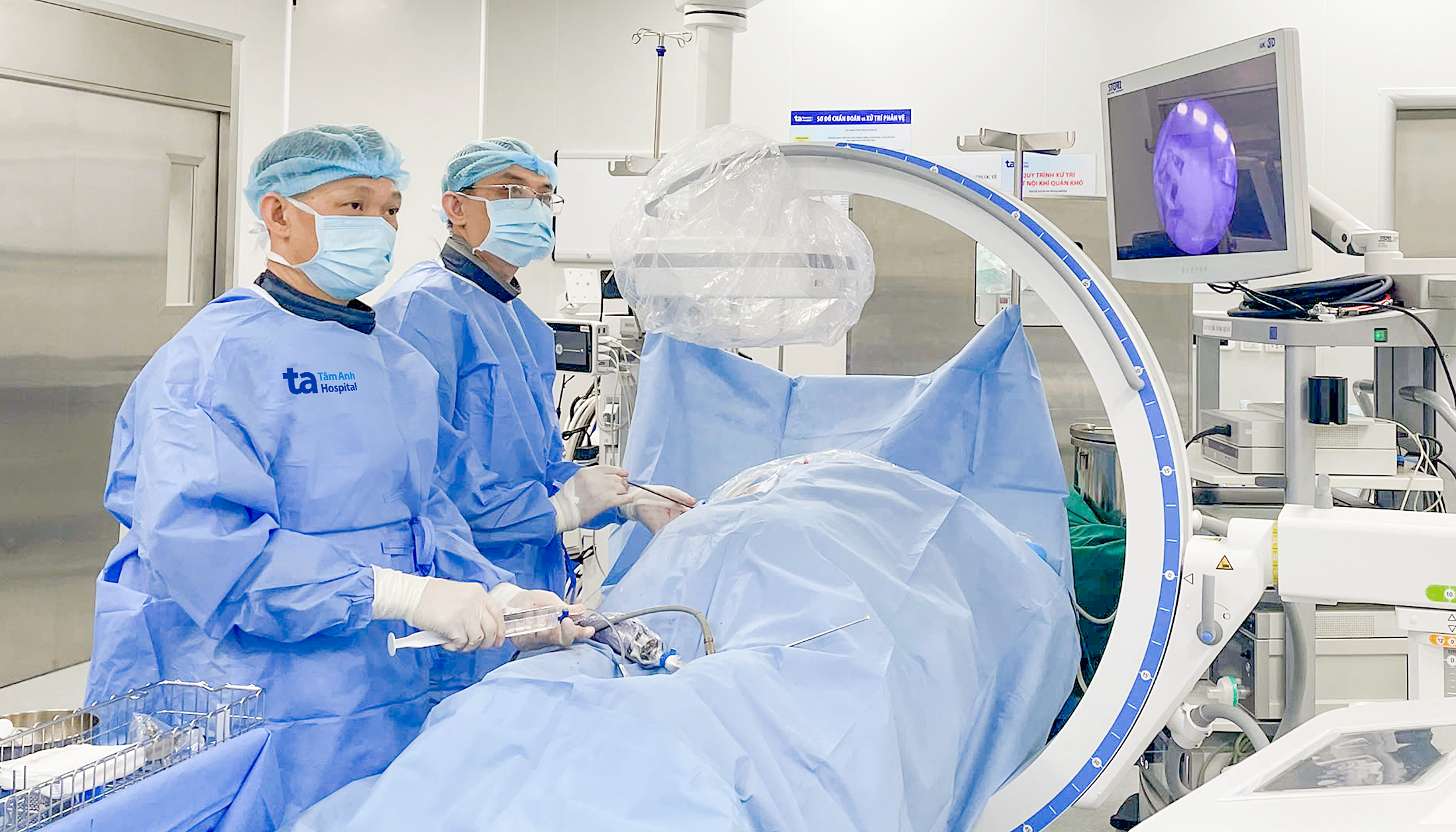 |
Dr. Cuong (left) and his team perform endoscopic percutaneous coral stone lithotripsy for a patient. Photo: Tam Anh General Hospital |
The mini-PCNL technique involves creating a small tunnel, approximately 5 mm in diameter, from the skin into the lower renal calyx. Through this access, a high-power laser breaks the coral stone into small fragments, which are then suctioned out. This minimally invasive approach preserves kidney tissue, reduces blood loss, and minimizes post-operative pain for the patient.
The surgical team utilized a C-arm system combined with ultrasound for precise stone localization and needle guidance into the kidney. Advanced 3D imaging provided surgeons with clear visibility, helping them avoid damage to important blood vessels and reducing radiation exposure. This technology also confirmed the complete removal of stones immediately after the procedure.
Two years prior, Mr. Duc underwent open surgery for kidney stone removal, resulting in an 18 cm scar and a half-month recovery period. In contrast, his recent mini-PCNL procedure led to less pain, enabled him to walk after two days, and allowed discharge after four days, with a swift return to normal activities. The large coral stone was almost entirely removed.
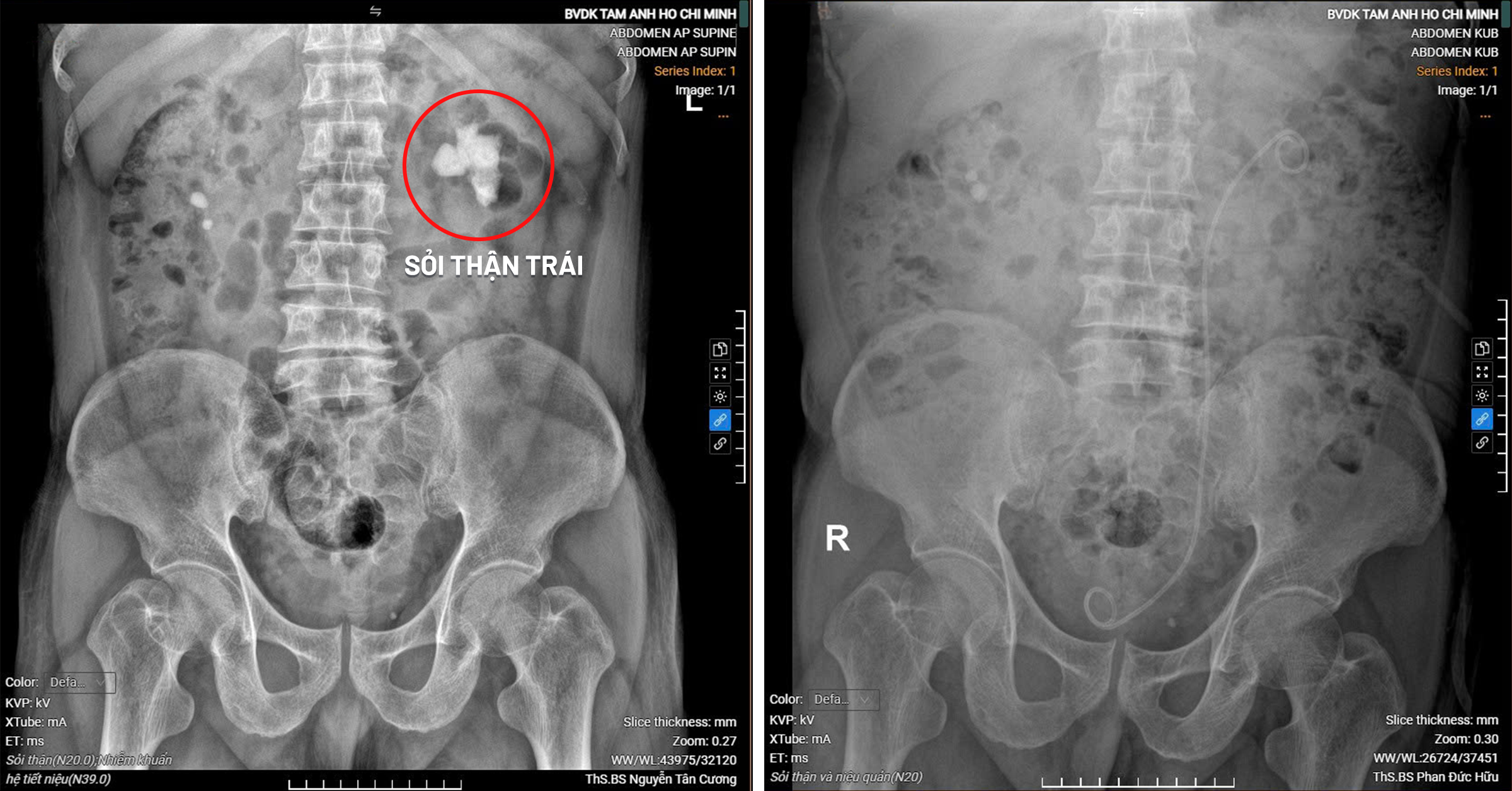 |
Images of the patient's left kidney with a coral stone before intervention (left) and completely stone-free after intervention (right). Photo: Tam Anh General Hospital |
Dr. Cuong highlighted the high recurrence rate of coral stones, up to 50-70% within five years, emphasizing the need for regular follow-up appointments and preventive treatment. To mitigate the risk of kidney stones, individuals should maintain adequate hydration, consume a low-salt diet, avoid spicy foods, manage weight, and control underlying conditions such as gout, urinary tract infections, and metabolic disorders.
Bao Anh
*Patient's name has been changed