Master of Science, Doctor Ngo Chi Thien, from the Dermatology and Aesthetics Department at Tam Anh General Hospital, Ho Chi Minh City, noted Mai's tattoo was about 8 cm long, containing multiple colors like red and black, along with some difficult-to-treat pigments. The doctor selected pico laser technology and adjusted the wavelength for each ink color to effectively break down pigments while minimizing skin tissue damage.
Mai's treatment plan consisted of 10-12 sessions, spaced 4-6 weeks apart to allow the skin to recover. During each session, the doctor meticulously worked on small areas. After each laser application, the skin experienced mild stinging and might develop blisters for one to two days, which then healed naturally. This is a normal reaction as the tattoo ink particles break down.
After 9 treatment sessions, her tattoo significantly faded, colors lightened considerably, and the skin surface became more even-toned.
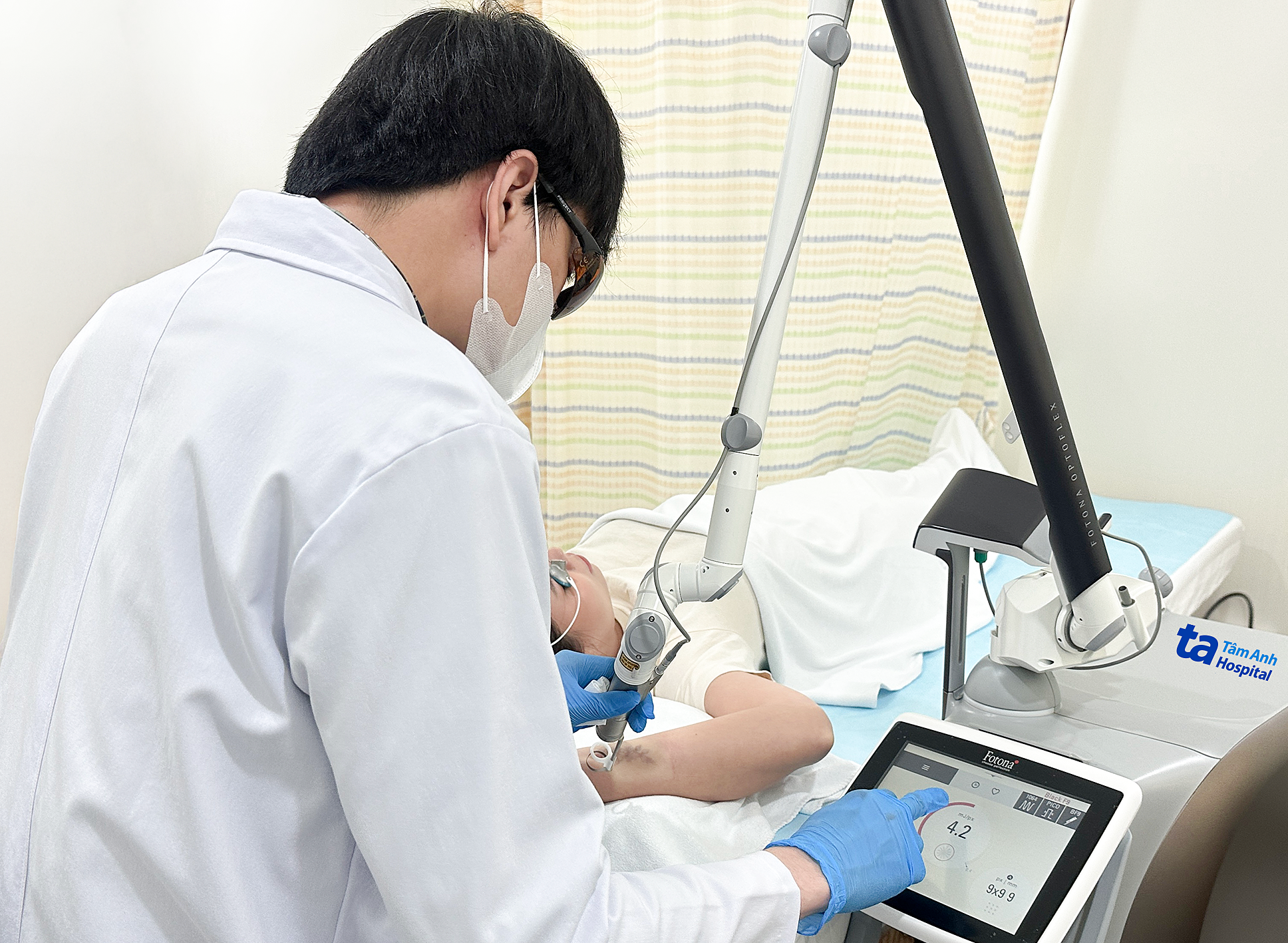 |
Doctor Thien adjusts the laser wavelength for each ink color to remove Mai's tattoo. *Photo: Tam Anh General Hospital* |
According to Doctor Thien, the effectiveness of tattoo removal depends on the type of ink, its depth, the technology used, and the practitioner's skill. Multi-colored tattoos, especially those with green and blue, often require more sessions because these colors absorb laser light poorly, making ink particles harder to break down. Tattoos that have been present for 8 to 10 years or more are also more challenging to treat due to deeply spread and layered ink. Some older inks even contain metals or impurities, which hinder laser interaction.
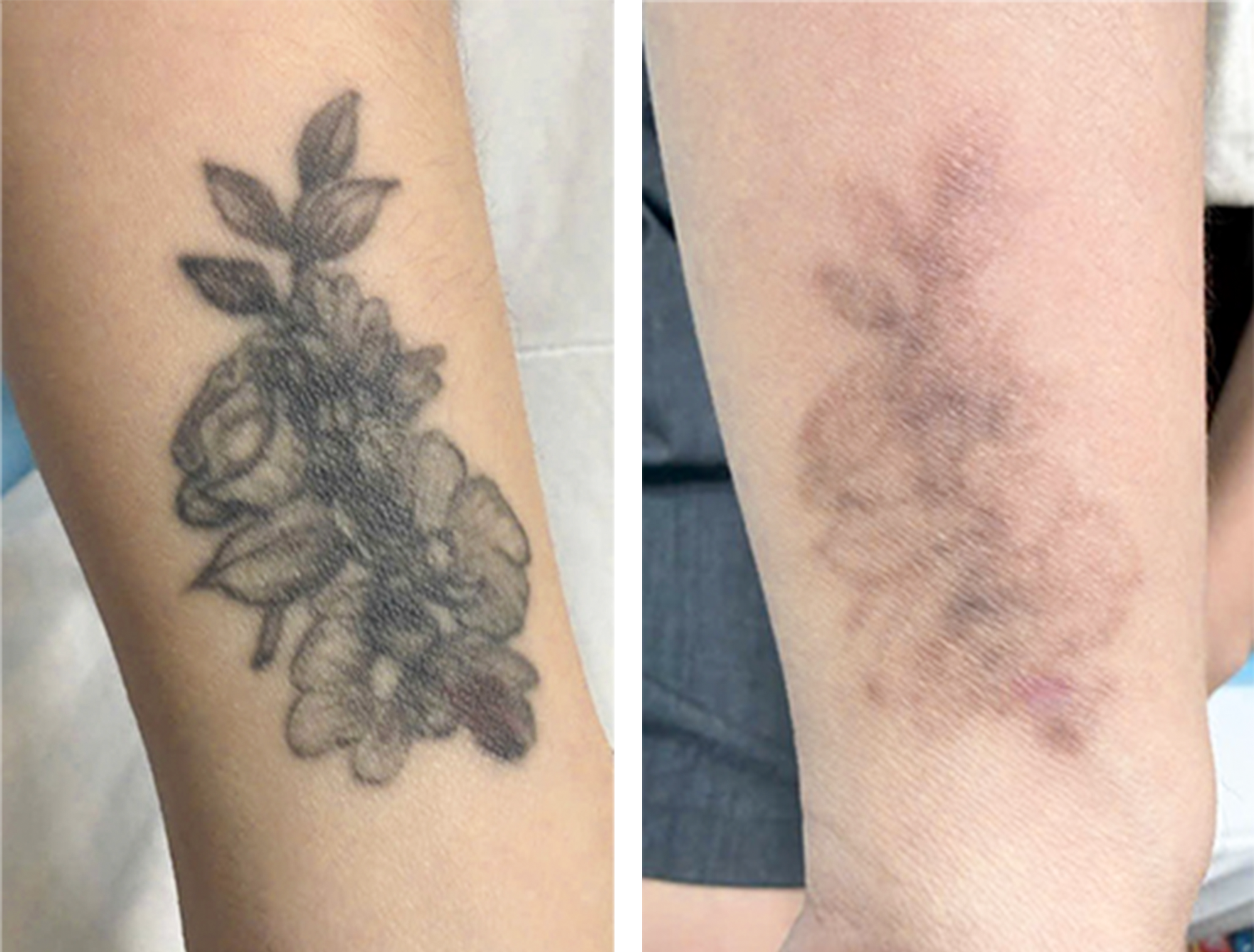 |
Mai's tattoo significantly faded after 9 pico laser removal sessions. *Photo: Tam Anh General Hospital* |
Doctor Thien advises individuals considering tattoo removal to visit medical facilities with Dermatology and Aesthetics Departments for a thorough tattoo assessment before deciding on treatment. Each ink color reacts differently to various laser wavelengths, necessitating a detailed examination by a doctor to select appropriate technology, estimate the required number of sessions, and minimize the risk of scarring or post-treatment hyperpigmentation.
Following tattoo removal, patients must diligently avoid sun exposure, refrain from rubbing, or picking at the skin. The treated area should be kept clean, a recovery cream applied as directed, and follow-up appointments attended promptly to monitor the skin's response.
Minh Huong
*Character's name has been changed*