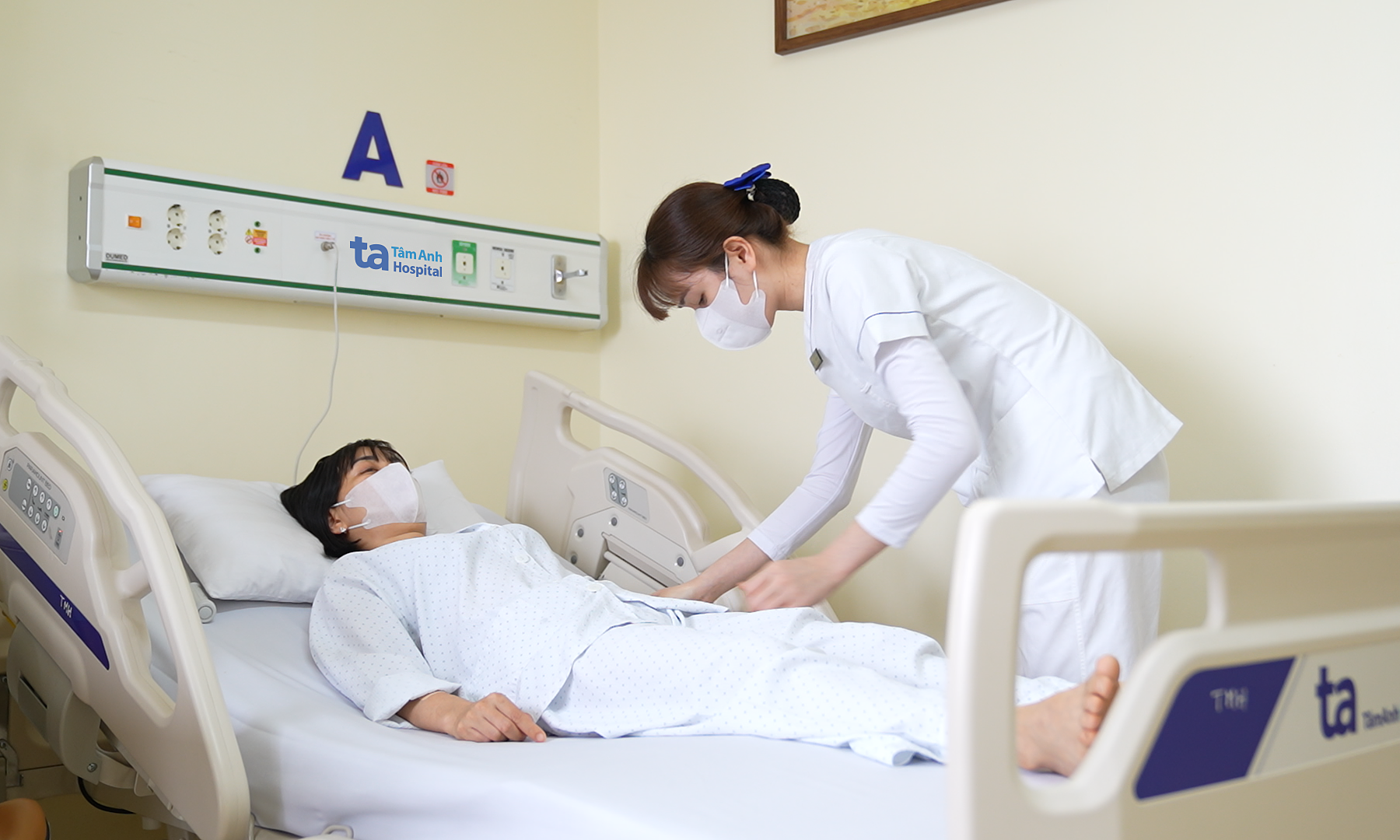
Vuttananon, a Lao national, underwent CT and MRI scans at Tam Anh Cau Giay General Clinic, which revealed multiple osteolytic lesions in the right pelvis, ribs, occipital bone, and left parietal bone. These lesions were characterized by irregular margins and cortical destruction. Doctor of Clinical Oncology II Ngo Truong Son, Deputy Head of the Oncology Department, noted that the CT images suggested malignant lesions, likely bone metastases or a hematological malignancy.
Doctors decided to perform a bone biopsy at the right iliac osteolytic lesion and skull bone under CT guidance. Histopathological and immunohistochemical results confirmed the patient had diffuse large B-cell non-Hodgkin lymphoma (DLBCL).
 |
Dr. Son advises Vuttananon. *Photo: Tam Anh General Hospital*
"This is a rapidly progressing and aggressive form of blood cancer," Dr. Son explained. A PET/CT scan showed increased FDG-18 uptake at multiple bone sites throughout the body, indicating stage 4, widespread disease. Vuttananon had extranodal lymphoma manifesting in the bones, lacking typical lymph node symptoms, which made the initial diagnosis difficult.
Malignant lymphoma typically develops in the lymphatic system. However, lymphocytes are distributed throughout the body, allowing tumors to originate outside the lymphatic system and lymphoid tissues such as the lungs, chest, skin, stomach, and bones.
The patient received chemotherapy combined with monoclonal antibodies according to the R-CHOP regimen, consisting of about 6-8 cycles, along with the monoclonal antibody Denosumab to control bone destruction. R-CHOP is a common regimen for treating non-Hodgkin lymphoma, combining chemotherapy and targeted drugs. In this regimen, "R" stands for Rituximab, a monoclonal antibody targeting the CD20 protein on cancer cells, which helps the immune system recognize and destroy diseased cells. The regimen also uses a combination of three chemotherapy drugs to increase the ability to kill cancer cells.
The patient tolerated the medication well, maintained normal eating and daily activities, and symptoms improved after the first treatment cycle. Each treatment cycle was ba weeks apart; the patient received medication and was discharged the same day if there were no complications.
Non-Hodgkin lymphoma is a type of cancer originating from the lymphatic system, a part of the body's immune system. The disease occurs when lymphocyte white blood cells proliferate uncontrollably, leading to tumor formation. Globocan in 2022 recorded that Vietnam had over 3,500 new cases of this disease.
The disease does not show obvious symptoms in its early stages. Dr. Son recommends that everyone undergo regular health check-ups. If one feels a lump in the neck, experiences prolonged fever, or unexplained weight loss, they should immediately visit a medical facility with an oncology specialty for timely diagnosis and treatment.
Hieu Nguyen
*Patient's name has been changed*
| Readers can submit questions about cancer here for doctors to answer |