Quang regularly consumed large amounts of alcohol. Approximately eight months ago, he suddenly vomited blood. Doctors at a local hospital diagnosed him with liver cirrhosis, which led to complications of portal hypertension and ruptured esophageal varices, resulting in gastrointestinal bleeding. He received blood transfusions and underwent endoscopic ligation of the esophageal varices. However, after discharge, he did not follow up and continued drinking alcohol, causing the condition to recur and requiring a second endoscopic ligation.
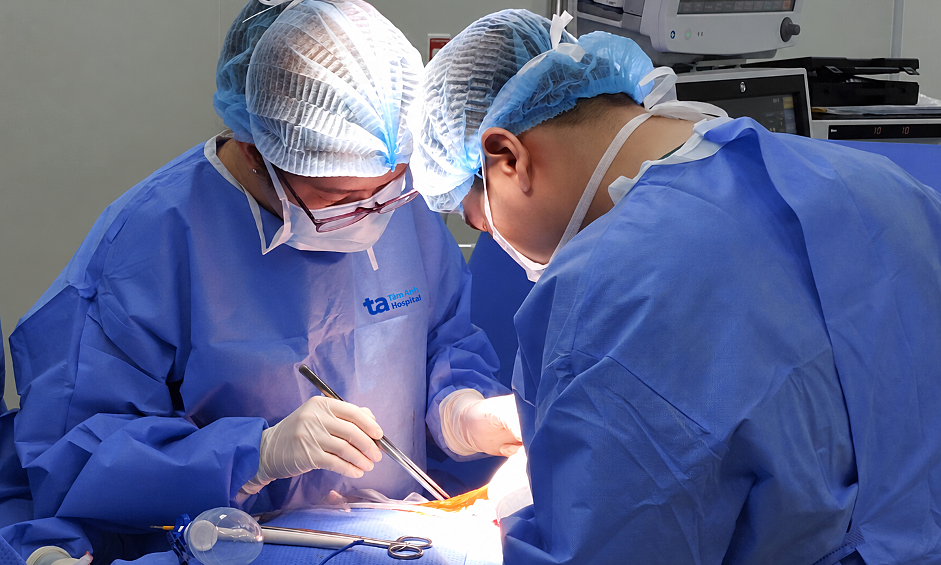
This time, an esophagogastroduodenoscopy at Tam Anh General Hospital, HCMC, revealed scars from previous ligations of grade II-III esophageal varices, accompanied by portal hypertensive gastropathy. Doctors performed additional endoscopic ligations to reduce the risk of further bleeding.
Specialist Doctor Level II Huynh Van Trung, Deputy Head of Gastroenterology at Tam Anh General Hospital, HCMC, explained that Quang has F4 liver fibrosis, with complications including portal hypertension, esophageal varices, and rupture causing gastrointestinal bleeding. This indicates that the disease has progressed to the stage of decompensated cirrhosis.
Scar tissue from cirrhosis obstructs blood flow through the liver, increasing pressure within the portal venous system. This causes blood vessels in the lower esophagus and stomach to dilate significantly, leading to a high risk of rupture and bleeding.
 |
Doctor Trung consulting with the patient. Photo: Tam Anh General Hospital |
Doctor Trung consulting with the patient. Photo: Tam Anh General Hospital
Master, Doctor Mai Hoai Sang, from the Gastroenterology Department at the Endoscopy and Gastrointestinal Endoscopic Surgery Center, stated that the liver metabolizes most ethanol from alcohol. This process produces acetaldehyde, a toxic metabolite that can damage liver cells, promote inflammation, and induce cell mutations. Prolonged exposure to large amounts of alcohol can sequentially lead to fatty liver, alcoholic hepatitis, and liver cirrhosis.
Quang was advised to stop drinking alcohol completely, combine medical treatment, undergo regular monitoring, and receive endoscopic interventions as indicated to control complications and minimize the risk of recurrence.
According to Doctor Trung, alcohol-related liver disease often progresses silently. Patients may not exhibit clear symptoms for an extended period, while liver damage accumulates over many years. When signs such as jaundice, abdominal swelling, leg edema, altered consciousness, confusion, or vomiting blood appear, the disease may have advanced to a severe stage with complications.
Doctors recommend that individuals who consume large quantities of alcohol undergo regular check-ups to assess their risk and monitor liver health. Once alcohol-related liver disease is diagnosed, patients must completely abstain from alcohol and adhere to their prescribed treatment plan.
Quyen Phan
| Readers can submit questions about digestive diseases here for doctors to answer. |