In the afternoons after school, while friends lingered to chat, Khai Dan, an office worker in Tay Ninh, had one goal: to rush into the restroom, shed his ao dai (traditional Vietnamese dress), and only then head home. This was an unwritten ritual throughout his high school years, not due to heat or inconvenience, but because for Dan, "every minute spent in a female uniform felt like a minute living as the wrong person".
Khai Dan, now 26 years old, was born with a female body but always identified as male. His journey to see himself in the mirror without feeling alienated spanned nearly a decade. It involved mornings spent trying to conform, relationships severed without explanation, and a conversation with his family that he mentally prepared for extensively before daring to speak.
Dan's experience is professionally known as gender dysphoria, a misalignment between biological sex and gender identity. Individuals with this condition wake up daily with the awareness that their physical body betrays the gender map inherently programmed in their brain.
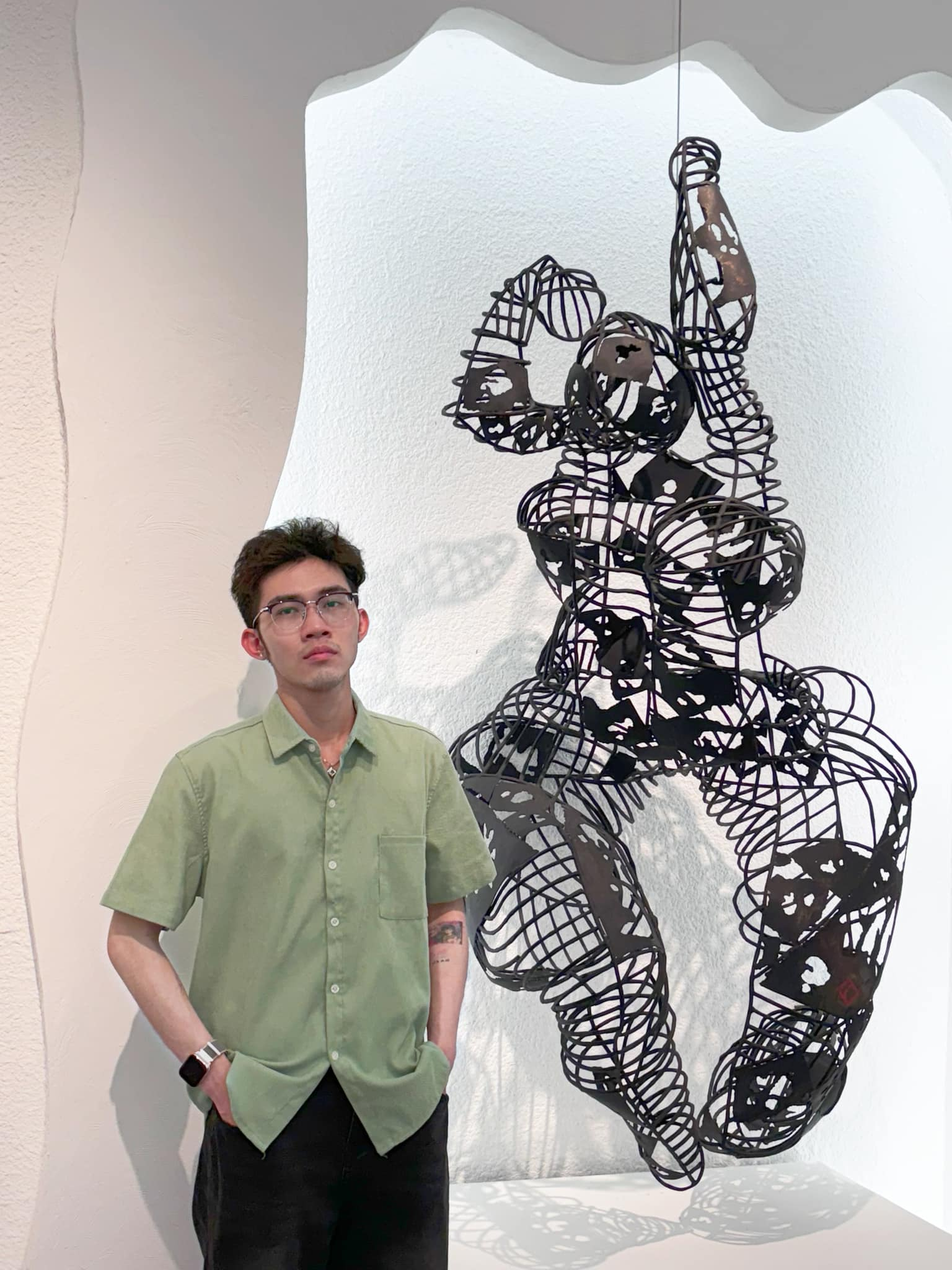 |
Khai Dan today. *Photo provided by subject* |
The American Psychiatric Association defines gender dysphoria as "deep psychological distress arising from the incongruence between physiological sex and internal gender identity. This constant suppression erodes mental health, forcing individuals to expend immense energy just to maintain basic life activities".
Global epidemiological data indicates this condition exists in every country. According to studies published in the US National Library of Medicine, approximately 25 million people worldwide identify as transgender. Self-reported rates of gender diversity range from 0,5% to 1,3% of the general population.
Data from the American Psychiatric Association also reveals that individuals with gender dysphoria face a high risk of anxiety, depression, sleep disorders, and social isolation. The rate of suicidal ideation among unsupported transgender individuals reaches over 40%, significantly higher than the general population.
Dan was unaware of these statistics during his adolescence. What he knew was a constant feeling of incongruence with what girls his age enjoyed, with his feminine birth name, and with the pronouns "this girl" or "that girl" that those around him used as a matter of course.
"My immediate solution then was simple: if someone misgendered me, I cut off contact. No explanations, no arguments," Dan shared.
In 10th grade, Dan decided to advocate for wearing a male uniform for the entire first semester. The school agreed. This marked the first time Dan realized that the external world, though slowly, could change.
Yet, small harms accumulated daily. Clinical Psychologist Master Vuong Nguyen Toan Thien, Professional Director of Lumos Psychological Counseling and Therapy Center, terms this "microaggression"—behaviors or words that deny identity, seemingly minor at first glance, but when repeated over time, cause cumulative damage.
"An individual with a male gender identity forced to live as female will constantly feel like they are playing a role instead of being themselves," he explained. "In the long term, they are prone to isolation, shame, and perpetual vigilance due to fear of judgment."
For Dan, this state persisted for years; outwardly, he studied and worked normally, but inwardly, he experienced a simmering exhaustion. "It was like wearing a mask 24/7," Dan described. "That was a major cause of my stress."
His only anchor during those years was a promise to himself: as long as he was alive, everything could be resolved. This simple mantra, while minimalist, was enough to keep him from crossing dangerous boundaries.
A turning point arrived when Dan decided to be honest with his family and close friends. He prepared for the worst: judgment, rejection, or cold silence. Instead, they embraced him. This acceptance was not merely emotional; it had a scientific basis. A study published in the journal Pediatrics in 2019 showed that transgender youth who were accepted by at least one family member had significantly lower rates of depression and suicidal ideation compared to those who lacked such support.
"There was no longer any reason to hide in a false shell," Dan stated.
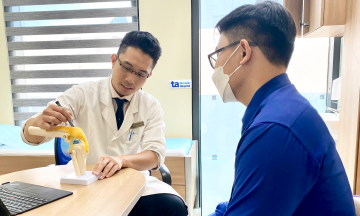
The medical intervention phase, according to Dan, proved to be the easiest part of his journey. Upon starting oral testosterone hormone therapy and regular injections, Dan's body changed weekly. His voice gradually deepened, note by note, "like an instrument being tuned to the correct pitch."
Fat redistributed, facial features became more angular, muscles developed, and body hair thickened, aligning with a male physique. His menstrual cycle completely ceased, marking a significant step in synchronizing his physiological form with his male gender identity.
 |
Khai Dan states he is happy and satisfied with his current appearance. *Photo provided by subject* |
Now, looking in the mirror and seeing the man before him, Dan feels fulfilled. "Find a reason strong enough to step out. As long as that reason is meaningful enough to you, you will have the strength to see it through," Dan expressed.
My Y