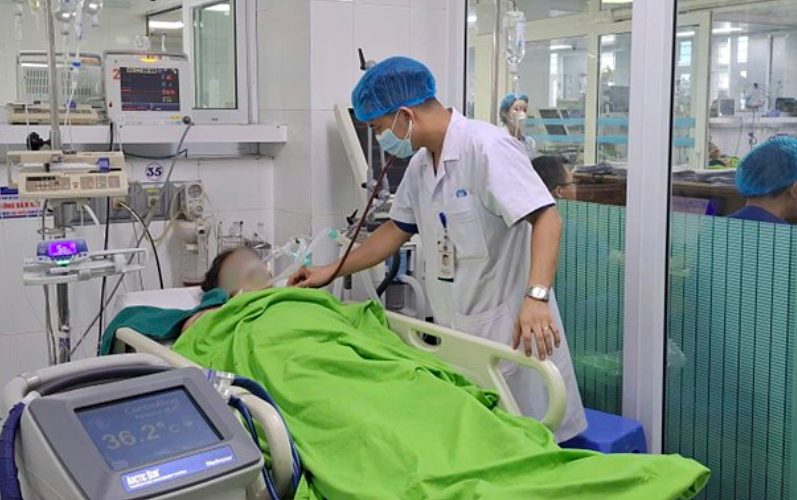
On 25/5, Dr. Nguyen Minh Tien, Deputy Director of City Children's Hospital, reported the patient arrived unconscious, with dry lips, sunken eyes, rapid breathing, bluish extremities, and unmeasurable blood pressure. Doctors intubated him for respiratory support, administered fluids to combat shock, cooled his body, and corrected electrolyte and acid-base imbalances.
The teenager played soccer at a local club from 17h to 20h daily, with additional sessions on weekend mornings. Around 9h on the morning of his admission, while playing soccer under the hot sun, he suddenly felt fatigued, sweated profusely, and then collapsed. He was rushed to a nearby health station with altered consciousness, requiring oxygen support and intravenous fluids before being transferred to the hospital.
Lab results revealed severe metabolic acidosis and multi-organ damage. Liver enzymes were elevated tens of times above normal levels, kidney function was impaired, and his pancreas was damaged. Critically, muscle breakdown indicators were extremely high, signaling severe rhabdomyolysis—a dangerous complication that can lead to acute kidney failure if not promptly managed.
The patient was diagnosed with severe heatstroke, complicated by rhabdomyolysis and acute liver, pancreas, and kidney damage. Despite intensive resuscitation, his condition worsened, with a prolonged fever of 39-40 degrees Celsius, elevated systemic inflammatory markers, and a high risk of multi-organ failure.
Doctors administered 12 liters of electrolyte fluids to stabilize his hemodynamics, along with vasopressors, mechanical ventilation, and continuous hemodialysis to support toxin elimination, control inflammation, and protect organ function. After nearly three weeks of intensive treatment, the teenager gradually recovered, was weaned off the ventilator, regained consciousness, and saw his liver, kidney, and pancreas functions return to normal before being discharged.
 |
Intensive care treatment for the patient. Photo: Quynh Tran
Doctors warn that heatstroke can occur during prolonged high-intensity outdoor activity in hot weather, especially in summer. They advise exercising in cool environments, staying adequately hydrated, avoiding overexertion in direct sunlight, and taking regular breaks.
If outdoor activity is unavoidable, limit exercise duration and rest in the shade every 20-25 minutes. Stop immediately if unusual symptoms appear, such as severe fatigue, dizziness, headache, nausea, or unusual sweating.
Proper first aid for sunstroke and heatstroke
First aid steps for sunstroke and heatstroke. Video: Hoan My Saigon Hospital
Le Phuong