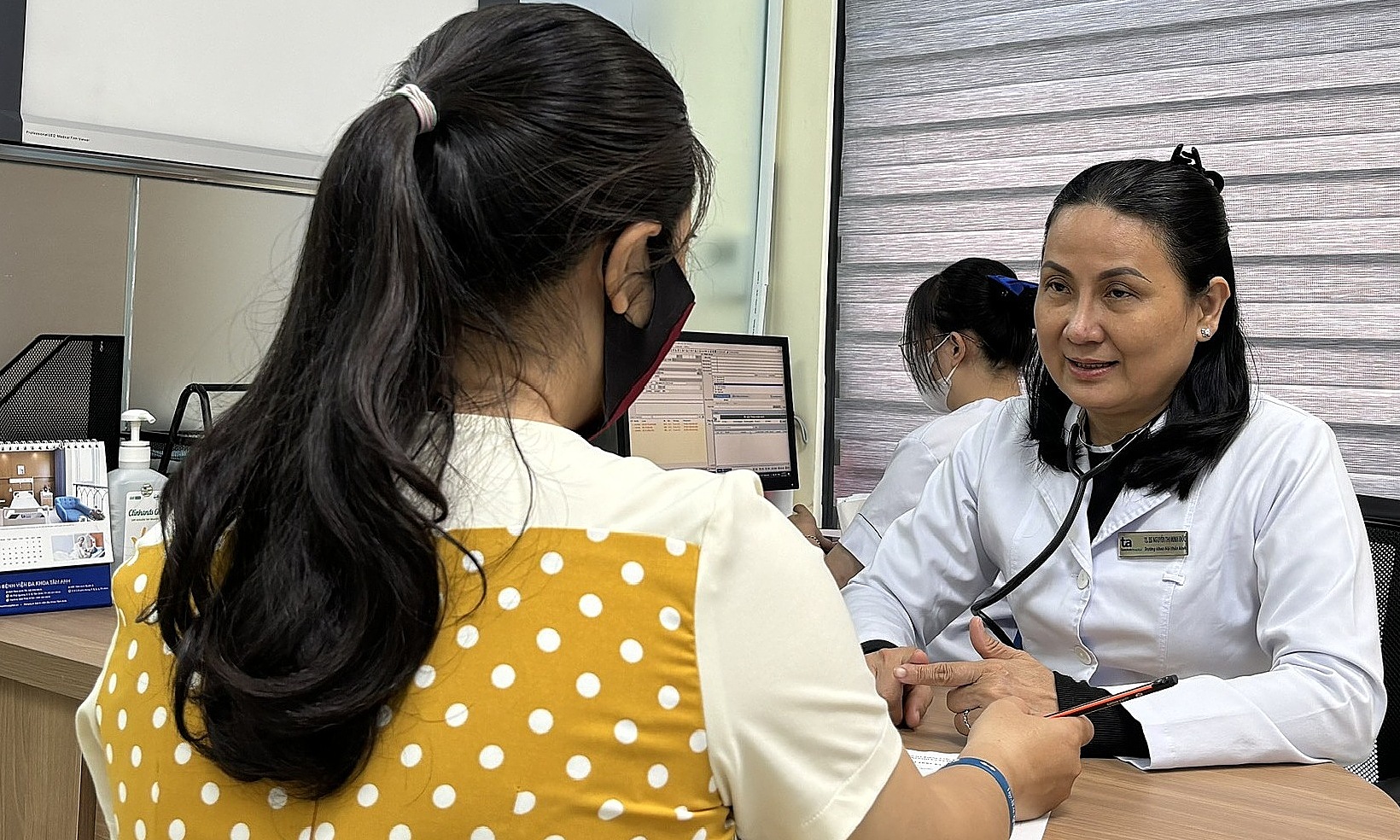
At nearly 25 weeks into her twin pregnancy, Ms. Nhu, 32, experienced severe lower abdominal pain and contractions, leading to her transfer to Tam Anh General Hospital, Hanoi. She had undergone cervical cerclage at the 23rd week at another hospital. Upon examination, Doctor Hoang Ngoc Anh, from the Obstetrics and Gynecology Center, confirmed her cervical length was only 21 mm, significantly shorter than the normal 30-50 mm, along with vaginitis, indicating threatened preterm labor. A birth at this stage posed severe risks for the babies, including respiratory distress, infection, brain hemorrhage, and challenges in their development.
Doctors immediately initiated measures to prolong the pregnancy. Nhu received vaginal progesterone and uterine relaxants to soothe uterine smooth muscles and reduce contractions, thereby mitigating the risk of preterm labor. Concurrently, her vaginitis was treated, as this condition can lead to cervical inflammation, potentially shortening or weakening the cervix and increasing preterm birth risk.
After four weeks of hospitalization, Nhu experienced amniotic fluid leakage. Doctor Ngoc Anh explained that this complication heightens the risk of preterm birth and amniotic infection, directly jeopardizing the health of both mother and fetuses. To manage infection risk, doctors administered antibiotics and lung maturation medication for the fetuses. By the 31st week of pregnancy, with a rising trend in infection, the medical team decided to perform a cesarean section.
The two babies were born at 31 weeks and five days, weighing 1,6 kg and 1,5 kg respectively, and exhibited good respiration. Following intensive care in the Neonatal Intensive Care Unit (NICU), their health steadily improved. They began breathing independently, maintained stable body temperature, and gained weight consistently. After seven weeks, both babies were discharged from the hospital, weighing 3,1 kg and 3 kg.
 |
Nhu's two children. Photo: Tam Anh General Hospital |
Doctor Ngoc Anh emphasized that twin pregnancies are inherently high-risk compared to single pregnancies. Mothers face increased chances of complications such as threatened preterm labor, preterm birth, preeclampsia, gestational diabetes, and postpartum hemorrhage. The fetuses themselves are at higher risk of low birth weight and respiratory distress. Therefore, women expecting twins must adhere to scheduled prenatal check-ups and follow medical guidance throughout their pregnancy. Any signs like abdominal pain, contractions, unusual vaginal discharge, amniotic fluid leakage, or changes in fetal movement require immediate medical consultation.
Van Anh
| Readers can submit questions about obstetrics and gynecology here for doctors to answer. |