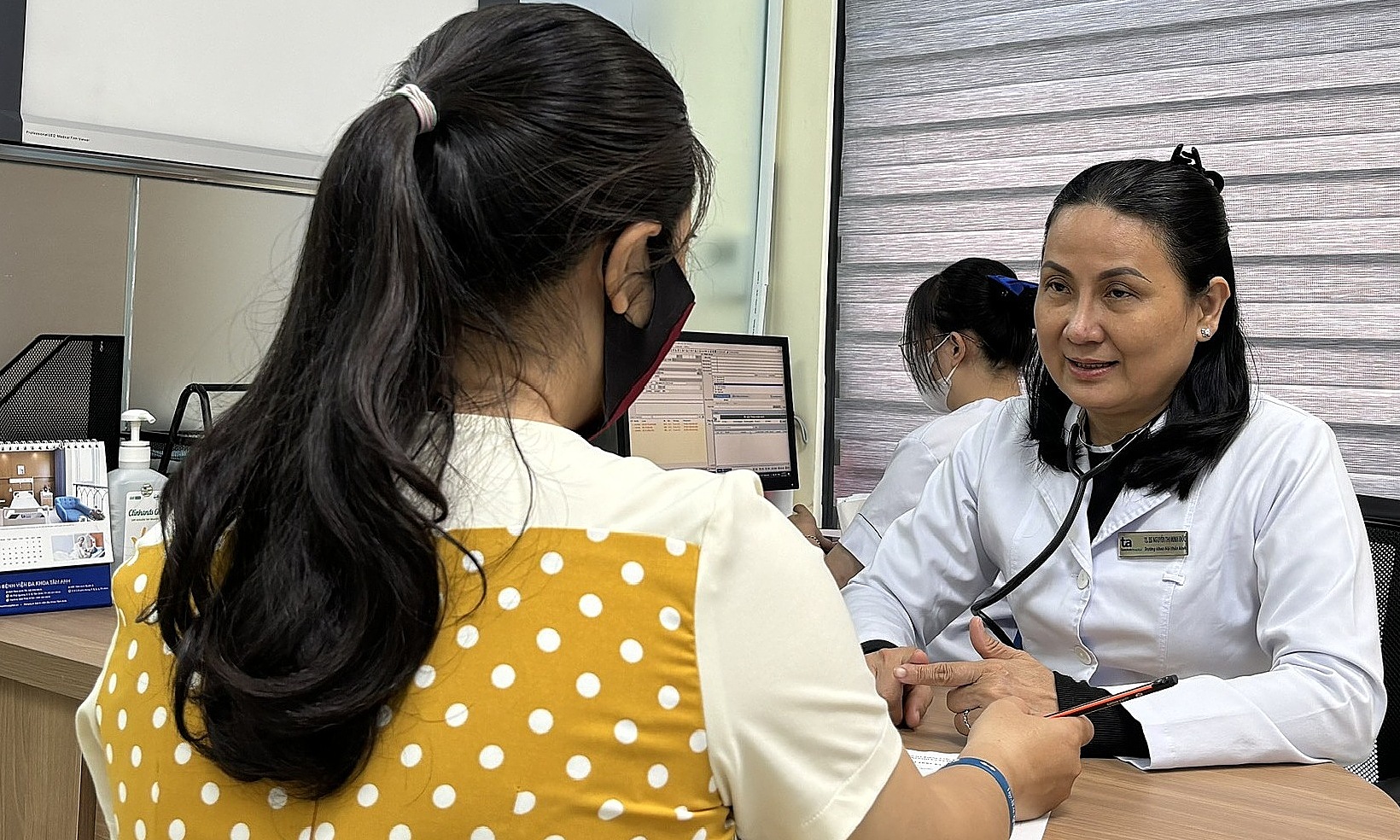
Lan, an accountant, spent 8-10 hours daily sitting. Over the past two years, she experienced calf tension that self-massage did not relieve. Recently, prominent blue veins appeared under her skin, accompanied by burning, numbness when standing for extended periods, and ankle swelling.
Doctor Nguyen Thu Trang, a specialist in cardiology and deputy head of the Cardiology Department at Tam Anh Cau Giay General Clinic, diagnosed Lan with advanced great saphenous vein insufficiency in her left leg. This condition involves the superficial vein, running from the inner ankle along the inner calf and thigh to the groin, becoming dilated with weakened valve function.
Doctor Trang explained that prolonged sitting and inactivity increase pressure within the blood vessels, leading to gradual dilation of vein walls and weakened valves. When these valves function poorly, blood struggles to return to the heart and tends to pool in the legs.
Given the numerous symptoms impacting her daily life, doctors recommended an intervention to close the affected vein segment. Lan underwent treatment using a new generation 1940 nm wavelength endovenous laser. This minimally invasive and aesthetically pleasing procedure significantly reduces symptoms.
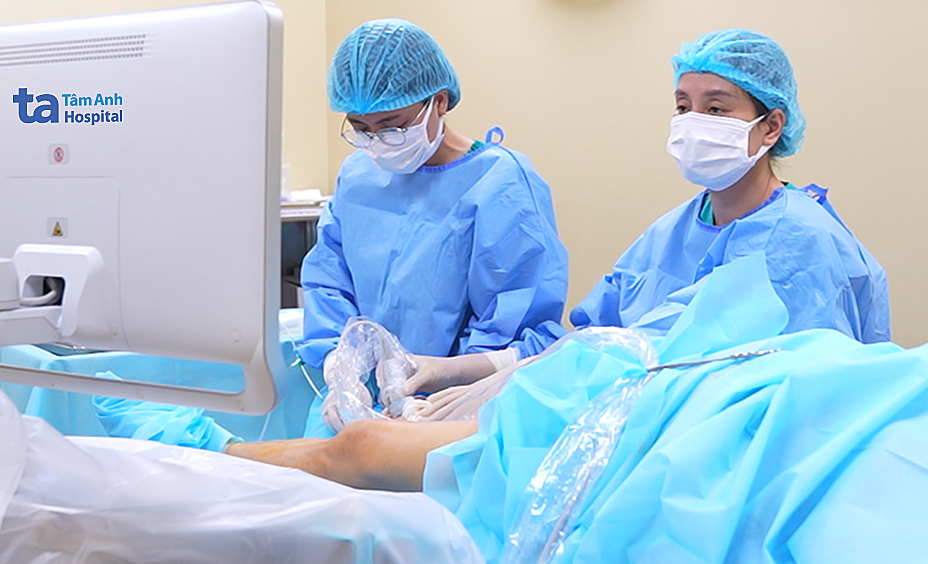 |
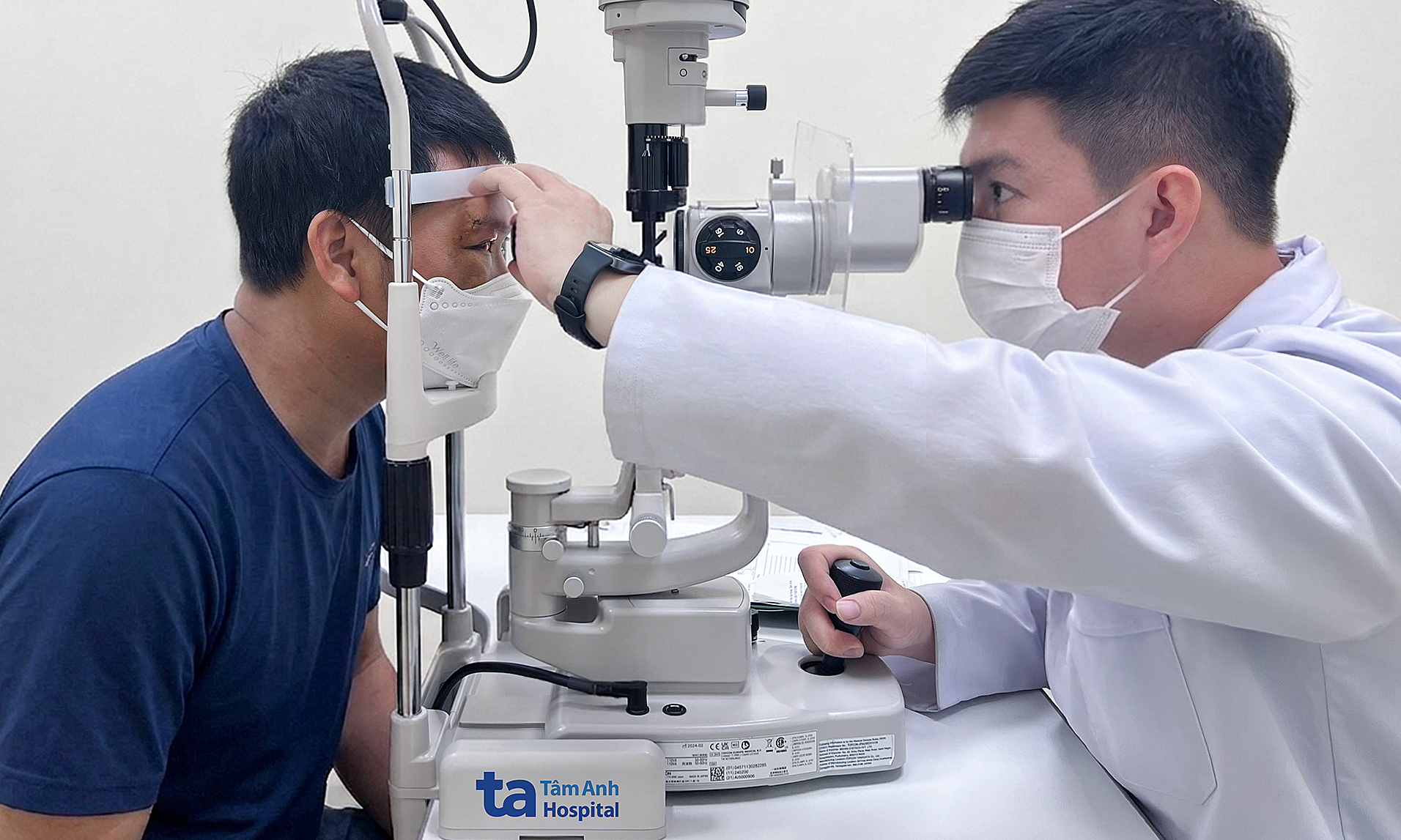
The medical team treats varicose veins using the 1940 nm wavelength endovenous laser method. *Photo: Tam Anh General Hospital*
Doctor Trang elaborated that the 1940 nm wavelength endovenous laser is a new generation technology. It boasts higher water absorption than previous wavelengths, allowing energy to focus primarily on the target vein wall. This enhanced focus improves vessel closure efficacy and minimizes damage to surrounding tissues, thereby reducing post-procedure pain.
The new generation burner tip features a beam emission area of approximately 4 mm. This design ensures uniform and stable energy distribution during treatment, optimizing vein occlusion effectiveness.
Following local anesthesia, the medical team inserted a small optical fiber into the insufficient vein. Thermal energy from the laser directly targets the vessel wall, causing the vein to contract and close, thus eliminating blood reflux. The procedure typically lasts 30-45 minutes per leg. Lan reported no pain, could walk immediately, and was discharged on the same day.
According to Doctor Trang, chronic lower limb varicose veins are common, frequently affecting individuals who stand or sit for extended periods or lead sedentary lifestyles. If left undetected and untreated, the condition can lead to symptoms such as numbness, heavy legs, leg swelling, visibly tortuous veins, and skin discoloration.
In its early stages, the condition is managed with conservative treatments, including lifestyle modifications, increased physical activity, compression stockings, or medication. However, when these measures prove ineffective, patients are recommended minimally invasive interventions such as endovenous laser, radiofrequency ablation (RFA), or biological glue injection.
Doctor Trang advises that individuals experiencing symptoms such as numbness, heavy legs, leg pain after prolonged standing, leg swelling, or visibly tortuous veins under the skin should seek medical attention.
By Ly Nguyen
*Patient's name has been changed
| Readers can submit questions about cardiovascular health here for doctors to answer |