Answer:
Pink eye (conjunctivitis) is a common condition affecting people of all ages. It is highly contagious and can spread rapidly within communities, often reaching epidemic proportions, especially during seasonal transitions. The condition occurs when the transparent membrane covering the white part of the eye and the inner surface of the eyelids (conjunctiva) becomes inflamed due to viruses, bacteria, or allergens.
Pink eye typically develops three to five days after exposure to the source. Symptoms include redness, a gritty or foreign body sensation, itching, watery discharge, excessive eye discharge, and eyelid soreness. These may be accompanied by fatigue, a mild fever, sore throat, cough, and swollen lymph nodes near the ear.
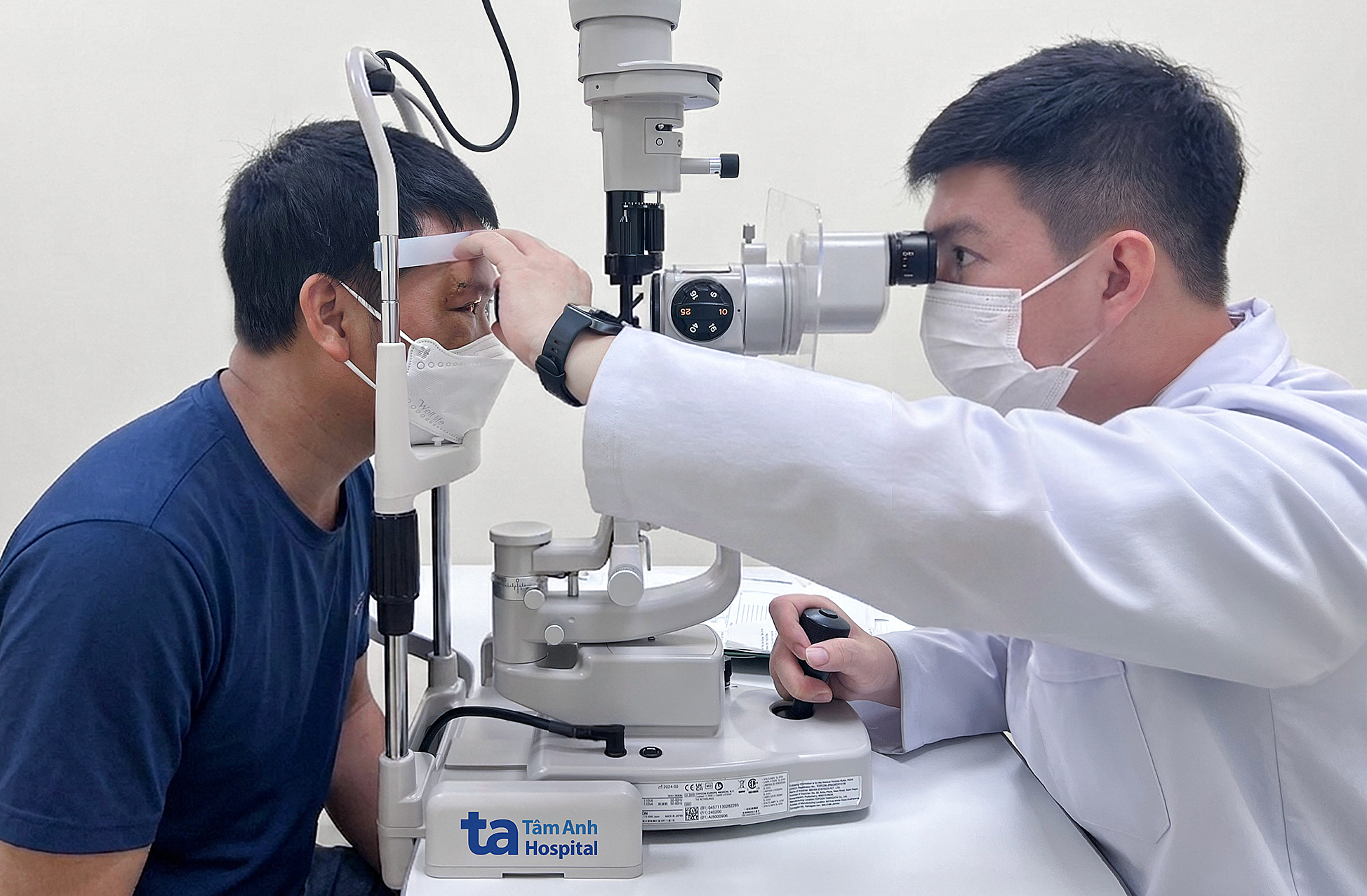 |
A doctor at Tam Anh General Hospital examining a patient's eye. Illustration: Courtesy of the hospital. |
Most cases of pink eye are benign and resolve on their own within seven to 14 days without lasting complications. However, if the condition persists and is not treated promptly, it can lead to serious complications such as corneal inflammation, ulcers, scarring, temporary vision loss, or even blindness.
The blurry vision, eye fatigue, and watery eyes experienced after pink eye may be related to superficial punctate keratitis or viral conjunctivitis with pseudomembrane formation. These lesions can cause temporary vision reduction, sometimes lasting for several weeks.
You should consult an ophthalmologist for timely diagnosis and treatment. This will help limit dangerous complications affecting your vision and prevent further spread of the infection.
In addition to medication prescribed by a doctor, patients should avoid touching or rubbing their eyes, maintain good eye hygiene, wash hands frequently, and avoid sharing towels or drinking glasses. Rinsing eyes and softening/cleaning discharge with physiological saline solution in the morning after waking or before applying eye drops can provide relief.
Staying hydrated, consuming plenty of green vegetables, and vitamin-rich fruits are beneficial. Supplementing with natural broccophane extract from broccoli can also boost thioredoxin synthesis. This protein acts as an antioxidant, protecting retinal and lens cells, supporting vision maintenance, reducing eye cell damage, and aiding rapid eye recovery after prolonged inflammation.
Doctor Hoang Quyet Tien
Medical Information Center
Tam Anh General Hospital, TP HCM
| Readers can send questions about ophthalmological conditions here for doctors to answer |