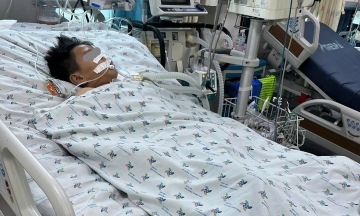
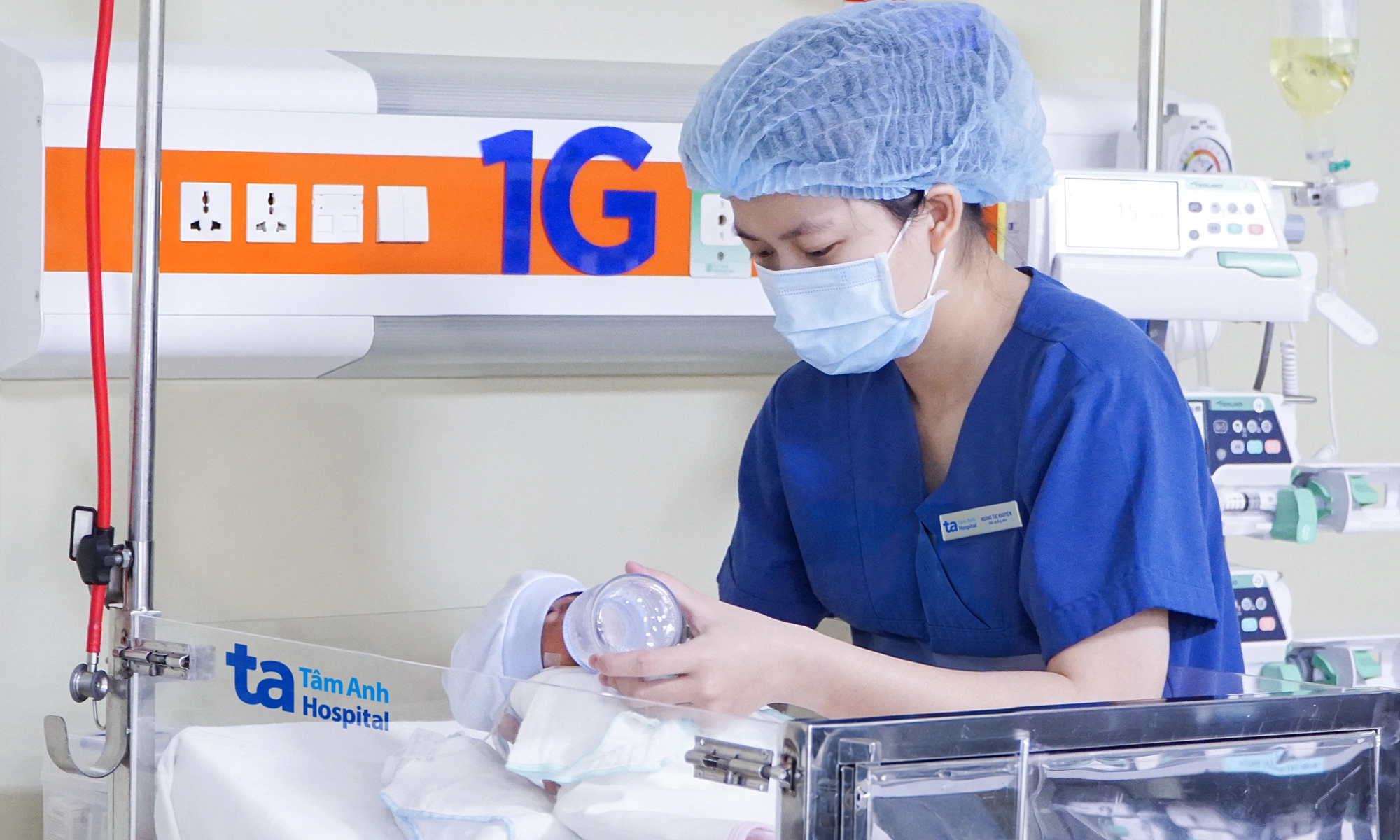
On 7/7, doctors at Hanoi Heart Hospital announced the patient’s health is improving. They are focusing on resuscitation, intravenous feeding, and preparing the child for oral feeding.
Previously, the patient was born in mid-June at 31 weeks gestation. He was transferred from Hanoi Children's Hospital to Hanoi Heart Hospital with severe respiratory failure, a lung infection, and multiple serious cardiovascular defects.
Diagnosis confirmed the baby had a ventricular septal defect, an atrial septal defect, a large patent ductus arteriosus, severe coarctation of the aorta, hypoplastic aortic arch, tricuspid regurgitation, and severe pulmonary hypertension.
Associate Professor Doctor Nguyen Sinh Hien, Director of Hanoi Heart Hospital, stated that without timely surgical intervention, the child would not survive.
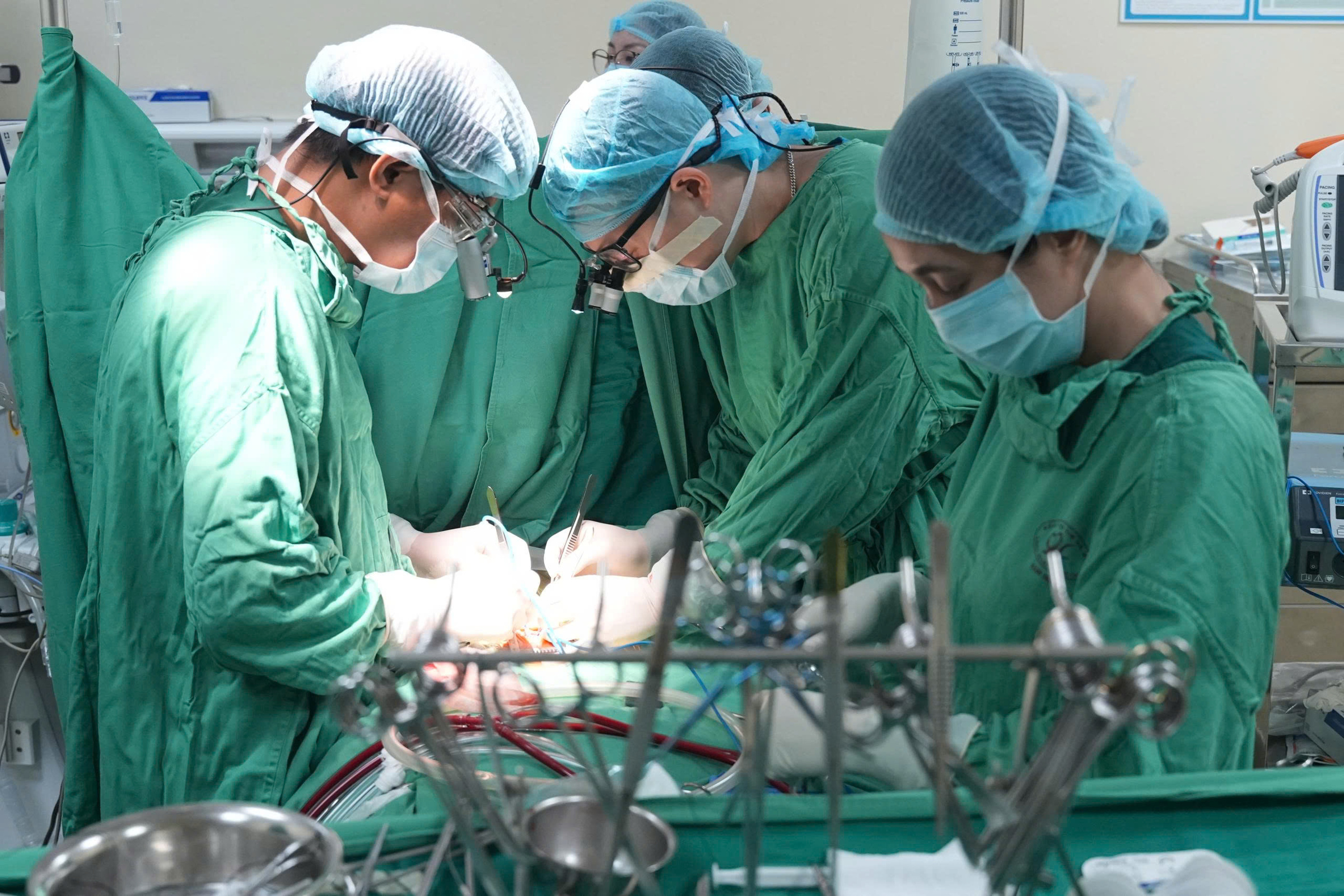 |
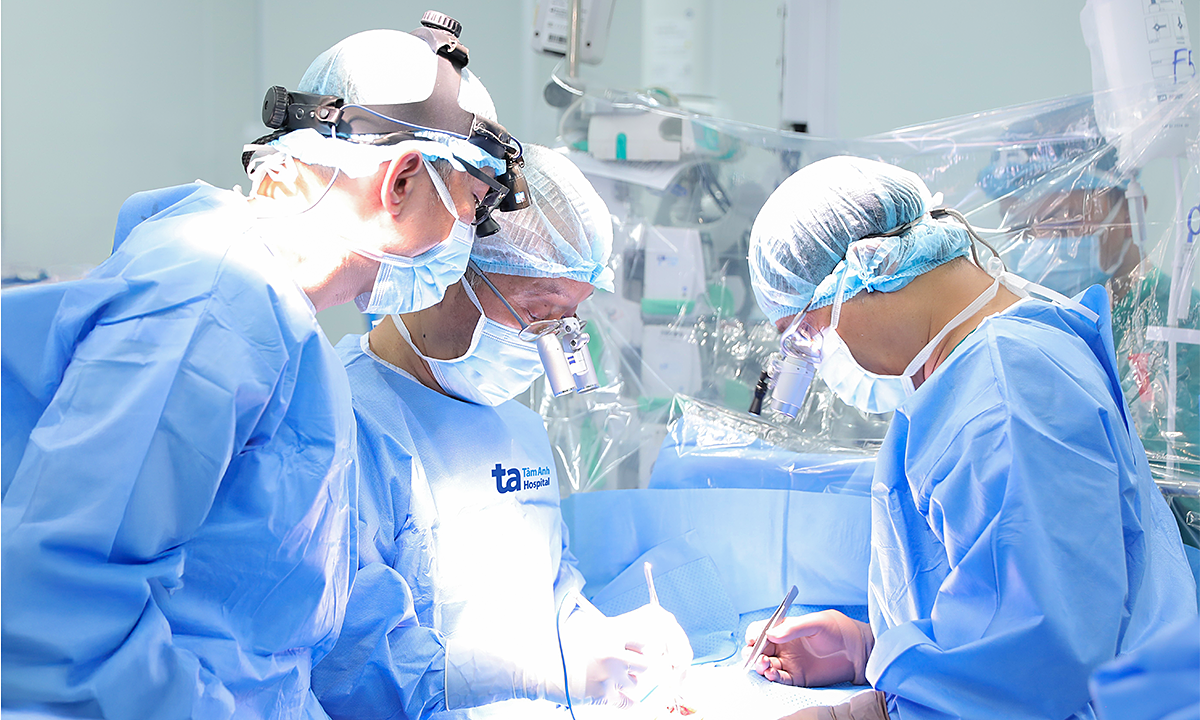
Doctors perform heart surgery on the patient. Photo: Quang Hung.
Due to complex damage simultaneously affecting both the aortic arch and isthmus, the team decided to perform a complete repair in one single surgery instead of two stages to minimize risks.
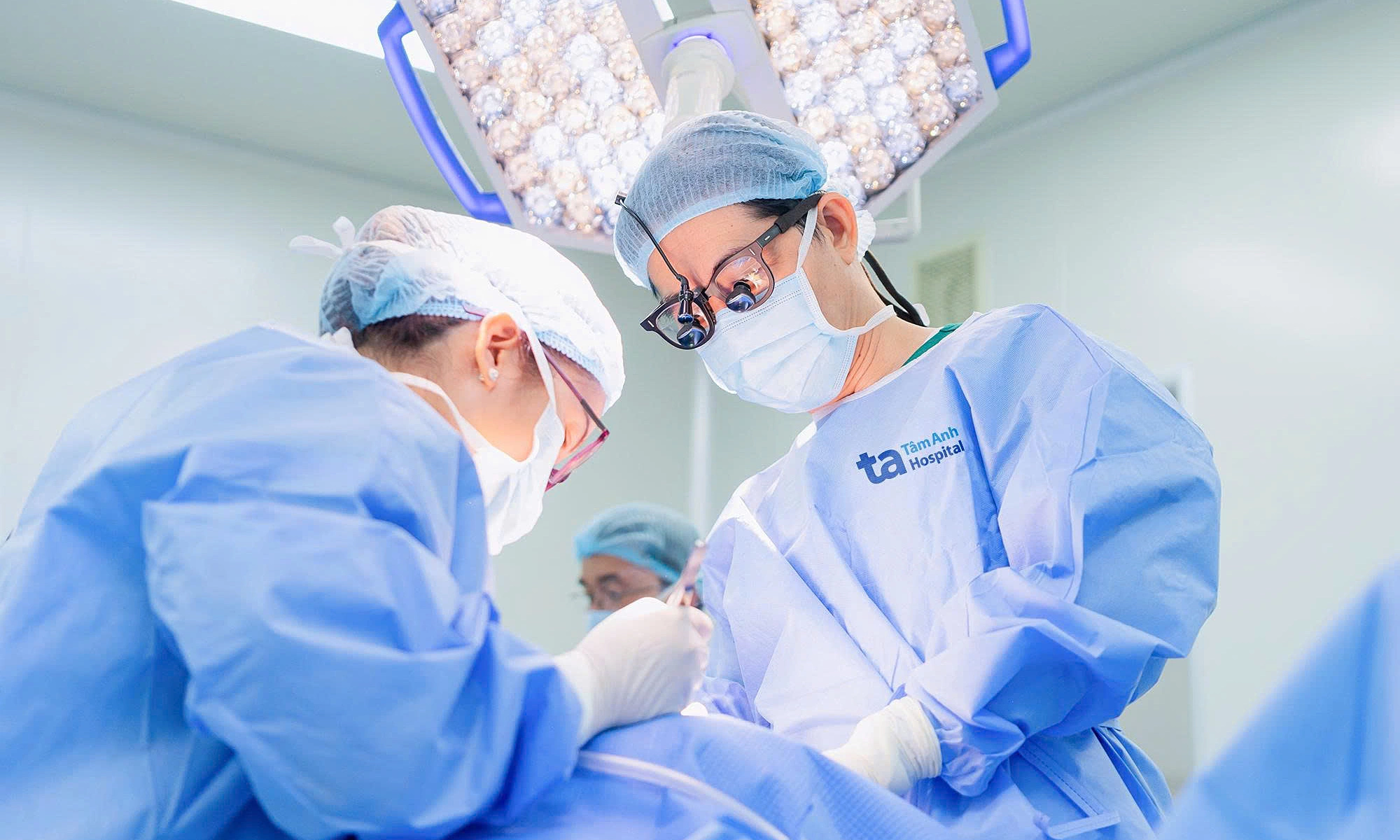
For over 5 hours, surgeons patched the heart defects and reconstructed the aortic arch and isthmus. To protect the patient’s body, doctors used deep hypothermia and selective cerebral perfusion techniques.
Doctor Nguyen Dang Hung, Head of the Pediatric Surgery Department, stated the surgery faced immense challenges in using an extracorporeal circulation machine for a child weighing only 1,5 kg. Due to the baby’s very low total blood volume, blood dilution and anticoagulant use carried risks of brain hemorrhage, electrolyte imbalance, or internal organ damage.
Additionally, the tissue structures of premature infants are fragile, prone to tearing and bleeding after surgery, demanding extremely precise surgical maneuvers. After the critical surgical phase, the patient continued close monitoring in the Pediatric Surgical Intensive Care Unit to control infection and restore respiratory function. Prolonged mechanical ventilation since birth had weakened the baby’s respiratory muscles, requiring special care to adapt to the newly reconstructed heart structure.
"The child’s current prognosis is good. Doctors are continuing resuscitation, intravenous feeding, and preparing the child for oral feeding," Doctor Hung said. He added that open-heart surgery simultaneously addressing multiple heart lesions in a 1,5 kg premature infant is rare worldwide.
Le Nga