On 29/5, Doctor Nguyen Thang Nhat Tue, Head of the Emergency Department at Gia An 115 Hospital, stated that a patient born in 1966 was admitted for urgent intervention after suffering severe chest pain and collapsing right outside his clinic last night.
According to Doctor Tue, the man rode his motorbike to the clinic feeling tired and experiencing chest pain, then suddenly collapsed. With many years of experience in emergency care, Doctor Tue immediately recognized this as a potentially life-threatening situation.
At the clinic, the patient was reassured and underwent an emergency electrocardiogram. The results showed he had a severe anterior wall myocardial infarction, a condition that could lead to cardiac arrest and sudden death at any moment if not treated promptly.
Fortunately, the clinic always keeps emergency equipment readily available, including an electrocardiogram machine, monitor, oxygen, coronary vasodilators, antiplatelet medications, anticoagulants, and statins – a professional habit for emergency doctors. The patient received on-site emergency medication, similar to hospital emergency department procedures. After being administered nitroglycerin, the man gradually opened his eyes, responded, and was able to converse.
"When he regained consciousness, the first thing he asked was for help calling his neighbors to close his house door, as he was in too much pain to lock it himself," Doctor Tue recounted, adding that the patient lives alone, without a wife, children, or relatives nearby.
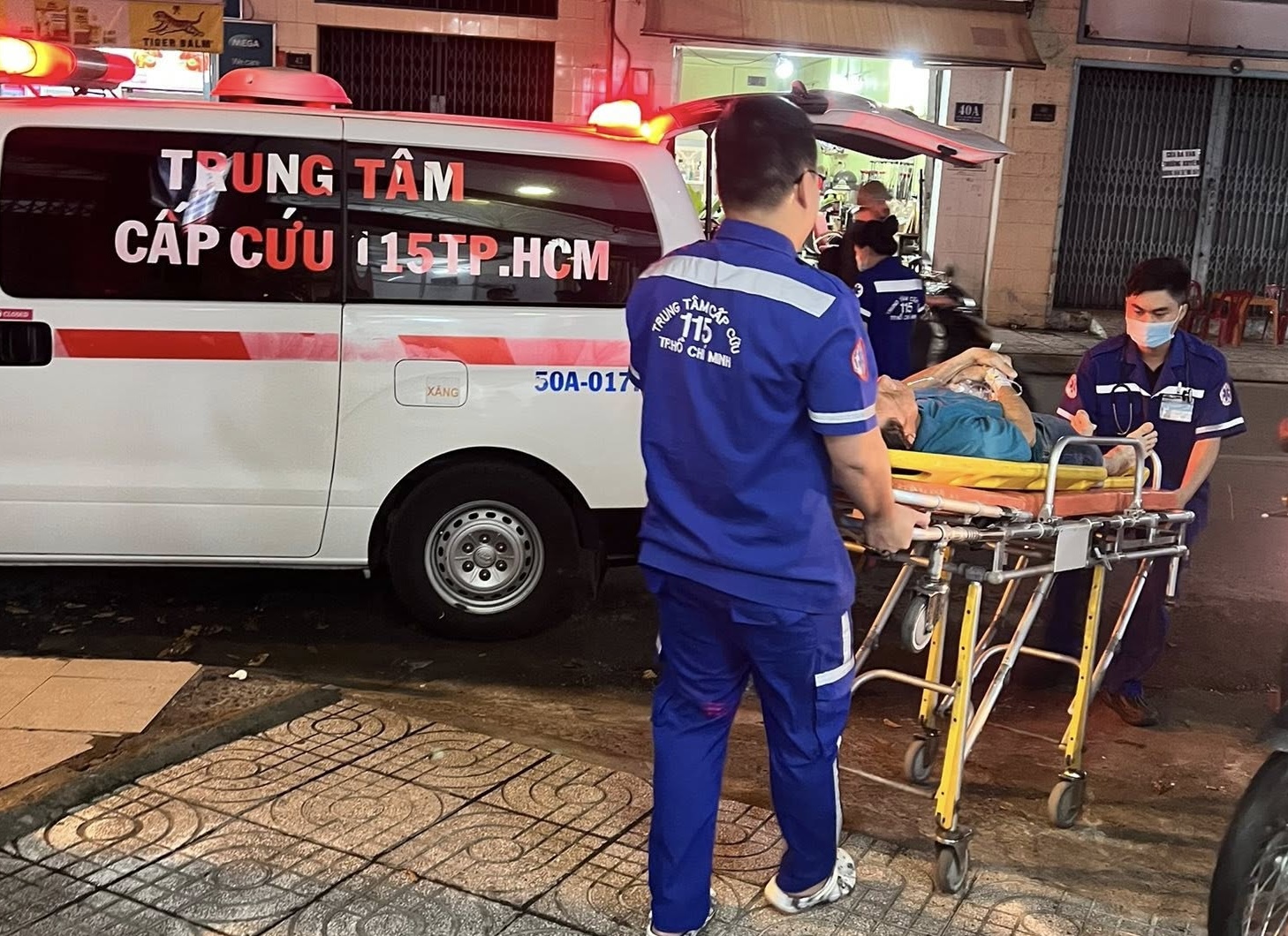 |
The staff from TP HCM 115 Emergency Center transported the patient to the hospital. Photo: Doctor provided
Doctor Tue also contacted colleagues at the 115 Emergency Center to transfer the patient to Gia An 115 Hospital for urgent coronary intervention. Doctor Duong Duy Trang, Deputy Director and Head of the hospital's Cardiology Department, directly performed the intervention. Upon learning of the man's circumstances – living alone, without health insurance, and facing financial difficulties – the team provided some intervention supplies free of charge.
By this morning, the patient was conscious, his health had improved, and he continuously expressed gratitude to the medical staff.
Acute myocardial infarction is a leading cause of hospitalization and death globally and in Vietnam. Many patients with acute myocardial infarction often die in the first few hours before reaching a hospital due to complications related to arrhythmias.
Typical symptoms include chest pain lasting over 20-30 minutes, accompanied by shortness of breath, sweating, nausea, or extreme fatigue. Some cases do not present with clear chest pain but only with shortness of breath, epigastric pain, or altered consciousness.
Doctors recommend that when unusual symptoms appear, people should seek medical attention as soon as possible because the "golden hour" for treatment lies within the first few hours after onset. Older adults, smokers, individuals with hypertension, diabetes, dyslipidemia, overweight or obesity, or existing coronary artery disease are considered high-risk groups. Effective control of risk factors plays a pivotal role in preventing myocardial infarction.
"Emergency medicine involves significant pressure, but sometimes just correct and sufficient treatment in the first few minutes can save a life," Doctor Tue shared.
Le Phuong