A newborn girl, diagnosed prenatally with three rare and severe congenital heart defects, underwent successful corrective surgery at Tam Anh General Hospital TP HCM just three days after her birth. The complex condition, identified at the 14th week of pregnancy, included transposition of the great arteries (where the two main arteries originating from the heart were swapped), hypoplastic aortic arch, a single coronary artery (instead of two main branches), a large atrial septal defect, and a large patent ductus arteriosus. Doctor Nguyen Minh Tri Vien, Cardiac Surgery Consultant at the Cardiovascular Center, stated, "Three heart defects appearing simultaneously is rare; world medical literature has not fully documented such cases."
The baby is the daughter of Ms. Tue, 39, conceived through in vitro fertilization. Doctor Nguyen Pham Thuy Linh from the Department of Congenital Heart Disease, Cardiovascular Center, collaborated with the Obstetrics and Gynecology team to meticulously manage the pregnancy and provide psychological support to the expectant mother. Ms. Tue received nutritional guidance to help the fetus gain weight through each stage. "Our priority was to ensure the fetus reached 3 kg or more," Doctor Linh said, highlighting this as the ideal weight for major heart surgery in infants with congenital heart disease.
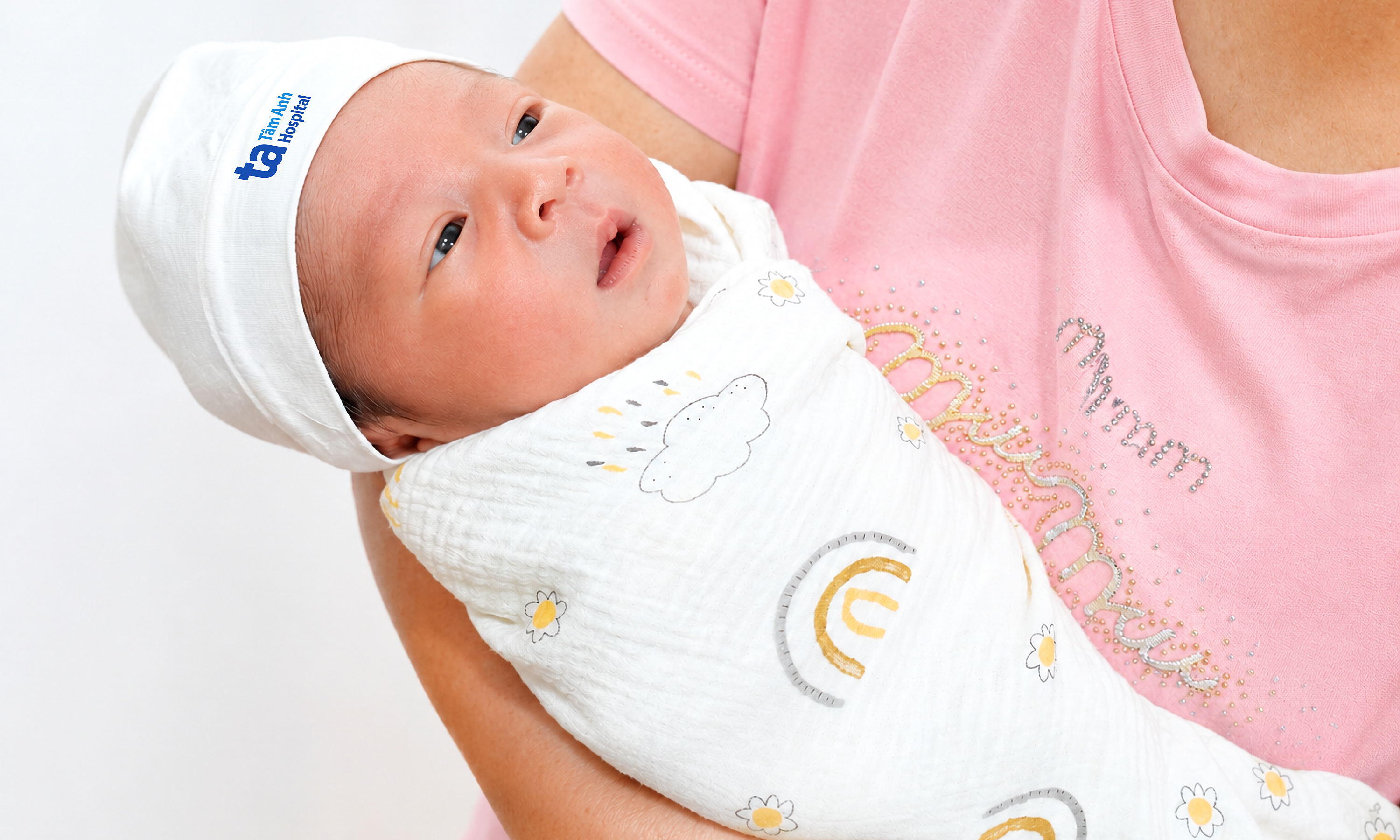
Ms. Tue had monthly prenatal check-ups. By the 39th week, the team assessed that the fetus had reached the target weight, and a planned caesarean section was performed to optimally control the disease progression after birth. The baby girl was born weighing 3,2 kg, with pale skin, and received warming and respiratory support immediately in the delivery room, followed by special care.
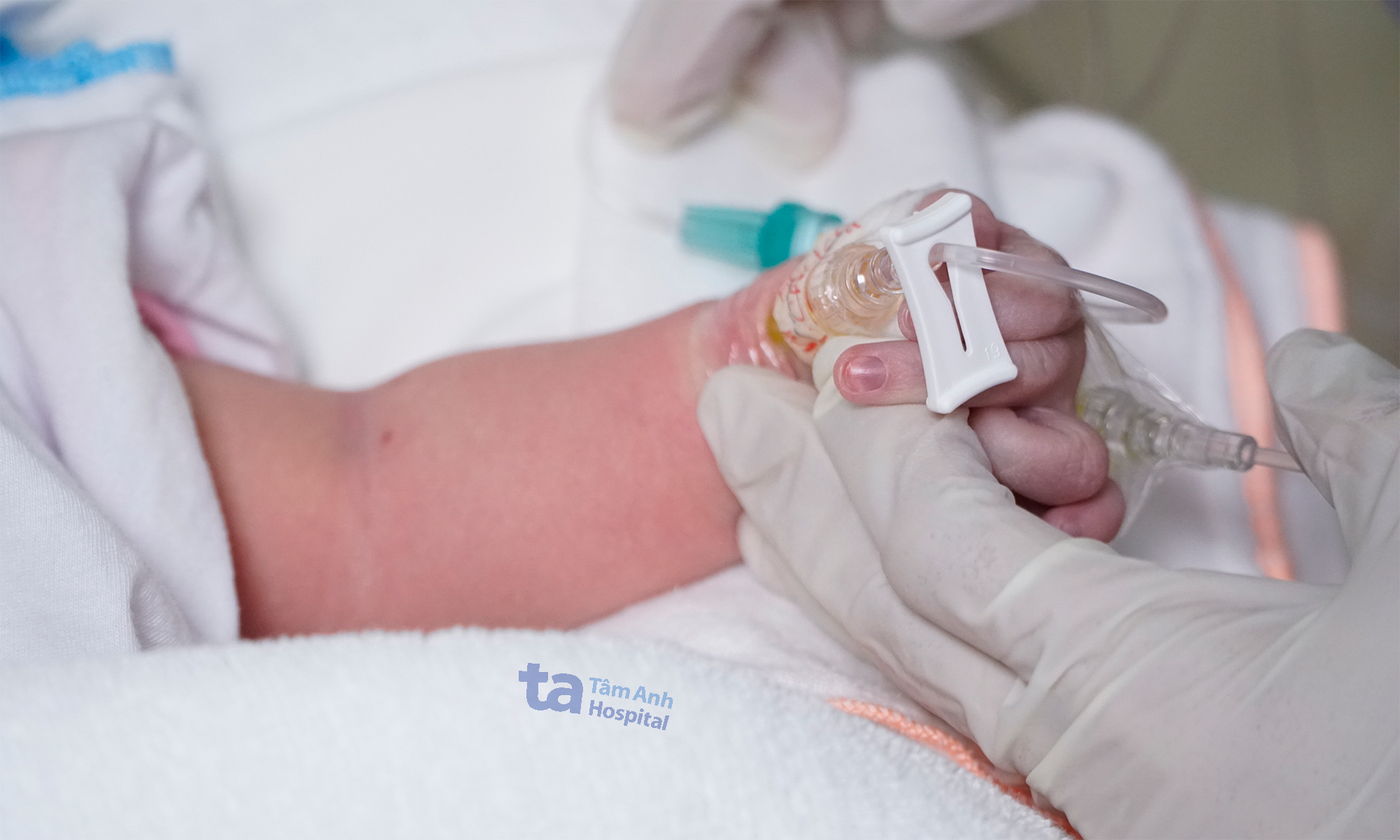 |
The baby received care at the neonatal intensive care unit (NICU) before surgery to repair heart defects. *Photo: Tam Anh General Hospital*. |
Doctor Cam Ngoc Phuong, Director of the Neonatal Center, reported a significant drop in the patient's blood oxygen level after birth. The medical team administered medication to maintain the patent ductus arteriosus and reduce aortic coarctation, ensuring sufficient oxygen supply to the body while awaiting heart surgery. The baby received non-invasive respiratory support (continuous positive airway pressure - CPAP) and was fed milk via a gastric tube. Doctors performed echocardiograms and continuously monitored oxygen saturation (SpO2) to control the patient's vital functions.
The medical team determined the third day after birth was the "golden time" for the operation. The patient's condition was unstable; any delay would risk the left ventricle collapsing, making surgical repair almost impossible. "This was an arterial switch operation combined with aortic arch reconstruction for the youngest patient at Tam Anh Hospital," Doctor Tri Vien explained. The baby's heart, approximately 3 cm in size, presented a challenge due to its tiny vascular system. The single coronary artery, crucial for supplying 100% of blood to the heart muscle, measured only about 1 mm in diameter.
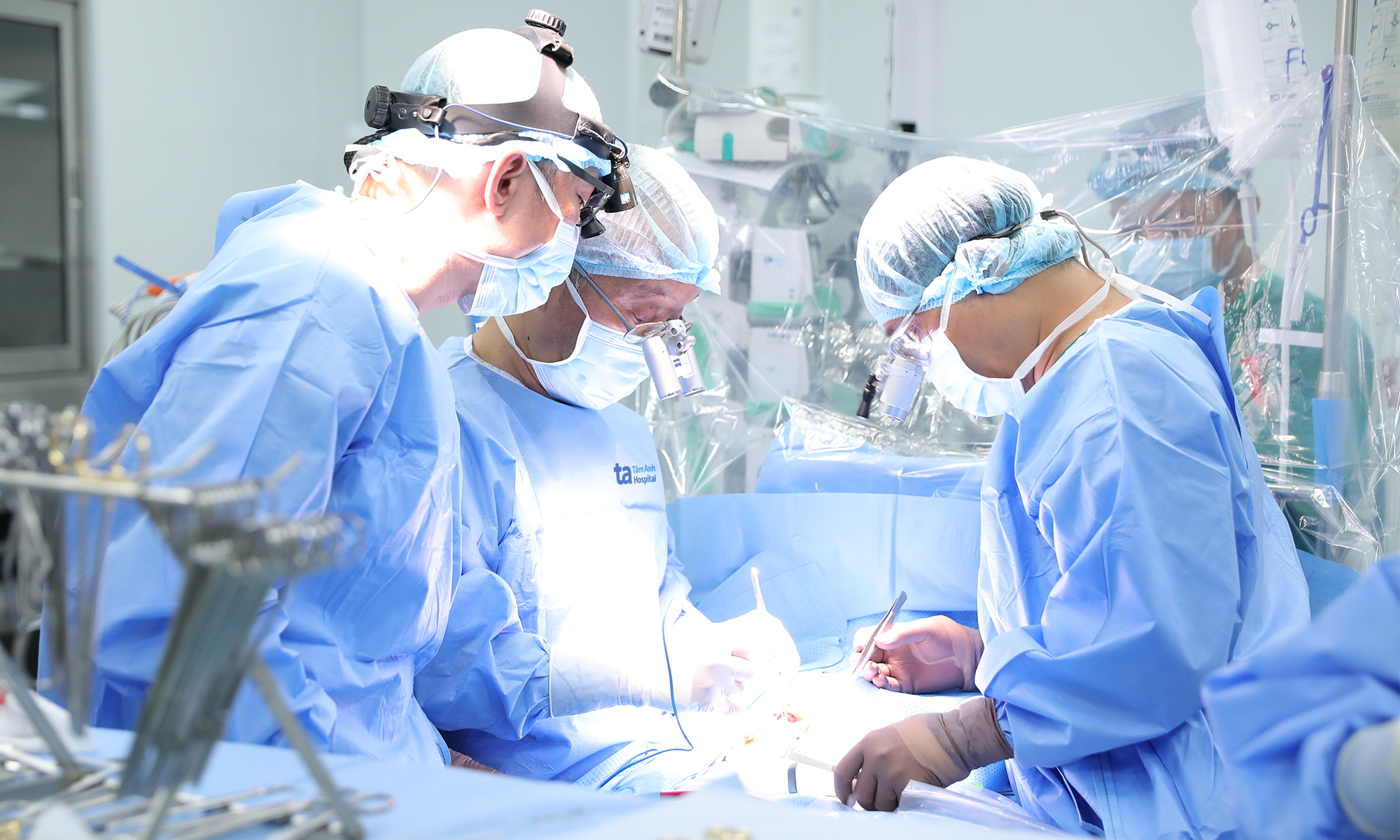 |
Doctor Vien (center) and the team performing surgery on the patient. *Photo: Tam Anh General Hospital*. |
During the intricate procedure, the team meticulously repositioned the coronary artery to its correct anatomical location, ensuring the blood vessel did not twist or kink. They then reconstructed the aortic arch, repositioned the great arteries, and closed both the atrial septal defect and the patent ductus arteriosus. Each suture required extreme precision to prevent future bleeding or vascular narrowing.
Following the surgery, the baby received intensive care to prevent postoperative complications and support essential vital functions. Echocardiogram results confirmed normal heart function and the absence of cardiac arrhythmia. The baby soon breathed independently, fed well, and her weight increased to 3,5 kg. She was subsequently discharged and scheduled for regular follow-up appointments.
Ngoc Chau
*Character name has been changed*.
Readers can submit questions about cardiovascular disease here for doctors to answer.