Doctor Le Phuc Lien, Head of the Female Urology Unit at the Urology - Nephrology - Andrology Center, Tam Anh General Hospital TP HCM, explained that Ms. Ly's urinary leakage was a result of radiation therapy to her abdominopelvic region two years prior at another hospital. This treatment caused damage to the vaginal-bladder tissue. Prolonged urethral catheterization for urine drainage also led to significant discomfort, pain, infection, and urinary tract complications.
Doctor Lien initially recommended a suprapubic cystostomy to drain urine, reducing pressure and pain in the vaginal and urethral areas and limiting complications. However, a vesicovaginal fistula is a complex injury, as the pelvic tissues are often inflamed, adhesive, fibrotic, and poorly vascularized, resulting in a very low capacity for self-healing. After one month of observation, Ms. Ly's condition did not improve. Consequently, doctors opted for robotic-assisted laparoscopic fistula repair using the Da Vinci Xi robot to minimize the risk of recurrence.
 |
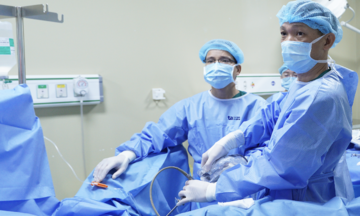
The surgical team performs robotic-assisted surgery for Ms. Ly's vesicovaginal fistula using the Da Vinci Xi robot. Photo: Tam Anh General Hospital |
The surgical team performs robotic-assisted surgery for Ms. Ly's vesicovaginal fistula using the Da Vinci Xi robot. Photo: Tam Anh General Hospital
The robotic system enabled doctors to precisely access the fistula from multiple directions: from outside into the bladder and from the abdominal cavity to the affected area. Four robotic arms assisted in dissecting inflammatory adhesions, completely excising the fistula margins, and removing surrounding fibrotic tissue. The bladder and vagina were then sutured separately.
Post-surgery, Ms. Ly recovered well, experiencing little pain, and her urinary leakage was controlled. Four days later, she was discharged. Doctors scheduled regular follow-up appointments to monitor scar healing, evaluate bladder function, and detect early signs of recurrence.
Vesicovaginal fistula is a severe complication that impacts women's physical and mental health, as well as their daily lives. Causes can include obstetric trauma, pelvic surgery, infection, congenital malformations, malignancies, or cancer treatment involving surgery and radiation therapy.
According to Doctor Lien, in its early stages, the condition is easily mistaken for common gynecological infections, leading to delayed diagnosis and treatment. If not treated promptly, it can result in chronic infections, sexual dysfunction, severe psychological distress, and complicated pelvic anatomical structures. Robotic-assisted repair of vesicovaginal fistula using the Da Vinci Xi robot is an optimal choice for complex, recurrent cases, or those difficult to access with traditional surgery, promoting faster recovery, less pain, and minimized complications for patients.
Ha Thanh
*Patient's name has been changed