On 7/7, a representative from the Central Hospital for Tropical Diseases announced that the patient's health has stabilized after undergoing two major surgeries. The patient was initially admitted with a diagnosis of hepatocellular carcinoma and was scheduled for liver resection. During a pre-operative endoscopy of the esophagus and stomach to screen for chronic liver complications, doctors unexpectedly discovered one abnormal mucosal area in the esophagus. Biopsy results confirmed the patient had also developed early-stage esophageal squamous cell carcinoma.
Dr. Dang Hoang Quoc, from the Center for Hepato-Biliary, Digestive, and Oncological Surgery, identified this as a particularly dangerous case, as the two malignant tumors appeared independently, not due to metastasis. Because the patient had undergone liver resection two months prior, his weakened state made the subsequent esophageal surgery more challenging.
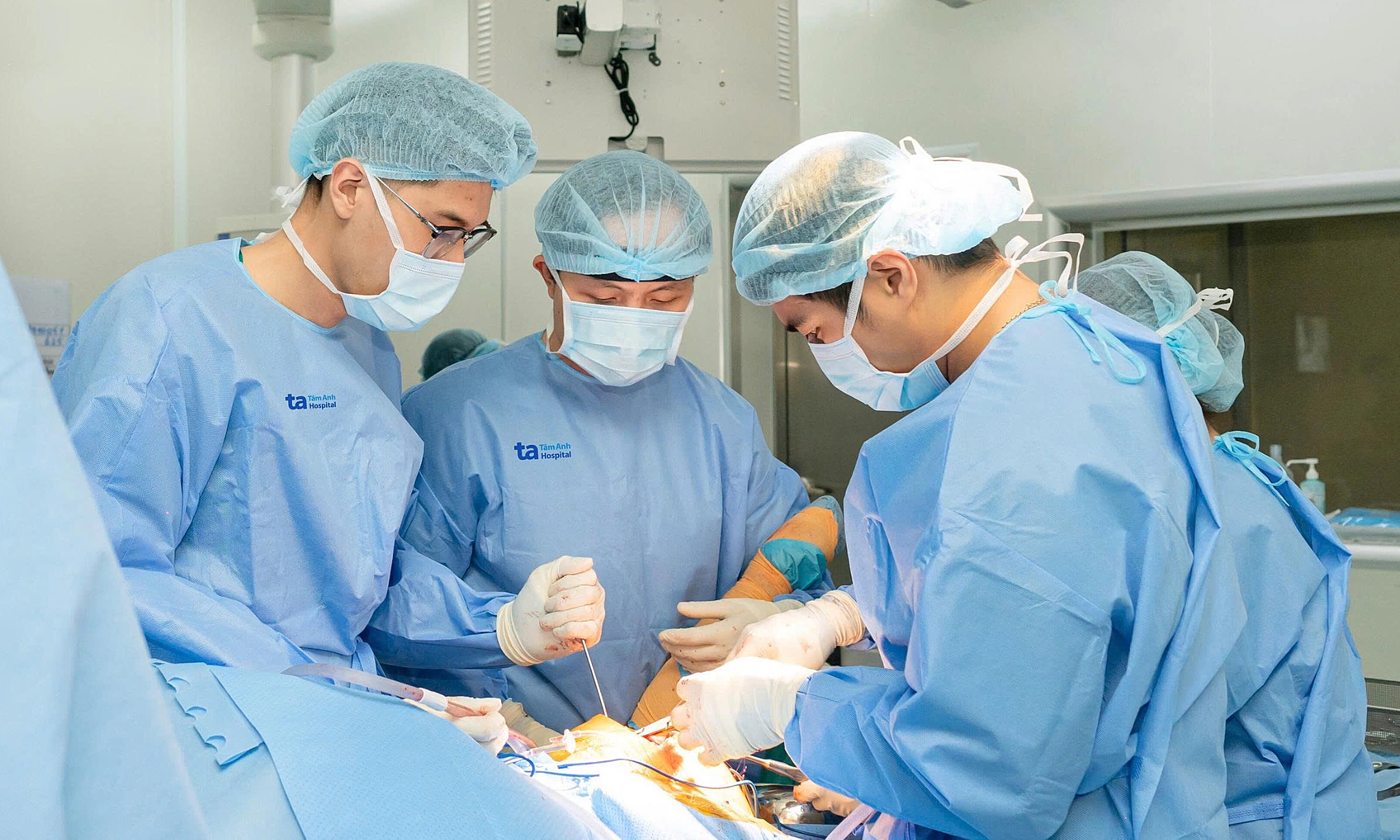
The surgical team worked continuously for 9 hours to resect the tumor-containing esophageal segment, perform lymph node dissection, and reconstruct a new esophagus using the stomach. The surgery simultaneously involved all three anatomical regions: neck, chest, and abdomen, to restore the patient's natural eating function.
According to Dr. Quoc, both liver and esophageal cancers progress silently with subtle symptoms in their early stages. Patients with esophageal cancer often experience only mild dysphagia, a feeling of food getting stuck when eating solid foods, or occasional choking.
Because the esophagus lacks a protective serosal layer, cancer cells can easily invade the trachea and large blood vessels in the chest, leading to a loss of opportunity for radical treatment if detected late. Similarly, liver cancer also typically manifests only when malignant cells have spread extensively or metastasized distantly, making treatment costly and less effective.
 |
Doctors operate on a patient. Photo: _Hospital provided_ |
Medical experts advise immediate consultation if experiencing persistent difficulty swallowing or unexplained weight loss. High-risk individuals, including those who abuse alcohol and tobacco, suffer from chronic gastroesophageal reflux disease (GERD), or frequently consume excessively hot foods, should proactively undergo regular screening. Early detection through endoscopy and imaging increases the success rate of treatment and preserves the function of digestive organs.
Thuy Quynh