Doctor Tran Thi My Linh, a dermatologist and aesthetic skin specialist at Tam Anh General Hospital, Ho Chi Minh City, diagnosed Trinh with post-pregnancy mixed melasma, affecting both the epidermal and dermal layers of her skin.
Melasma is a common dermatological issue among pregnant and postpartum women. Hormonal changes increase the activity of pigment cells, stimulating melanin production and forming pigmented patches on the skin.
While melasma may fade in some women as hormone levels stabilize, many experience persistent melasma due to melanin continuing to exist or deposit in deeper skin layers. Without proper examination and treatment, melasma can last for many years and become more challenging to treat over time.
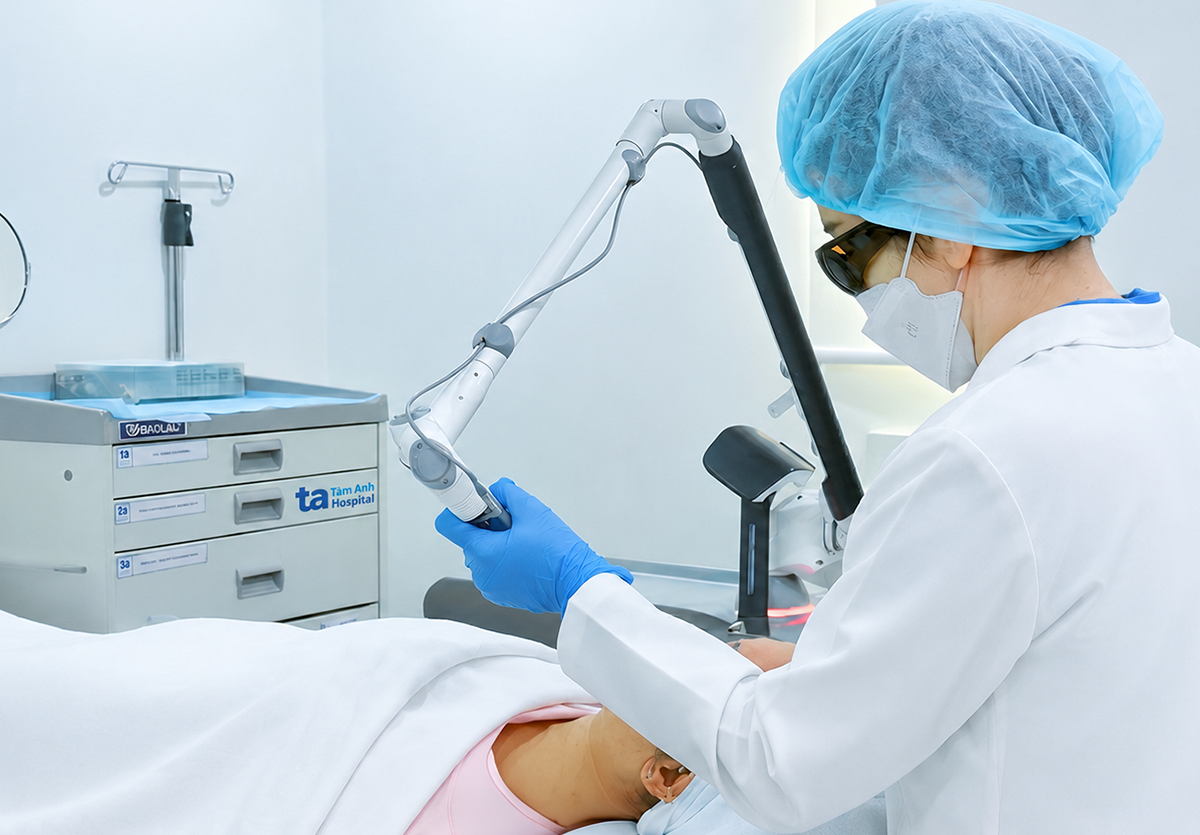 |
A doctor uses Pico Pro laser to treat Trinh's melasma. Photo: Tam Anh General Hospital
Doctor Linh explained that melasma has a complex pathogenesis, influenced by factors such as hormones, UV radiation, genetics, and other elements. Sun protection or skin-lightening cosmetics alone are often insufficient for control. Choosing or using unsuitable cosmetics can weaken the skin barrier, making the skin prone to irritation and redness, contributing to persistent or worsening melasma.
For Trinh, the doctor initially prioritized restoring her skin barrier and improving skin sensitivity with a combination of oral and topical medications. Once her skin stabilized, she began Pico Pro laser treatment, consisting of 6-8 sessions, spaced 2-4 weeks apart, alongside consistent skincare and sun protection.
This technology emits ultra-short laser pulses that selectively target melanin pigment, breaking it down into tiny particles for the body to gradually eliminate naturally. This process helps fade melasma while minimizing damage to surrounding skin tissues. Areas of post-inflammatory hyperpigmentation were also treated to promote a more even skin tone.
Doctor Linh emphasized that treating post-pregnancy melasma is a long process requiring patience and an individualized approach for each patient. Treatment effectiveness depends on many factors, including the type of melasma, extent of damage, duration of the condition, individual constitution, and response to therapy.
After 5 treatment sessions, the melasma patches on Trinh's cheekbones significantly improved, with lighter pigmentation and a more even skin tone. Concurrently, her previous prolonged irritation and redness were brought under control, and her skin barrier gradually recovered. Post-acne dark spots also faded over time, contributing to an overall improvement in skin quality.
Doctor Linh advised women who develop melasma during or after pregnancy not to wait for it to improve naturally over a long period. If melasma patches persist for many months, darken, spread, or if irritation occurs after using cosmetics, patients should consult a medical facility with a Dermatology - Aesthetic Dermatology department for examination, diagnosis, and appropriate treatment.
Minh Huong
*Character's name has been changed