A representative from E Hospital reported on 7/7 that a patient was admitted experiencing significant pain and fatigue in both arms, redness and burning sensations in the forearms, and nausea. Prior to admission, the patient was completely unable to lift objects or perform simple daily activities such as changing clothes.
The patient, a construction engineer, regularly performed heavy labor at work sites. Despite his demanding job, he maintained a gym routine of one to two hours daily, focusing on arm, shoulder, and chest exercises with weights ranging from 5-10 kg. Lacking a structured training plan or expert guidance, he relied on personal experience, consistently pushing his body with intense workouts for several consecutive days. When his biceps developed severe pain, the man mistakenly believed it was normal post-workout soreness and continued training until he lost the ability to move his upper limbs.
 |
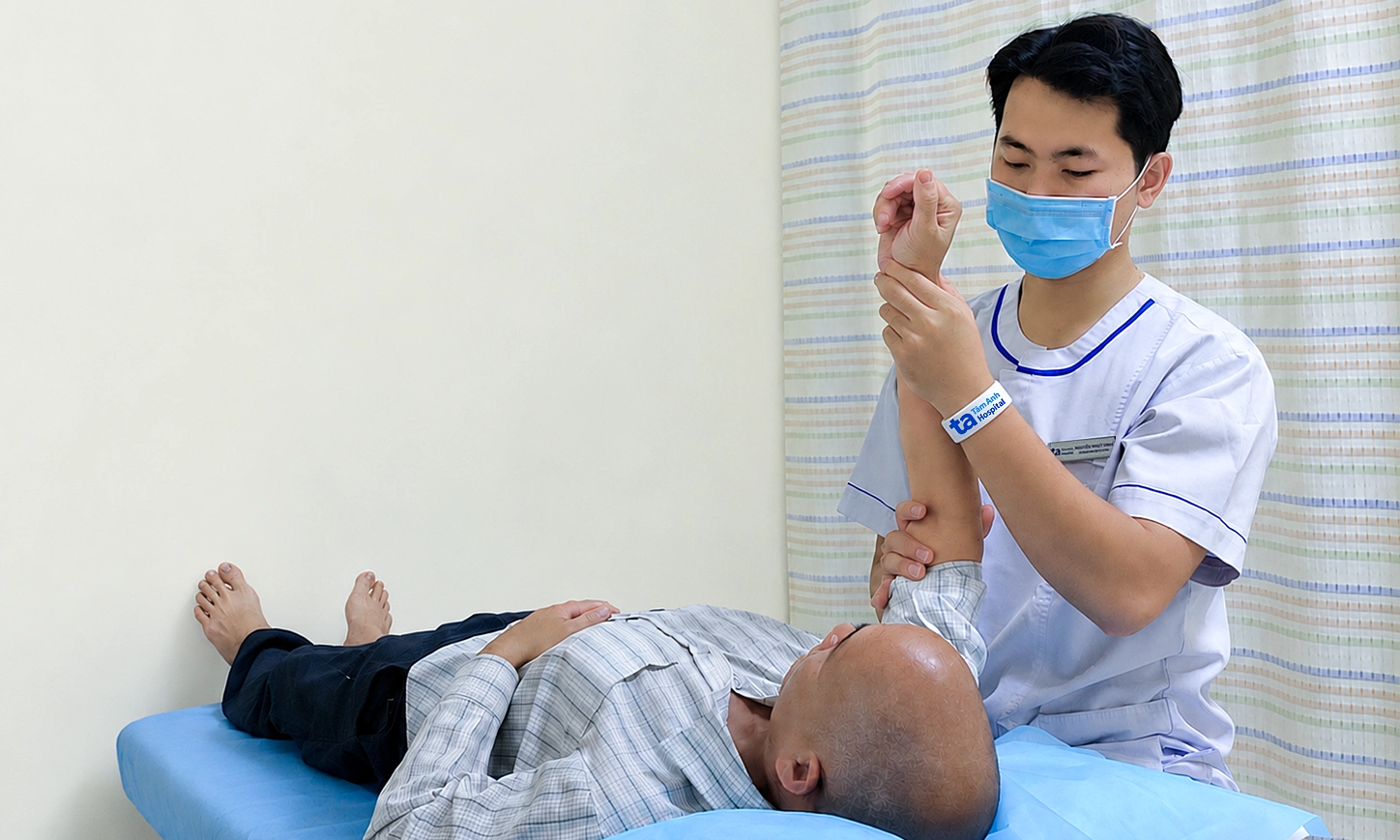
A doctor examines the patient. Photo: E Hospital
Doctor Nguyen Thi Hoa, from the Department of Nephrology and Dialysis, explained that rhabdomyolysis occurs when muscle cells are damaged and destroyed, releasing intracellular substances into the bloodstream. The primary cause in this case was overexertion, which subjected muscle groups to pressure beyond their adaptive capacity. Delayed hospitalization can lead to severe complications from these released substances, including acute kidney failure, electrolyte imbalance, and hyperkalemia, which can cause cardiac arrhythmias and be life-threatening. More severely, compartment syndrome can damage blood vessels and nerves, leading to permanent loss of motor function.
Currently, many young people engaging in sports like gym training, running, and pickleball tend to follow trends or seek rapid physique improvement. However, suddenly increasing exercise intensity without prioritizing rest and recovery is a leading factor in rhabdomyolysis development. Dehydration, sleep deprivation, poor nutrition, or working in hot weather also increase the risk of this condition.
To ensure safety, doctors advise athletes to develop a scientific training regimen tailored to their individual fitness levels. Individuals should ensure adequate hydration before, during, and after workouts, while also allowing time for proper body recovery. Upon noticing unusual symptoms such as severe muscle pain, limb weakness, swelling, or dark, tea-colored urine, exercisers must immediately stop all activity and seek medical attention for timely screening.
Thuy Quynh