MRI results at Tam Anh General Clinic, District 7, revealed a full-thickness tear of the supraspinatus tendon, part of the rotator cuff. This crucial tendon enables arm abduction and assists other rotator cuff tendons in rotation, lifting, and carrying heavy objects. Mr. Tinh also had subacromial impingement, where his rotator cuff tendons and bursa were compressed between the acromion and humerus, causing pain and restricted movement.
Doctor of First-Degree Specialization Nguyen Dai Duong, an orthopedic trauma specialist, determined that conservative treatments, including medication and physical therapy, were no longer effective. He recommended arthroscopic surgery for the patient.
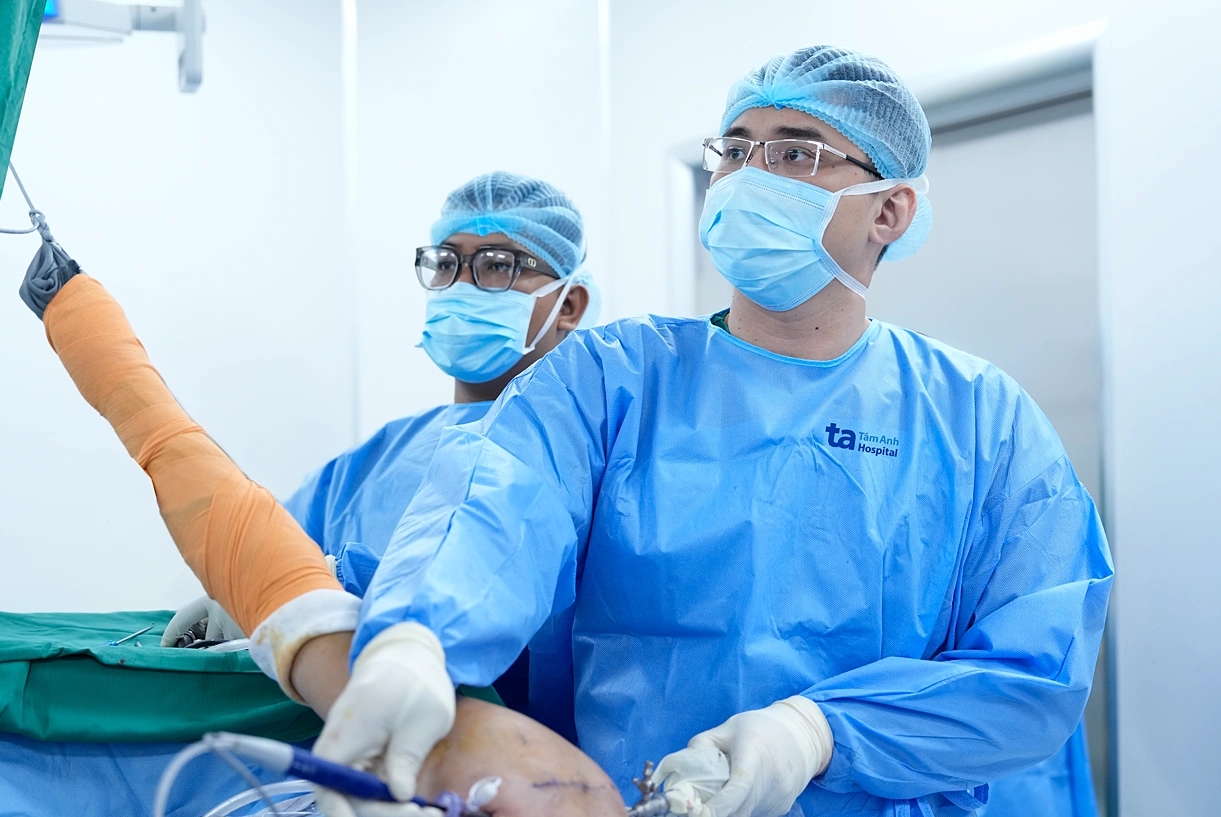 |
Doctor Dai Duong (right) performs arthroscopic repair of the supraspinatus tendon for the patient. *Photo: Tam Anh General Hospital* |
The surgical team inserted instruments into the right shoulder to repair the injury. They meticulously repaired the supraspinatus tendon using a secure two-row suturing technique. This method ensures the tendon surface adheres closely to the bone, fostering a biological environment for natural, durable healing between the tendon and bone.
Concurrently, the doctor performed an acromioplasty to widen the subacromial space. This procedure prevents friction between the bone and tendon, thus minimizing the risk of re-tearing. This minimally invasive technique preserves healthy tissues, reduces unnecessary damage, and leads to less patient pain and blood loss, optimizing the natural recovery of shoulder movement.
On the first day post-surgery, Mr. Tinh began physical therapy and was instructed to wear a rotator cuff brace. At his six-week follow-up, his condition had significantly improved, with no more nighttime pain and better sleep. After three months, his shoulder's range of motion was nearly fully restored. Doctor Dai Duong expects the patient to resume normal activities after six months.
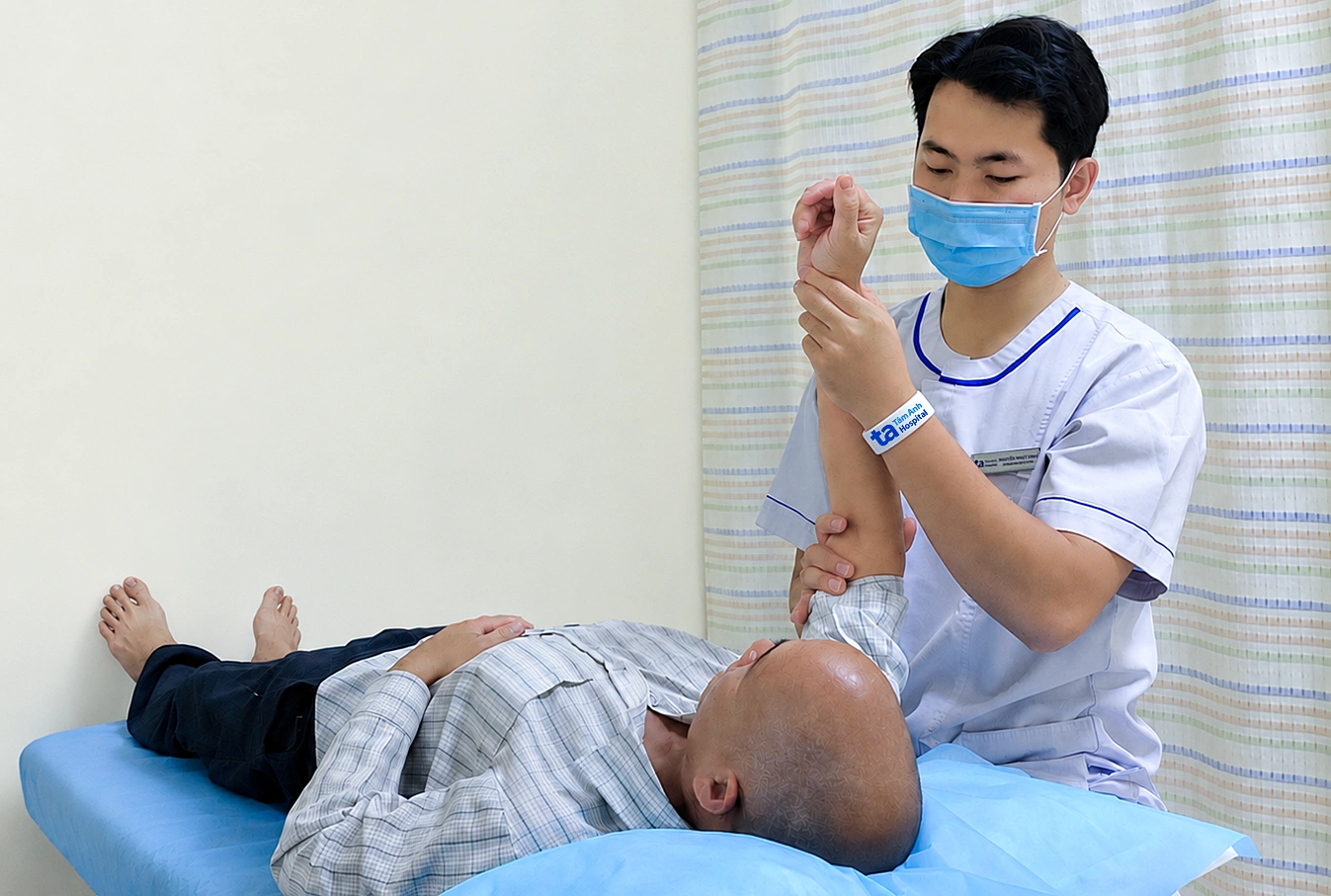 |
Mr. Tinh undergoes physical therapy three months after surgery. *Photo: Tam Anh General Hospital* |
Doctor Dai Duong emphasized that rotator cuff tears are common shoulder injuries, often resulting from degeneration or trauma. Without early detection and treatment, this condition can cause chronic pain and shoulder weakness, significantly hindering daily activities. Early surgical intervention allows for straightforward arthroscopic tendon repair. Conversely, delaying treatment can lead to substantial tendon retraction, potentially necessitating shoulder replacement or tendon transfer, which involves greater time and expense.
Patients should seek immediate medical attention if they notice warning signs of a rotator cuff injury. These include persistent pain, increased pain at night or when pressure is applied, shoulder weakness, difficulty lifting, carrying, or gripping objects, and trouble performing daily movements like combing hair or reaching behind the back.
Phi Hong