On 4/3, while at Tianhe Airport in Wuhan, Mr. Wang suddenly experienced dizziness, collapsed, and suffered left-sided paralysis, according to ST Headline. Medical personnel quickly transported him to the Houhu facility of Wuhan Central Hospital for emergency treatment. Thanks to timely intervention by doctors to clear the blood vessels, the patient is now conscious, communicates fluently, and has regained basic muscle strength in his limbs.
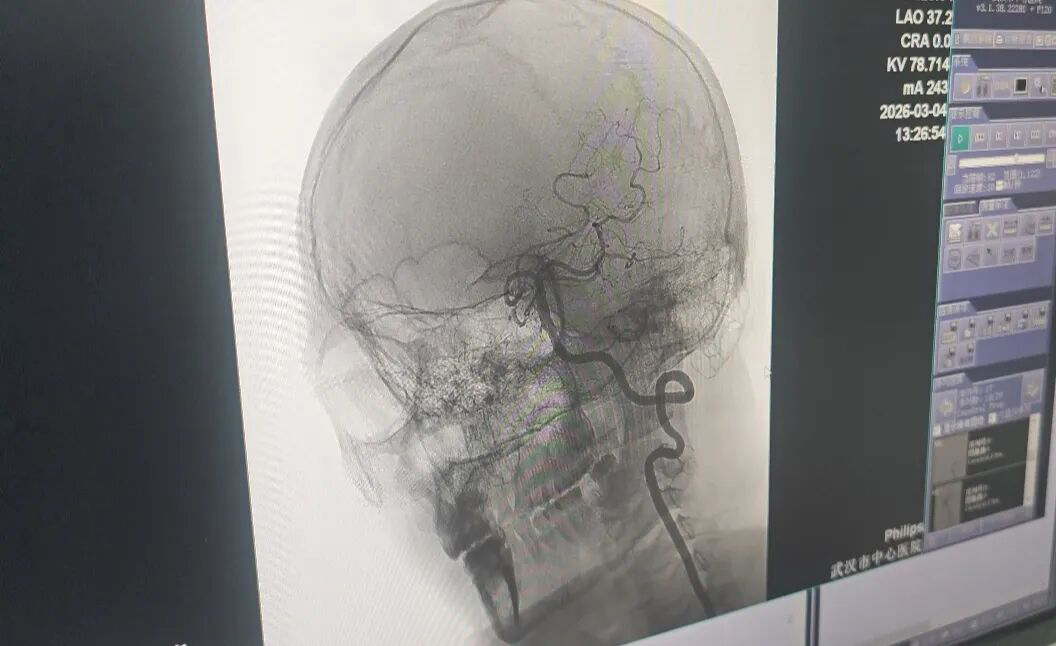 |
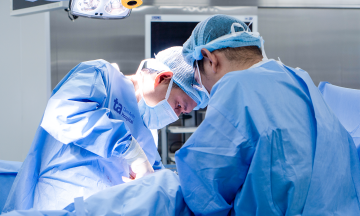
The medical team successfully intervened and revascularized Mr. Wang's blocked blood vessel. *Photo: Li Huizi*
Previously, due to his aluminum and glass business requiring long hours of sitting, Mr. Wang often suffered from persistent neck and shoulder pain. Unable to tolerate the discomfort, he sought treatment at a therapy center. He specifically requested the staff apply strong force to his neck, believing that greater pressure would yield better results. In the following days, a dull pain emerged in his neck, yet he dismissed it, continuing to self-massage vigorously to alleviate the discomfort.
At the hospital, neurologists diagnosed the patient with acute large vessel occlusion and prescribed intravenous thrombolytic medication. However, just 30 minutes later, Mr. Wang's condition worsened. He fell into a deep coma, his left pupil dilated, he lost his light reflex, and experienced complete left-sided paralysis, including facial and tongue paralysis, along with aphasia. Doctors performed an angiogram, revealing a tear in the intimal layer of his vertebral artery. This caused severe hemodynamic disturbance and formed a blood clot that blocked the vessel. Dr. Hung Vi, head of the Neurology Department, explained that the tissue exposed from the damaged intima rapidly stimulated thrombosis, leading to a complete blockage of blood flow.
The emergency team immediately transferred the patient to the interventional cardiology suite. Recognizing that the vertebral artery was not yet completely occluded, specialists decided to perform additional arterial thrombolysis. This combined approach precisely restored blood flow, saving the patient's life.
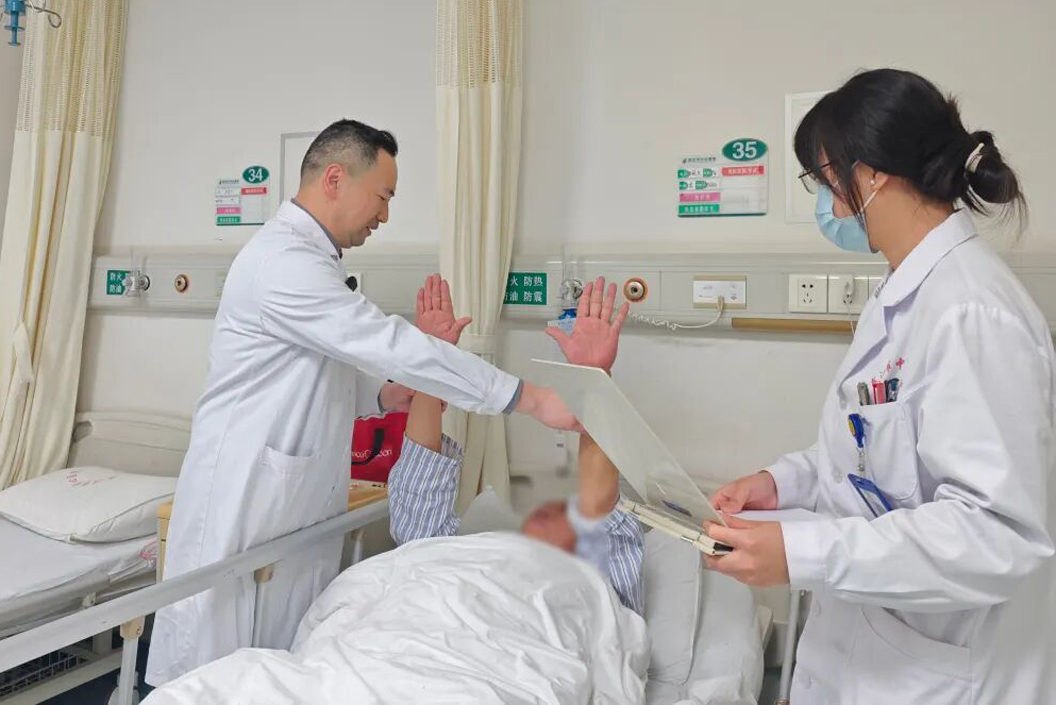 |
Dr. Hung Vi (left) on rounds examining a patient. *Photo: Li Huizi*
Through patient history and imaging diagnostics, Dr. Canh Binh, head of the Neurology Department, confirmed the brain infarction originated from an arterial dissection in the neck region. She explained that the neck contains numerous vital neural and vascular structures. The vertebral artery, situated within the transverse foramina of the cervical vertebrae, has a relatively fixed position. Incorrect external forces, such as excessive twisting, stretching, or overly strong massage, can easily tear the intimal layer of the blood vessel, forming a dissection pocket and generating a thrombus.
Medical professionals warn that neurovascular injuries caused by strong massage are not uncommon among young individuals. However, because this age group's bodies possess strong self-regulation capabilities, initial symptoms are often subtle, leading to easy oversight. Doctors advise people to be cautious when applying force to the neck area and to avoid excessive twisting. Anyone experiencing prolonged neck pain, dizziness, blurred vision, slurred speech, or limb weakness after a massage should immediately seek medical attention for vascular damage screening.
By Binh Minh (Jimu News, ST Headline)