Master of Science, Doctor Cao Vinh Duy, from the Department of Urology, Center for Urology - Nephrology - Andrology, Tam Anh General Hospital, Ho Chi Minh City, reported that the patient's anterior urethra had fibrosis and considerable narrowing. This led to significant residual urine in the bladder. If prolonged, this condition can cause ascending infection or affect kidney function.
Urethral stricture can result from trauma, a history of urinary tract interventions such as lithotripsy, catheterization, prostate resection, or long-term urinary tract infection. Nam's stricture was over 2 cm long, with an unknown cause.
Doctor Duy opted for reconstructive surgery using autologous tissue, specifically a flap taken from the patient's own foreskin. Oral mucosa and autologous skin flaps (with foreskin flaps being a common choice) are two types of autologous tissue known for their durability and compatibility, making them effective for urethral reconstruction.
 |
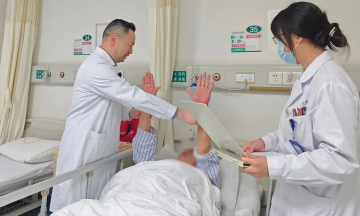
Doctor Duy (left) and his team performing urethral reconstruction surgery for a patient. Photo: Tam Anh General Hospital
During the procedure, doctors removed adhesions and fibrous tissue around the urethra. They then used a foreskin flap, complete with its vascular pedicle, suturing it to create a new urethra. This ensured an unobstructed urinary tract and reduced the risk of re-stricture. This method effectively repairs long strictures and avoids penile shortening, a potential outcome with end-to-end anastomosis.
A few days after surgery, the patient could eat and engage in normal activities, experiencing little pain. He was subsequently discharged. Nam continued to use a urinary catheter for two weeks and took antibiotics to prevent surgical site infection.
Doctor Duy noted that historically, urethral stricture was treated with urethral dilation using a sound or endoscopic incision of stricture using a laser or cold knife. However, these methods frequently led to re-stricture. Currently, end-to-end anastomosis is suitable for strictures shorter than 2 cm. For long or complex strictures, urethral reconstruction using a foreskin flap or oral mucosa offers an optimal solution.
Patients experiencing unusual symptoms like difficult urination, a weak urinary stream, or painful urination should consult a urology specialist at reputable hospitals. Early examination helps identify the cause, allows for appropriate intervention, and prevents recurrence.
Bao Anh
*Patient's name has been changed