In a dispatch sent to provincial and city health departments on 2/4, the Ministry of Health identified three groups requiring the strictest control. The first includes self-declared foods, comprising products that supplement micronutrients, vitamins, minerals, amino acids, enzymes, and probiotics. Authorities will thoroughly inspect documentation and strictly penalize violations such as non-declaration, incorrect declaration, or the use of invalid test certificates.
The second group, requiring declaration registration, will also face strict post-inspection. This includes medical nutritional foods, foods for special diets, products for children under 36 months old, and imported goods exempted from or subject to reduced inspection. Post-inspections will be linked to safety assurance conditions at production and processing facilities, especially collective kitchens and schools, which are high-risk locations for food poisoning.
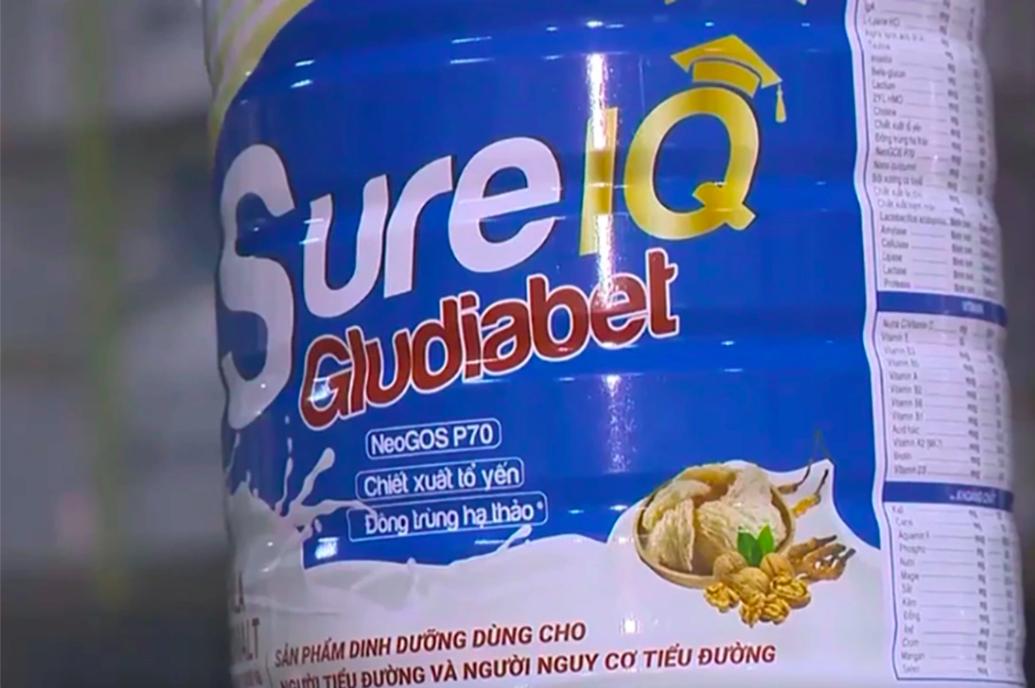 |
A box of milk identified as counterfeit by the police. *VTV*. |
Finally, health supplements will be subject to increased scrutiny. Authorities will intensify inspections of enterprises that have declared their products, prioritizing sampling items at risk of containing banned substances. This focus includes products advertised to support blood pressure, blood sugar, bone and joint health, blood lipids, male physiology, and weight loss.
Experts assess that consumers find it difficult to verify the quality of these products independently. High profit margins drive some businesses to commit fraud. A notable case involved Nguyen Trung Kien, chairman of Z-Holding Company, and eight accomplices who produced and traded counterfeit foods. From 2020 to 2023, this group imported unregulated raw materials, hired processing to package imitation brands, and released many types of counterfeit milk onto the market, profiting 2,436 billion VND. The suspects intentionally exaggerated the uses of these products, claiming they could "treat diabetes, prevent stroke", to defraud consumers for illicit gains.
Alongside quality supervision, the Ministry of Health requires localities to severely penalize false advertising on social media and online platforms, while publicly disclosing the identities of violating establishments. The health sector also boosts inter-sectoral coordination to dismantle counterfeit food trading networks and combat smuggling and trade fraud.
To prevent counterfeit goods at their source, the government and ministries have issued new regulations guiding the Law on Food Safety, focusing on tightening pre-market control. Authorities now require production facilities to directly register product declarations in their own name, rather than allowing commercial enterprises to represent them as before. Test certificates must also simultaneously show both safety and quality indicators, closing the loophole of "declaring one thing, delivering another quality" that was exploited for many years. These changes aim to establish clearer legal responsibilities, avoiding situations where no one takes responsibility when incidents occur.