


Mr. Tam was diagnosed with superficial bladder cancer three years ago, undergoing conservative endoscopic transurethral surgery at a hospital. Six months later, the disease recurred, leading to a second surgery. Recently, a magnetic resonance imaging (MRI) scan at Tam Anh General Hospital Ho Chi Minh City revealed the tumor had progressed, invading the bladder muscle, measuring approximately 4 cm.
Doctor Nguyen Hoang Duc, Head of Urology at the Urology - Nephrology - Andrology Center, stated that bladder cancer has a high recurrence rate, about 50%. This is because the bladder muscle layer contains numerous blood vessels and a lymphatic system, which facilitates cancer cell recurrence and distant metastasis via the lymphatic system. In such cases, patients lose the opportunity for radical surgery, and the mortality rate increases. The optimal treatment for muscle-invasive bladder cancer is total cystectomy and neobladder reconstruction using a segment of the intestine.
Patients with multiple prior surgeries face risks of pelvic adhesions and altered anatomy. Radical cystectomy with neobladder reconstruction demands high precision. Therefore, Doctor Duc opted for Da Vinci Xi robotic surgery for Mr. Tam to minimize complications and expedite recovery.
The surgeon controlled the robotic arms to dissect and remove the entire bladder and surrounding tissues. A 3D camera, magnified 15 times, enabled meticulous dissection of surrounding pelvic lymph nodes, ensuring no cancer cells remained. The robot then measured and cut a 40-50 cm segment of the small intestine. Flexible robotic arms, rotating 540 degrees, facilitated suturing this segment into a new bladder, connecting it to the ureters and urethra for urine storage and excretion.
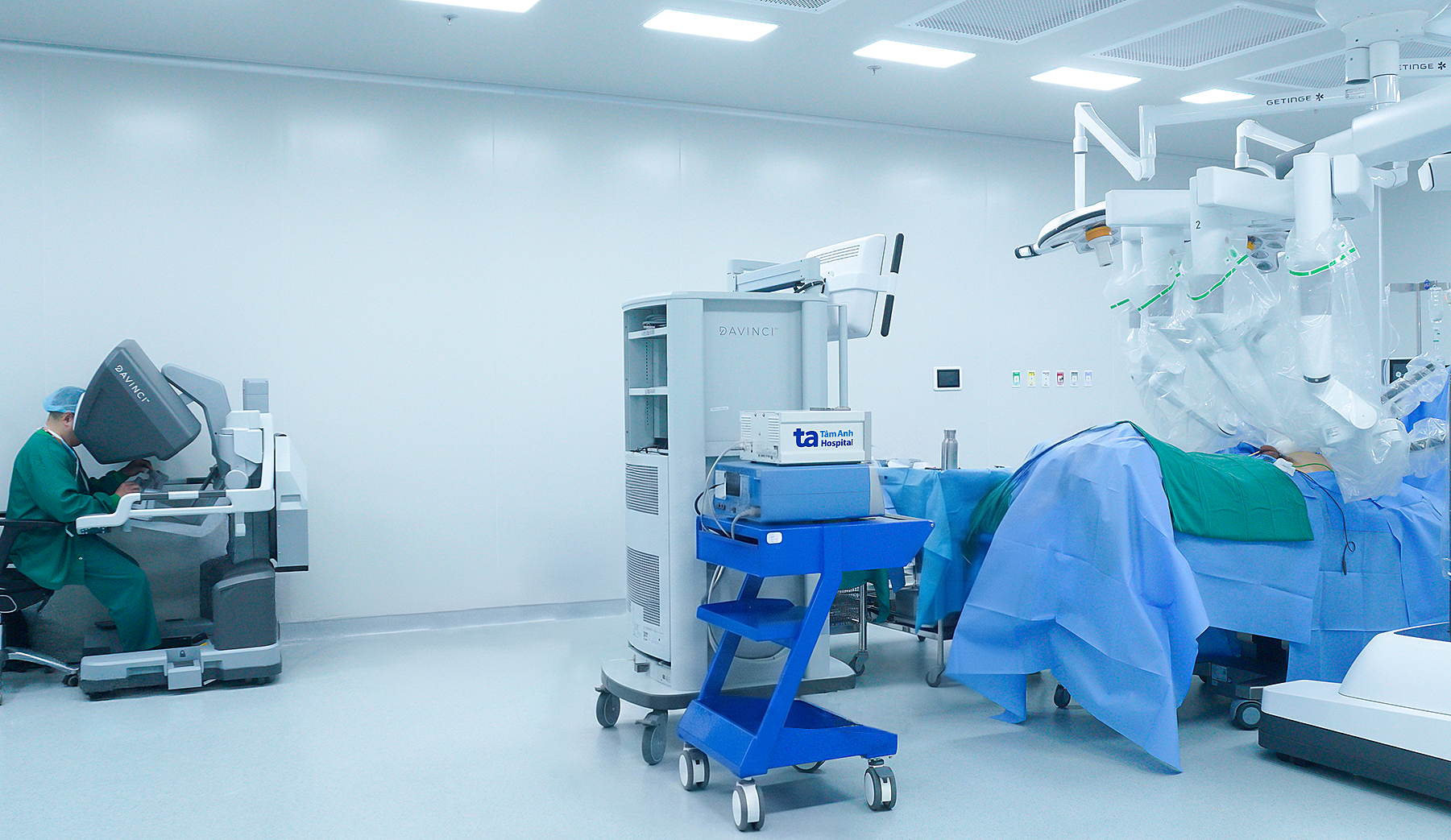 |
Doctor Duc (seated) controls the Da Vinci Xi robot to perform cystectomy and neobladder reconstruction using the small intestine for Mr. Tam. Photo: Tam Anh General Hospital |
Doctor Duc (seated) controls the Da Vinci Xi robot to perform cystectomy and neobladder reconstruction using the small intestine for Mr. Tam. Photo: Tam Anh General Hospital
According to Doctor Duc, traditional open surgery involved making an abdominal incision to bring the small intestine out for pouch creation, then returning it to the abdominal cavity to connect to the urethra. This method increased infection risk, prolonged recovery, caused blood loss, and raised the chance of postoperative ileus.
With robotic assistance, the surgery mitigated these risks. Mr. Tam could walk and move lightly two days post-surgery. The new bladder, made from intestine, lacks sensory nerves and cannot contract naturally. Doctor Duc instructed Mr. Tam to practice straining with his abdominal muscles and urinate at fixed intervals for adaptation. After about three months, he can urinate normally.
Statistics from Globocan 2022 indicate that Vietnam records over 1,900 new bladder cancer cases annually. In early stages, patients may experience painless hematuria, increased urination frequency, urgent need to urinate even with an empty bladder, or a feeling of incomplete emptying, and back pain. These symptoms often lead to misdiagnosis as common infections and delayed detection. In advanced stages where the disease invades the muscle or recurs multiple times with large tumor sizes, doctors must perform a total cystectomy.
Doctor Duc noted that after treatment, patients still face a high recurrence risk due to the entire mucosal lining's exposure to urinary carcinogens. Even if a tumor is completely removed from one location, other mucosal areas may still harbor cancer cells. Patients require scheduled follow-up appointments for early detection and timely intervention of abnormalities. Men over 50, regular smokers, individuals working in chemical environments (dyeing, rubber, footwear, textiles, printing), or those with a history of chronic bladder inflammation should undergo regular bladder cancer screening.
Dinh Lam
*Patient's name has been changed


