Dr. Ho Tan Thong, a second-degree specialist from the Nephrology - Dialysis Unit at Tam Anh General Clinic District 7, reported that Mr. Thach's glomerular filtration rate (eGFR) was only 39,46 mL/min/1,73 m², which is lower than the normal range. His creatinine level was 151 µmol/L, exceeding the 104 µmol/L threshold, corresponding to stage 3B kidney failure.
Additionally, Mr. Thach suffered from grade three heart failure, exacerbated by chronic atrial fibrillation and other cardiovascular diseases. A blood NT pro BNP test, which measures a substance secreted by the heart muscle when its walls are stressed or stretched, showed a slight increase. An echocardiogram revealed a cardiac ejection fraction of approximately 50% and a myocardial longitudinal strain reduced to 11,5%, compared to a normal range of 16-20%. Dr. Vu Nang Phuc, a second-degree specialist from the Cardiology Center at Tam Anh General Hospital TP HCM, diagnosed Mr. Thach with heart failure with preserved ejection fraction and diastolic dysfunction.
Dr. Phuc explained that circulatory congestion due to heart failure increases pressure within the venous system, making it harder for blood to return to the heart from the kidneys. This leads to blood pooling in the kidneys and reduces their filtration capacity. Conversely, chronic kidney disease causes salt and water retention, increasing the burden on the heart. These two conditions can reciprocally impact each other, making the disease difficult to control.
 |
Dr. Phuc performs an echocardiogram for the patient. Photo: Tam Anh General Hospital |
Dr. Phuc performs an echocardiogram for the patient. Photo: Tam Anh General Hospital
The two doctors developed a treatment regimen for heart failure, simultaneously focusing on controlling fluid retention and protecting the patient's kidneys. Given Mr. Thach's chronic atrial fibrillation and chronic lung disease, the doctors carefully managed his heart rate and selected medications to avoid causing edema or negatively impacting kidney function.
Medication dosages were adjusted based on his heart and kidney function, co-existing conditions, and potential drug interactions. Mr. Thach's blood pressure, swelling, and heart and kidney indicators were closely monitored for further adjustments as needed.
After two weeks of medical treatment, Mr. Thach's swelling significantly decreased, his blood pressure stabilized, and both his cardiac contractile function and kidney function gradually improved. During a follow-up in late September, his glomerular filtration rate increased to approximately 62,23 mL/min/1,73 m², and his creatinine level dropped to 103 µmol/L, indicating an improvement to stage two kidney failure. Dr. Thong decided to discontinue the chronic kidney disease medication; however, continued monitoring of his cardiovascular issues was recommended.
 |
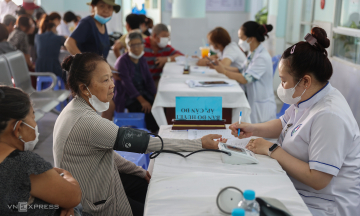
Mr. Thach during a follow-up with Dr. Thong in late September. Photo: Tam Anh General Clinic District 7 |
Mr. Thach during a follow-up with Dr. Thong in late September. Photo: Tam Anh General Clinic District 7
Cardiorenal syndrome describes a reciprocal relationship between the heart and kidneys, where the dysfunction of one organ can affect the other.
Dr. Phuc advises individuals with cardiovascular diseases, especially those with heart failure, high blood pressure, or atrial fibrillation, to undergo regular kidney function check-ups. Symptoms such as persistent leg or hand swelling, increased swelling after consuming salty foods, frequent nighttime urination, persistent foamy urine, rapid weight gain, or shortness of breath warrant a medical examination to determine the cause and receive timely treatment.
According to Dr. Thong, patients with chronic kidney disease should also manage their blood pressure, blood sugar, blood lipids, and dietary salt intake as guided by their doctor. It is crucial to attend follow-up appointments and never arbitrarily stop, change, or add medication. When simultaneously managing both heart and kidney conditions, patients should choose medical facilities that offer both specialties to ensure coordinated monitoring and treatment tailored to the progression of both organs.
Dinh Lam
* Character's name has been changed
| Readers can submit questions about dermatology - aesthetic dermatology here for doctors to answer. |