


Minh, 45, from Dong Da, manages a construction materials company. As the year ends, sales pressure and financial burdens compress him like a spring, ready to explode into unprovoked shouting at his wife and children. He states that tens of billions in debt, with looming interest rate hikes, suffocate him.
A child's cry or his wife's inquiry can trigger arguments. Only after seeing patches of hair on the floor after sleepless nights does Minh dimly realize his exhaustion, but pride stops him from seeking help.
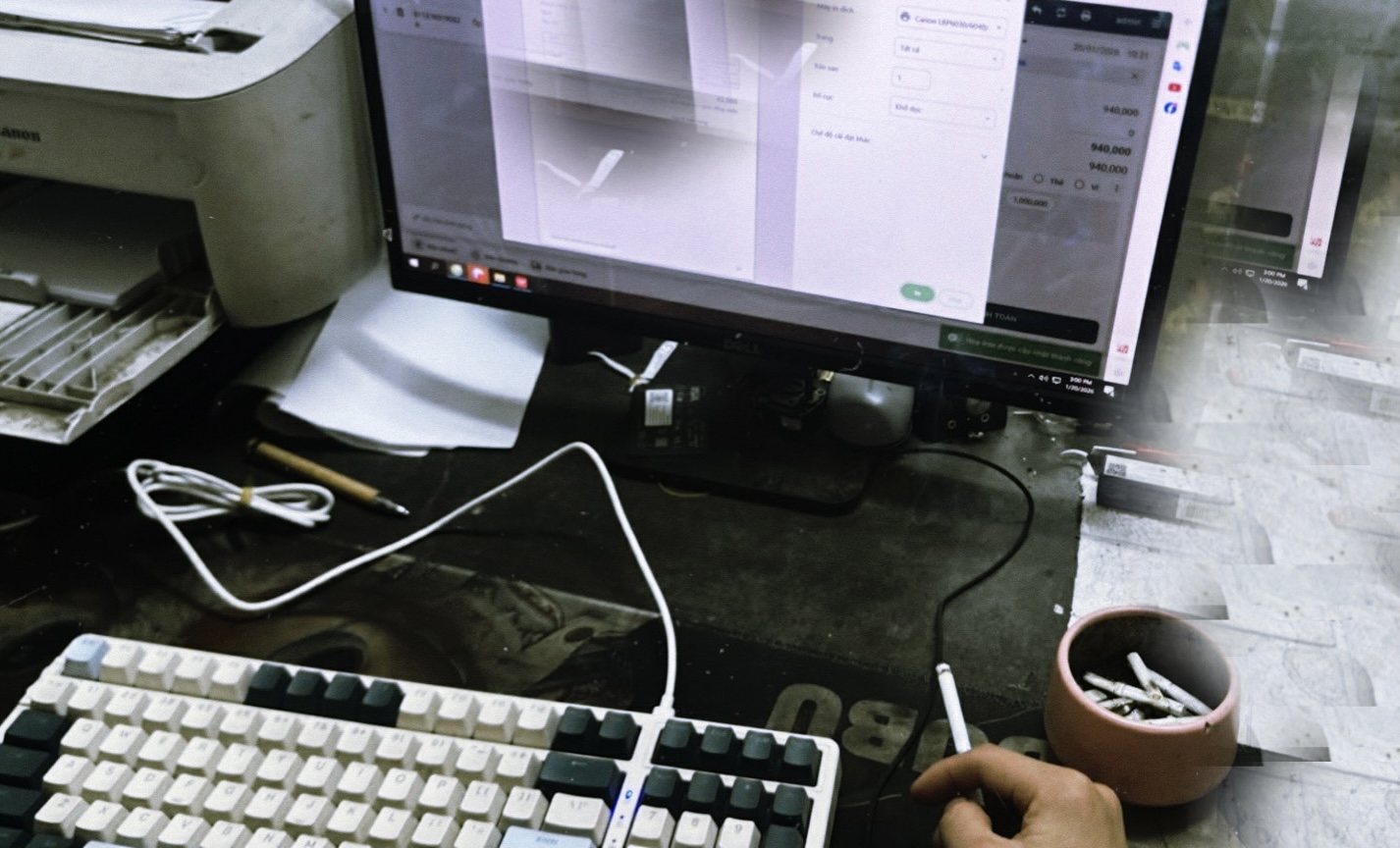 |
Cigarettes became Minh's "companion", helping him dispel fatigue, reduce stress, and even stay alert for work. *Photo provided by subject*
In contrast, Hung, 45, from Hoang Mai, sought psychological therapy not due to sadness, but because of a feeling of complete "paralysis." He eats, signs documents, and navigates life like a machine running on empty, unable to stop. He hides his inner emptiness from his wife, fearing her worry, and from his parents, fearing judgment that he is "too comfortable, gone mad." Many nights, he wakes with a heavy chest and difficulty breathing, despite normal cardiac test results.
Minh's anger outbursts or Hung's emotional paralysis are common "masks" for depression in men. Master Cao Tran Thanh Trung, Chief Executive Officer of Lumos Psychological Counseling and Therapy Center, notes that while depression often presents with prolonged sadness and loss of interest in life, in men, it disguises itself in misleading forms such as workaholism, substance abuse, or violent outbursts.
Statistics paint a bleak picture of men's mental health. According to the World Health Organization (WHO), the global prevalence of depression in adult men ranges from 4,6% to 5,7%. Although lower than in women, the rate of increase for this condition in men post-pandemic has surged by an alarming 20%. More concerning, according to the psychology website Brightside, about 30% of men experience depression at some point in their lives, but most choose to suffer in silence until the condition worsens.
The root cause of this "silence" lies in gender stereotypes. A large-scale 2019 survey by the Movember organization of 4.000 men in the US, Canada, UK, and Germany found that 58% believed society expects them to be emotionally strong, not to cry or show weakness. The pressure of the phrase "Man up!" has become psychological shackles, leading men to view depression as a failure rather than a treatable illness.
Doctor Tran Thi Hong Thu, Deputy Director of Mai Huong Day Psychiatric Hospital, explains that because men are not allowed to complain or express pain like women, they are forced to suppress emotions. When the "release valve" is blocked, they seek escape through negative behaviors such as gambling, racing, alcohol abuse, or self-harm to fill the emptiness. More dangerously, this suppression leads to deaths that are forewarned but lack warning signs.
In Vietnam, the study "Men and Masculinity in a Globalized Context" published in 2020 by the Institute for Social Development Studies (ISDS) indicated that when burdened by financial and career pressure, nearly 3% of surveyed men contemplated suicide. Notably, this rate surged to 5,4% in young men aged 18 to 29 – an age considered the prime of life. Men masking depression with aggression or false composure increases the risk of sudden suicide, depriving loved ones of timely intervention opportunities.
 |
The belief that men are pillars, "must not be weak," "must not complain," pushes them faster into the depths of depression. *Photo: Health*
Health experts advise men to free themselves from psychological shackles and open up to wives or friends to relieve stress. Spouses should share financial burdens instead of placing them solely on the husband. Maintaining a healthy lifestyle, supplementing nutrition with magnesium and B vitamins, and community activities to raise awareness about gender equality are necessary steps.
Loved ones should not nag, pressure, or impose. Avoid cornering men, which can lead to negative actions and emotions, harming themselves and those around them.
"Admitting you are not okay does not make you weak; it is the first step of responsibility toward yourself and those you love," expert Trung emphasizes. "Seeking psychological support is not a failure but a courageous and mature choice."
Thuy An





