This content is part of the draft Circular guiding the National Target Program on healthcare, population, and development for the 2026-2035 period, which the Ministry of Health is currently seeking feedback on. Vietnam's average birth rate currently stands at just 1.93 children per woman, placing it among the five lowest countries in Southeast Asia, while young people are increasingly marrying later.
According to the draft, the Ministry of Health will organize specialized surveys in 2027, 2029, and 2030 to understand what factors influence birth decisions and desired family size for both families and young individuals. These surveys will also examine the relationship between population size, birth rate, and socio-economic development, serving policy planning.
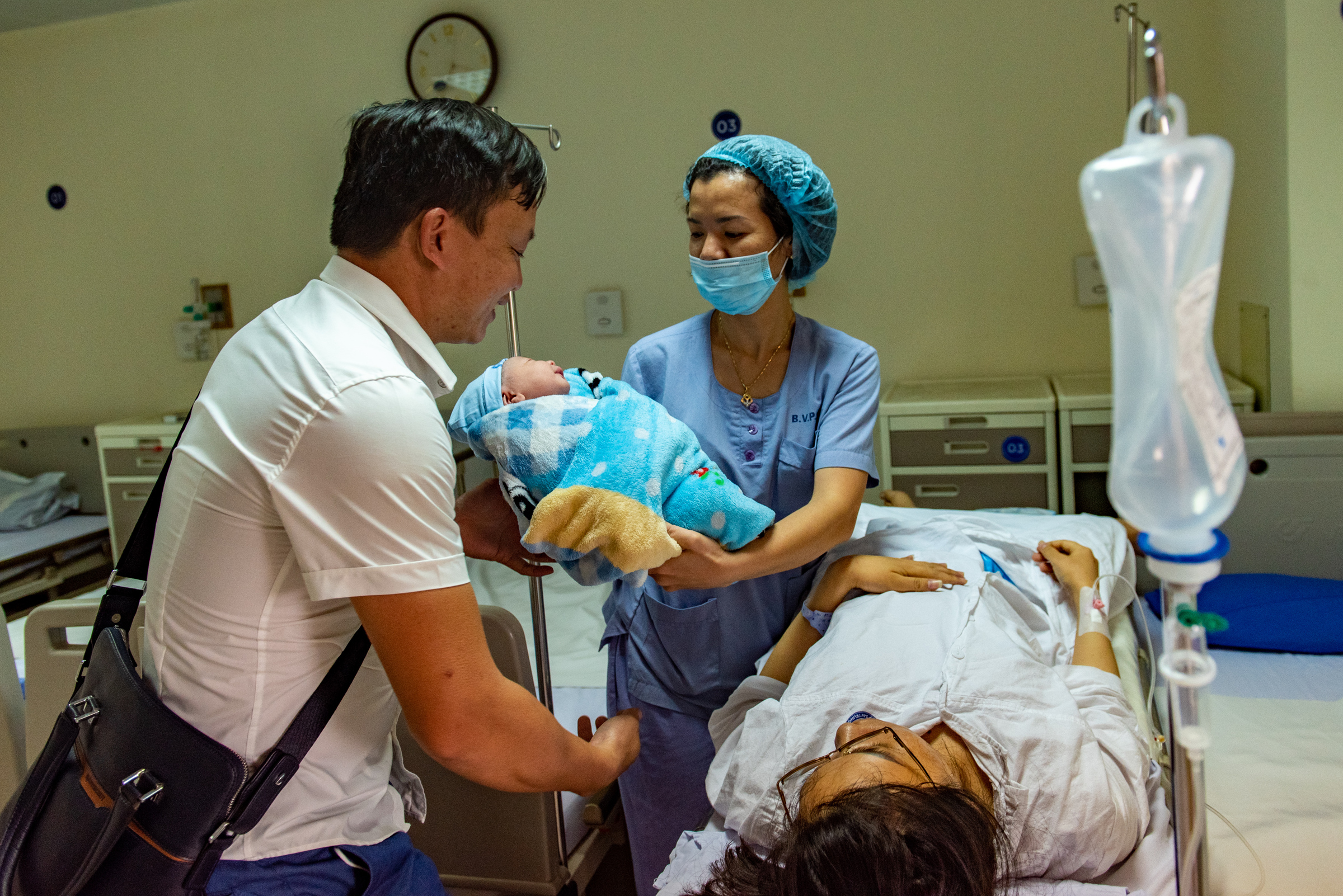 |
A baby born at the National Hospital of Obstetrics and Gynecology. Photo: Thanh Hue |
Concurrently, a Demographic and Health Survey is expected to be implemented over two years, 2027-2028. This survey will collect information on households, reproductive health, family planning, maternal and child health, birth rates, and desired family size. State budget funds from the National Target Program will cover the costs of these activities.
The Ministry of Health expects the results to provide updated data on fertility trends and the reasons for declining birth rates. This information will then be used to develop appropriate population policies, as many localities face low birth rates, an aging population, and demographic imbalances.
The draft also proposes establishing marriage and family classes for young people about to marry. It also suggests commending couples who have two children in 10 provinces and cities with low birth rates. Previously, the Ministry of Health proposed allowing localities to decide the monthly financial support for children from birth up to 36 months old. The draft also considers other support packages, such as lunch costs for preschool children or rewards for women who give birth before age 35.
Mai Xuan Phuong, former Deputy Director of the Communication - Education Department, General Department of Population (now the Population Department), notes that young people are currently marrying later, having children later, and some do not want children at all. The reasons stem from economic pressure, the cost of raising children, and the desire to focus on career development.
The average age for first marriage among Vietnamese youth is rising rapidly. From 2019 to 2024, this figure increased from 25.2 to 27.3 years old, nearly double the increase seen over the previous 20 years. Ho Chi Minh City records the highest average age for first marriage nationwide at 30.4.
Phuong believes that the old notion of "heaven gives elephants, heaven gives grass" (meaning God provides for all children) is no longer relevant. As living standards rise, families carefully consider their financial capacity before having children. Housing costs, education, healthcare, and the pace of urban life lead many couples to delay or forgo having children. Women face additional pressure, balancing work with the majority of family care responsibilities, while also dealing with postpartum health and psychological issues.
To improve the birth rate, Phuong recommends reducing financial burdens, extending maternity leave for both fathers and mothers, developing quality childcare systems, reforming education, and creating flexible working conditions for parents with young children. He emphasizes the need to view childbearing and raising children as a shared responsibility of both spouses, rather than solely the woman's burden.
Le Nga