Master of Science, Doctor Duong Minh Phuc, from the High-Tech Eye Center, Tam Anh General Hospital, TP HCM, reported that Mr. Manh was diagnosed with malignant hypertensive retinopathy and proliferative diabetic retinopathy. His vision in both eyes was reduced to 2/10, and his blood pressure was extremely high, at 158/100 mmHg (normal is approximately 120/80 mmHg).
Mr. Manh was unaware of his underlying conditions. He had previously experienced severe headaches, dizziness, and blurred vision. Three days later, his headache subsided, but his vision did not improve. In-depth examinations using a fundus photography machine (FO) and optical coherence tomography (OCT) revealed optic disc edema (swelling of the optic nerve head), retinal neovascularization, retinal hemorrhage, and vitreous hemorrhage in both eyes.
Doctors suspected the patient had recently experienced a malignant hypertension crisis (above 180/120 mmHg). Although his blood pressure had decreased by the time of the examination, a comprehensive assessment of organ damage was still necessary.
Malignant hypertension occurs when blood pressure suddenly rises sharply, accompanied by target organ damage affecting the heart, brain, kidneys, and eyes. Symptoms include severe headaches, blurred vision, chest pain, shortness of breath, or altered mental status.
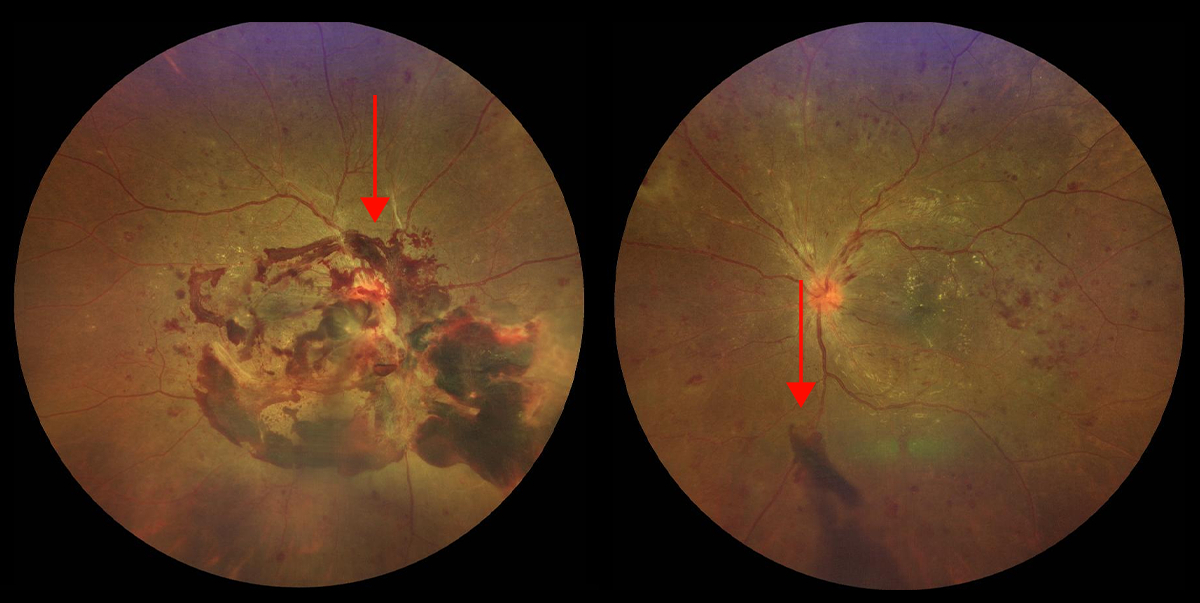 |
Fundus photographs of Mr. Manh's eyes show more severe hemorrhage in the left eye (left) compared to the right eye (right). *Tam Anh General Hospital*.
"Hypertension and diabetes simultaneously damage the blood vessels supplying the retina, leading to vision loss for the patient," explained Doctor Phuc. Prolonged high blood sugar damages the retinal vascular system, while a malignant hypertension crisis causes a sudden increase in pressure within these vessels, making already weakened blood vessels prone to rupture, leading to retinal hemorrhage, vitreous hemorrhage, and optic disc edema. Patients can experience sudden vision loss, or even blindness, if left untreated.
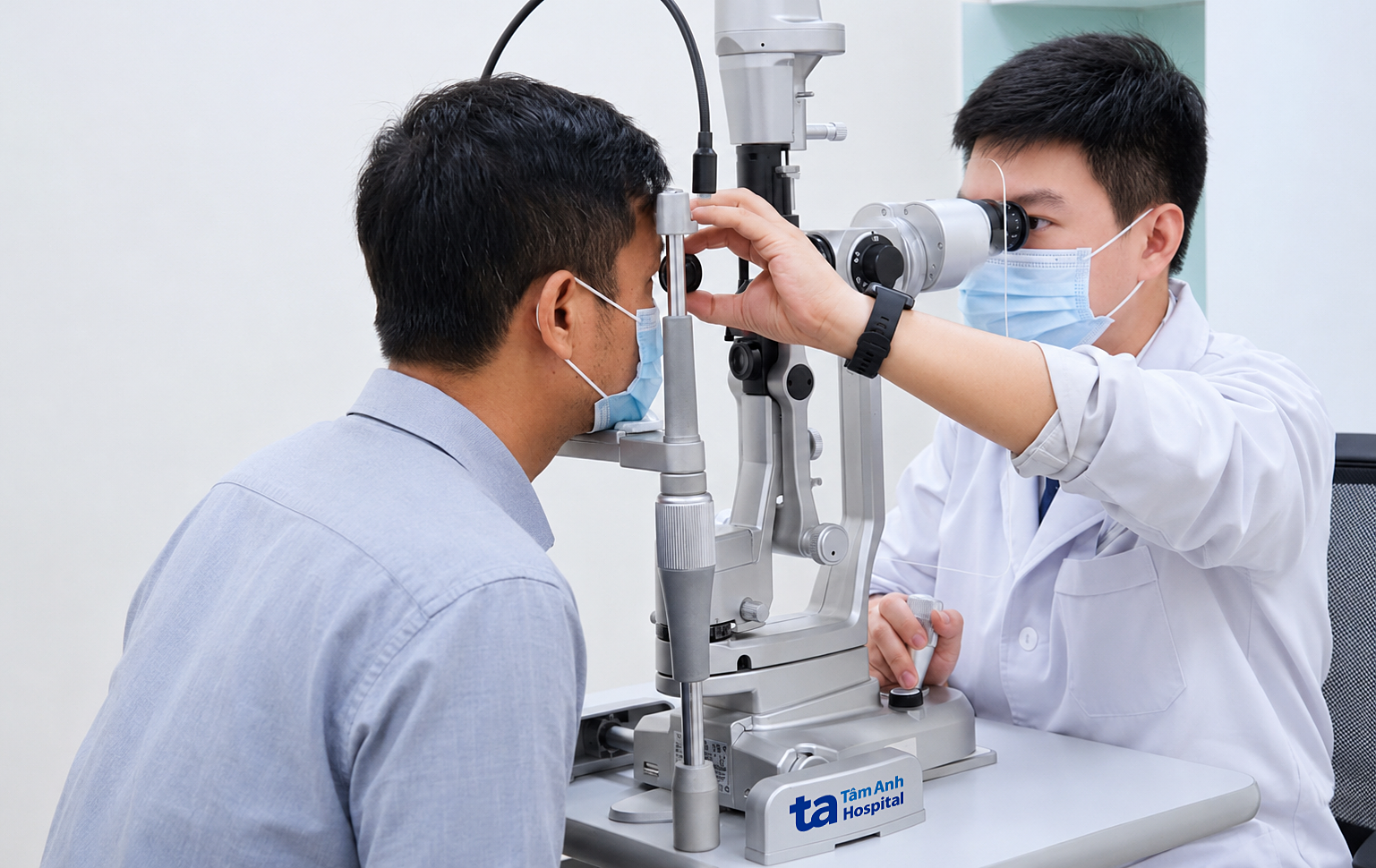 |
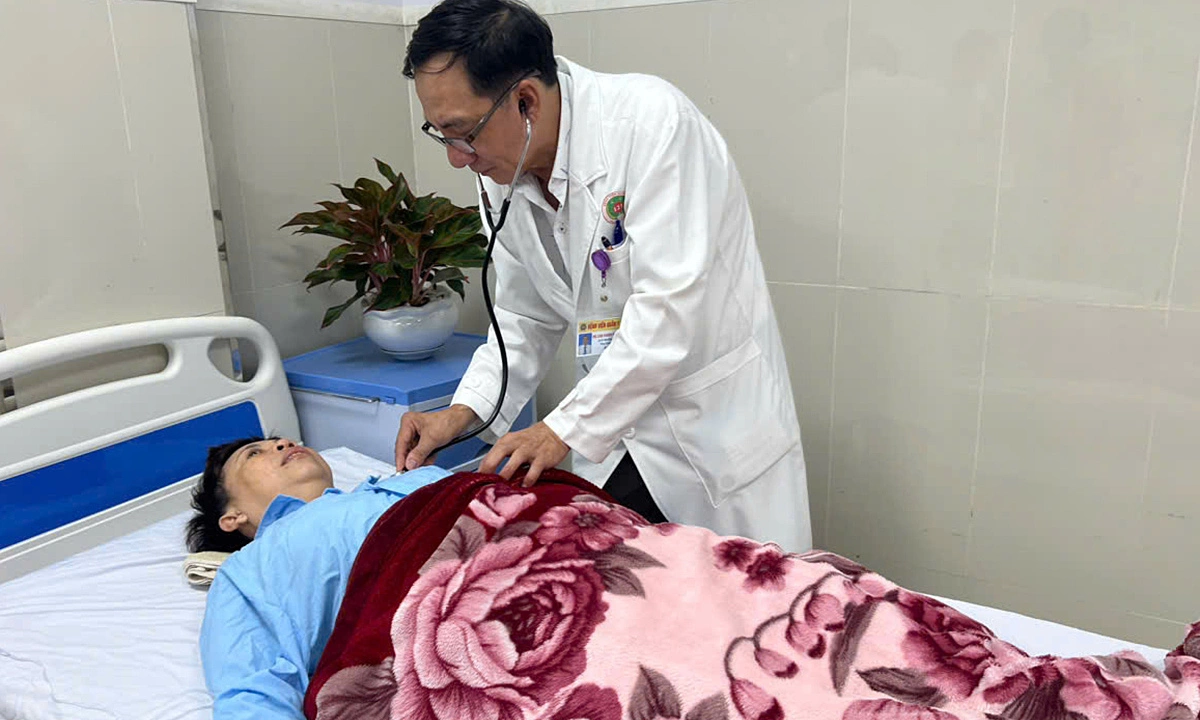
Doctor Phuc examines Mr. Manh's fundus with an ophthalmoscope. *Tam Anh General Hospital*.
The patient underwent examinations with specialists in Cardiology and Endocrinology - Diabetes to control blood pressure and blood sugar, and to screen for related complications.
Doctors injected anti-vascular endothelial growth factor (anti-VEGF) medication into the vitreous cavity to control neovascularization and reduce fluid leakage and hemorrhage. Subsequently, the patient underwent retinal photocoagulation to reduce ischemic areas of the retina. Doctors noted that due to the severe damage to the patient's retina, full vision recovery was unlikely. The treatment methods aimed to control the disease and prevent further damage progression.
One week after treatment, the retinal hemorrhage was controlled, and vision improved to 5/10. Doctors emphasized that the patient still needed strict control of blood pressure and blood sugar, along with regular follow-up appointments, as the condition carries a risk of recurrence.
Retinopathy is a common complication for individuals with diabetes, hypertension, and cardiovascular disease. Both conditions progress silently, often without clear symptoms in the early stages. However, in advanced stages of damage, patients may experience vision loss, floaters, distorted vision, or a veil-like obstruction in their field of vision.
Doctor Phuc recommends that everyone should monitor systemic indicators such as blood pressure and blood sugar. Individuals with underlying health conditions should undergo regular eye examinations every 6 to 12 months. If severe headaches, blurred vision, sudden vision loss, floaters, or a veil-like obstruction appear, patients should seek immediate medical attention for timely intervention.
Ngoc Kim Tham
*Patient's name has been changed*
| Readers can submit questions about ophthalmological conditions here for doctors to answer |