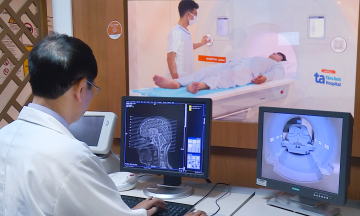
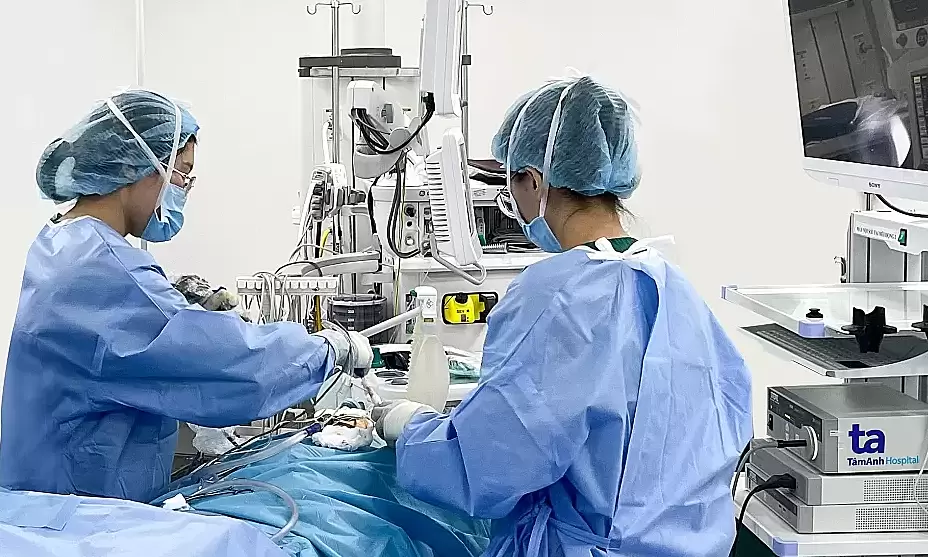
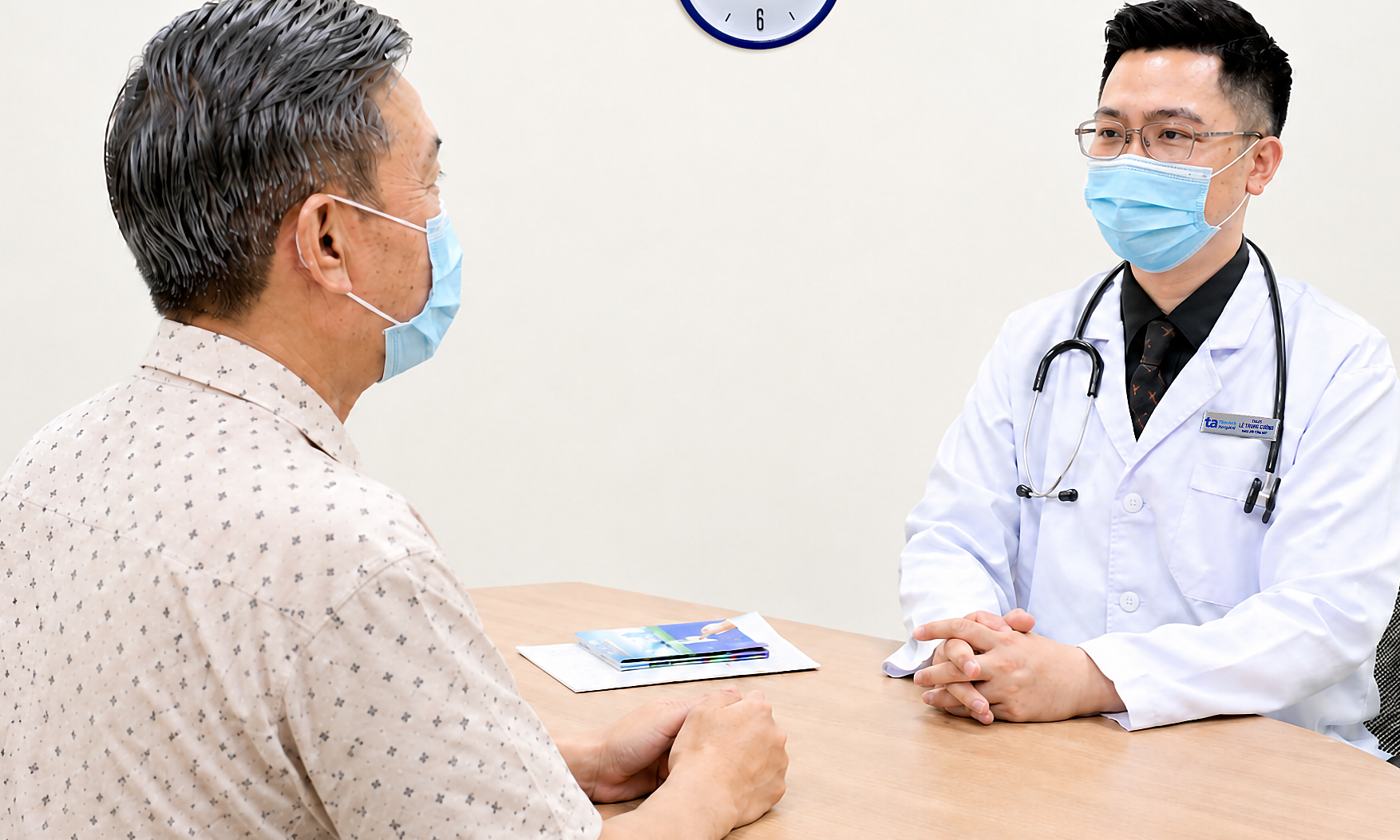
One day before admission, Hien presented with frequent urination and a distended, rigid abdomen, prompting her to visit Tam Anh District 7 General Clinic. Doctor Le Thanh Hung, Deputy Head of Obstetrics at the Obstetrics and Gynecology Center, reported finding a 7x6 cm fibroid near Hien's cervix and two ovarian tumors measuring approximately 6x8x9 cm. Doctors inserted a catheter to relieve bladder pressure, then transferred her to Tam Anh General Hospital in TP HCM for surgery.
Doctor Le Thanh Hung and his team performed open surgery to remove the uterus and the two tumor-containing ovaries. After surgery, Hien's urination normalized. She continued treatment for complications from the uterine fibroid compression, which had led to a urinary tract infection.
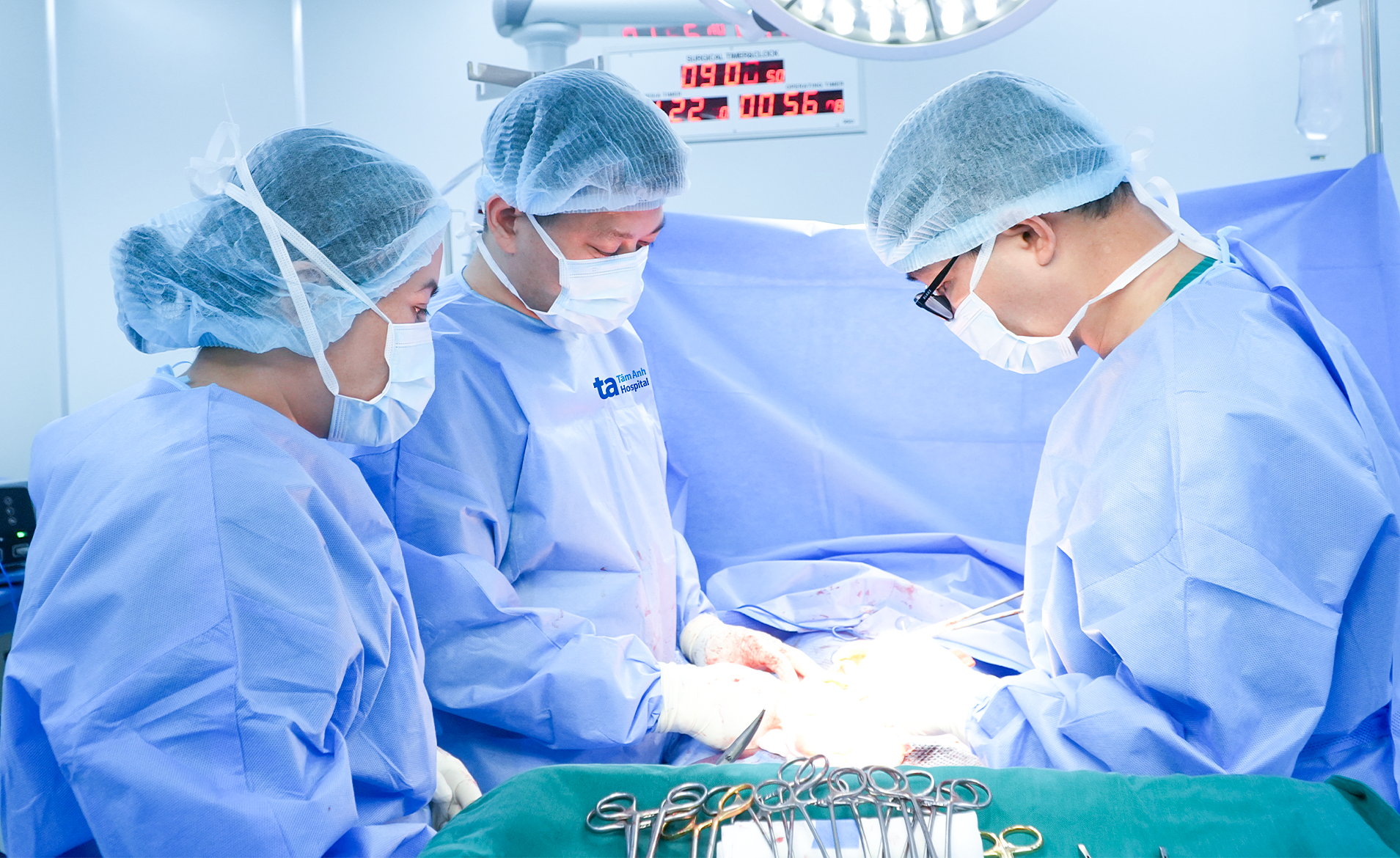 |
Doctor Hung (right) and his team surgically removed three tumors from the patient. Photo: Tam Anh General Hospital |
Doctor Thanh Hung stated that uterine fibroids are benign conditions common in women of reproductive age. Most fibroids are asymptomatic; however, 20-50% of cases exhibit symptoms such as irregular uterine bleeding causing anemia, lower abdominal pain, constipation, or frequent urination due to the tumor compressing nearby organs.
Acute urinary retention, a complication seen in Hien's case due to uterine fibroids, can occur when fibroids grow large or are located in specific areas like the cervix or isthmus, compressing the bladder, according to Doctor Hung.
Acute urinary retention caused by uterine fibroids (over 5-6 cm in size) can be temporarily managed by inserting a urinary catheter to relieve bladder pressure. Delaying treatment is not advisable as it can lead to urinary tract infections. Patients require emergency surgery to remove the fibroid while preserving the uterus if they wish to maintain fertility, or a hysterectomy if the fibroid is difficult to remove, causes significant bleeding, or if there is no desire for future pregnancies.
Doctor Hung recommends that women undergo regular gynecological check-ups every 6-12 months for early detection of abnormalities. If symptoms like difficulty urinating, urinary retention, frequent urination, lower abdominal pain, abnormally rapid abdominal enlargement, or prolonged menstrual bleeding occur, patients should seek medical attention promptly.
Tue Diem
*Patient's name has been changed
| Readers can submit questions about obstetrics and gynecology here for doctors to answer |