A December health report assessed the disease situation as complex. The changing weather, combined with increased travel and trade towards the year-end, creates favorable conditions for pathogens to spread rapidly, especially through respiratory and digestive routes.
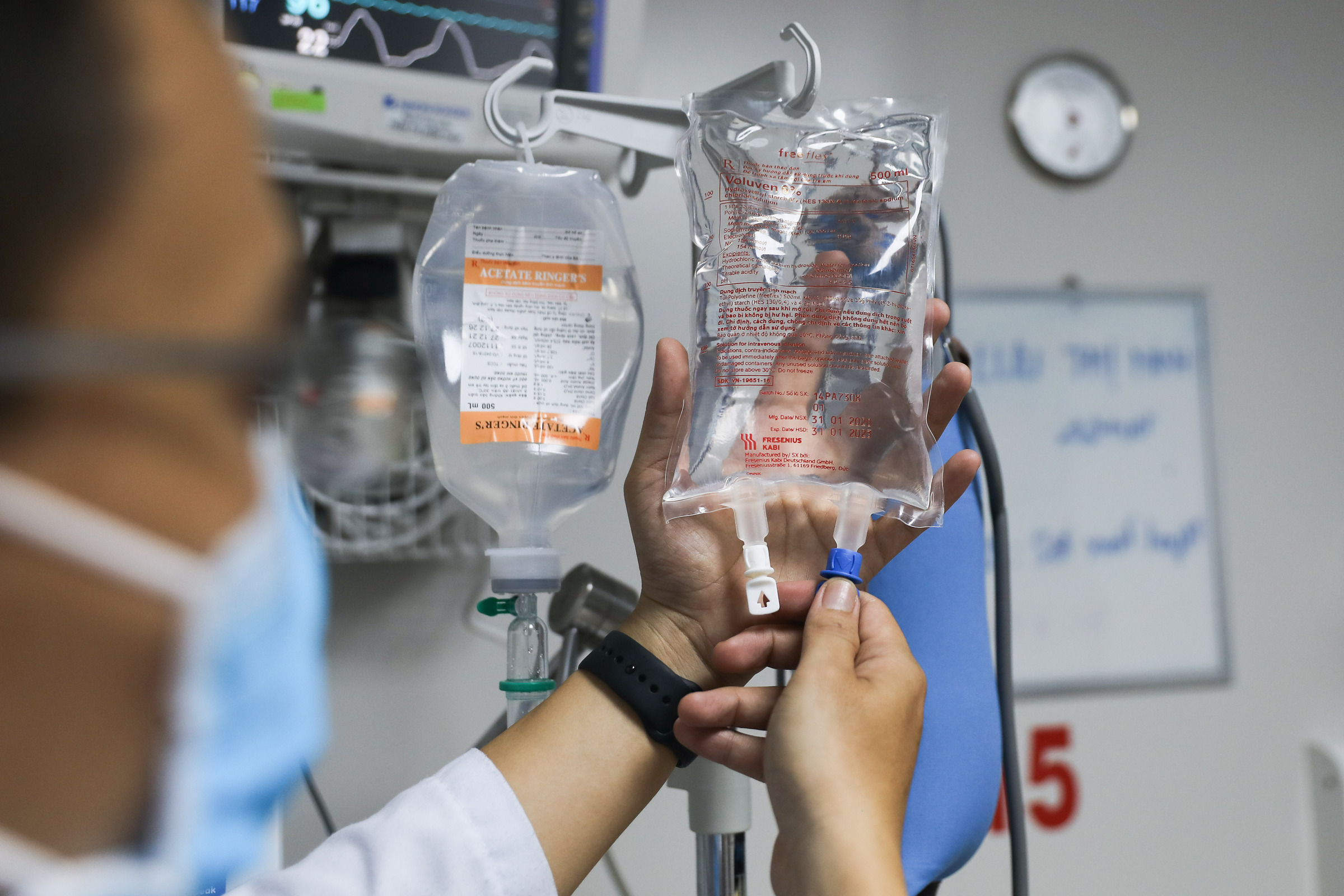 |
Intravenous fluids administered to a dengue patient at TP HCM Hospital for Tropical Diseases. *Photo: Quynh Tran*
Dengue fever has been the most critical, with over 24,600 cases and 5 deaths reported last month alone. Since 12/2024, the surveillance system has recorded over 181,200 patients and 43 fatalities, marking a 33% increase in cases and 17 more deaths compared to the same period. The epidemic is primarily concentrated in the South, with TP HCM accumulating over 64,000 cases since early 2025. Hotspots with high incidence rates, exceeding 100,000 per 100,000 residents, are found in the Southeast region, including Bac Tan Uyen, Bau Bang, and Ben Cat (formerly Binh Duong). In the North, Ha Noi has recorded over 6,000 patients and is projected to see continued cyclical increases.
Hand-foot-and-mouth disease also saw a 26% increase compared to the previous year. In December alone, the country reported over 17,600 cases, bringing the total accumulated cases for the year to over 96,000, including 1 fatality. Data indicates contrasting trends in the North and South. Ha Noi experienced a twofold increase in cases compared to the same period, reaching over 6,000 cases. TP HCM recorded approximately 37,000 cases, with high infection density in Nha Be, Binh Tan, and Con Dao.
Meningococcal meningitis cases surged, with 104 cases, 80 more than in the same period last year. The infectious disease surveillance system also noted the circulation of other pathogens. Covid-19 saw over 15,000 cases during the year, resulting in 3 deaths. Measles-like rash reported over 117,600 cases, with 11 fatalities testing positive for measles.
Dengue fever currently lacks a specific treatment and can quickly lead to severe complications such as shock, multi-organ failure, and massive bleeding, causing rapid death if not controlled promptly. Hand-foot-and-mouth disease is equally dangerous, directly attacking the nervous and cardiovascular systems, potentially causing encephalitis or acute pulmonary edema in young children. Meningococcal meningitis, in particular, is likened to a "killer" due to its rapid progression, capable of taking a healthy person's life within 24 hours of onset. Even if patients survive the critical phase, they face the risk of permanent sequelae like deafness, limb amputation, or intellectual developmental delay. The simultaneous outbreak of these three dangerous diseases during the Tet holiday places a significant burden on the treatment system and directly threatens public health.
Facing the risk of widespread outbreaks, specialized agencies have urged localities to tighten surveillance at borders and within communities, and to thoroughly manage outbreaks immediately upon detecting the first case. The Ministry of Health advises people to get fully vaccinated according to schedule. The National Institute of Hygiene and Epidemiology has currently received approximately 23 million doses of various vaccines, ensuring supply until mid-2026.
Le Nga