On 25/12, doctor Le Son Viet from the emergency department at the National Hospital for Tropical Diseases reported that the patient was in respiratory failure and required intensive care. Six days prior, he fell at a construction site, scratching his ankle and both knees. Believing the wounds were harmless, he disinfected and bandaged them at home, not seeking vaccination. His family only took him to a local clinic for examination when his jaw muscles stiffened. In less than one day, his condition rapidly worsened with chest tightness and difficulty breathing, necessitating intubation, mechanical ventilation, and an urgent transfer.
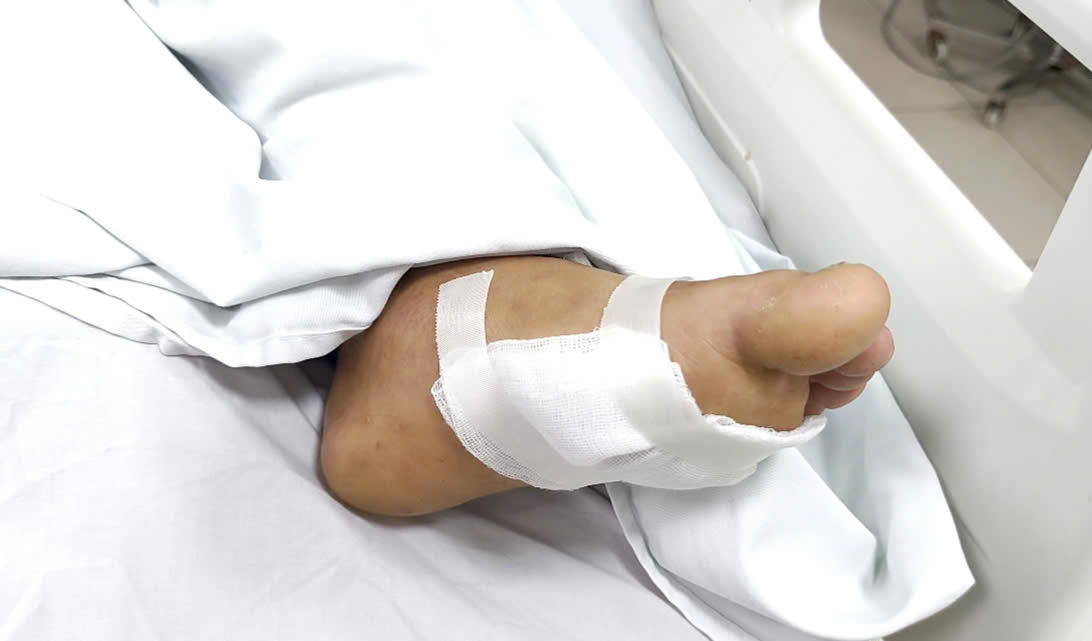 |
A tetanus patient receiving treatment at the hospital. Photo: Hospital provided |
This case is one of 10 severe tetanus cases currently undergoing treatment at the National Hospital for Tropical Diseases. Most cases stem from a complacent attitude towards minor injuries. Three weeks ago, for instance, a 40-year-old man stepped on a nail on his way home from work. After receiving first aid at a local health station, he neglected to get vaccinated. A few days later, he experienced jaw stiffness and difficulty opening his mouth but dismissed it as fatigue, enduring the discomfort. Only when his back arched and his limbs began to spasm did he seek hospital admission, already in respiratory failure, and doctors diagnosed him with generalized tetanus.
Similarly, a 37-year-old worker hit his leg on a cutting machine, detaching his big toenail. He treated the wound himself and did not receive tetanus antitoxin. Consequently, his muscles gradually stiffened, he found swallowing difficult, and severe episodes of muscle hypertonia appeared, leading to his transfer for specialized medical intervention.
Health experts state that tetanus is an acute infection with a high mortality rate. The tetanus bacillus (Clostridium tetani) is common in soil, dust, animal feces, and sewers. The bacteria enter through open wounds, releasing toxins that attack the nervous system, leading to muscle rigidity and respiratory failure. Many mistakenly believe that only large, profusely bleeding wounds are dangerous, yet the bacteria can infect even the smallest scratches if the instruments causing the injury are not sterilized.
Treatment for this disease often lasts many weeks to several months and is costly. The most effective preventive measure is complete vaccination and timely booster shots to ensure lasting immunity. People who sustain accidents or injuries during daily activities or work should seek medical attention for proper wound care and immediate vaccination to prevent unfortunate complications.
Thuy Quynh