Tang Chi Thuong, Director of the Ho Chi Minh City Department of Health, shared this information at a workshop on 26/12, focusing on the Eldercare System Development Project for the 2025-2030 period. Thuong emphasized that population aging is no longer a future concern but an immediate challenge, directly impacting healthcare, social security, and urban governance.
According to city health leaders, the current supply of eldercare services cannot keep pace with the increasing elderly population. Each year, Ho Chi Minh City sees nearly 35,000 more people enter their elderly years, bringing the total number of older adults to approximately 1.7 million. However, the 36 operational facilities meet only a small fraction of this demand, caring for just over 3,500 individuals. Current care models primarily involve institutional care, lacking flexible options such as home care, daycare, or palliative care. The existing system is fragmented, lacks coordination, and suffers from an inadequately trained workforce.
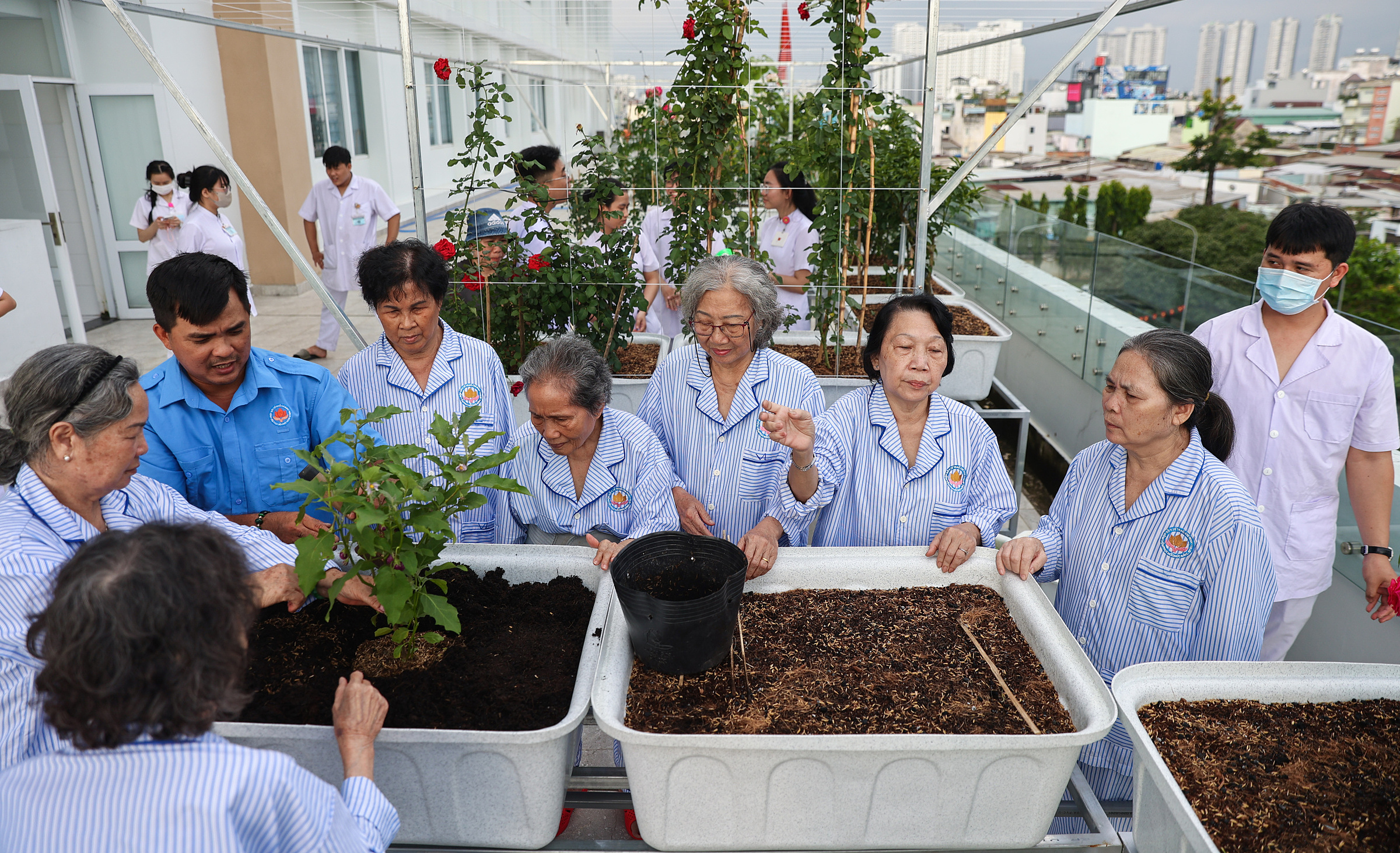 |
Elderly individuals participating in daycare eldercare services at the Ho Chi Minh City Hospital of Rehabilitation and Occupational Diseases. Photo: _Quynh Tran_ |
Nguyen Tang Minh, Deputy Director of the Department of Health, noted the growing pressure on the social security system due to changing traditional family structures, fewer children, and shrinking urban living spaces. Additionally, disease patterns are shifting significantly towards chronic non-communicable diseases, leading to a surge in demand for long-term care, rehabilitation, and dementia support.
Although Ho Chi Minh City entered its aging phase in 2017, approximately six years later than the national average, it is experiencing a very rapid increase in its elderly population. By the end of 2025, forecasts indicate the city will have approximately 1.6 million residents over 60, accounting for 11% of its population. This makes it the locality with the largest number of elderly people nationwide. On a national level, Vietnam is also among the fastest-aging countries globally, projected to reach 18 million elderly by 2030, meaning one in six citizens will be an older adult.
In response to this situation, the Ho Chi Minh City Department of Health is advising the City People's Committee on the development of an Eldercare System Development Project for the 2025-2030 period and beyond. The plan aims to establish a multi-tiered service model, encompassing home care, daycare, nursing home care, and end-of-life care. This approach seeks to ensure that older adults receive appropriate and timely care while reducing the burden on other healthcare facilities.
The city also aims to standardize the quality of eldercare services by developing a comprehensive set of standards for each type of care. It plans to cultivate a professional eldercare workforce, equipped with proper training and certifications. Concurrently, the city will explore sustainable financial mechanisms, encouraging controlled private sector involvement and ensuring service accessibility for vulnerable groups.
At the workshop, experts highlighted that a well-planned eldercare system could not only address social security needs but also create opportunities for a "silver economy." Many participants suggested that Ho Chi Minh City should develop a multi-tiered eldercare model, prioritizing home and community-based care. They also emphasized solving the workforce shortage through professional training. Furthermore, the city needs to investigate sustainable financial mechanisms, such as dedicated funds or long-term care insurance, to alleviate financial burdens on citizens.
Le Phuong