Dr. Dao Pham Thai Son, a specialist in spinal surgery at Tam Anh General Clinic District 7, states that sleeping posture impacts not only sleep quality but also directly affects spinal health. Correct sleeping posture maintains the spine's natural curve, reducing pressure on vertebrae and ligaments. In contrast, incorrect posture can imbalance the spine, causing body aches, neck, shoulder, and back pain, muscle tension, and nerve compression. Over time, this can lead to disc herniation due to uneven pressure on discs and joints, worsening any existing back problems.
To protect the spine, the doctor suggests the following postures:
Sleeping on your back with a pillow under your neck is one of the best postures for the spine. Back sleeping helps distribute weight evenly across the body and keeps the head, neck, and spine in a neutral position. Placing a small pillow under the neck maintains the natural curve of the lower back, reducing spinal pressure.
Side sleeping with a small pillow between the two knees prevents the upper leg from shifting off the spinal axis, helping to align the spine, hips, and pelvis. This reduces pressure on the back, hips, and knees, relaxes muscles, improves blood circulation, prevents numbness, and alleviates sciatica pain. This posture is particularly beneficial for pregnant women and individuals with back or hip pain.
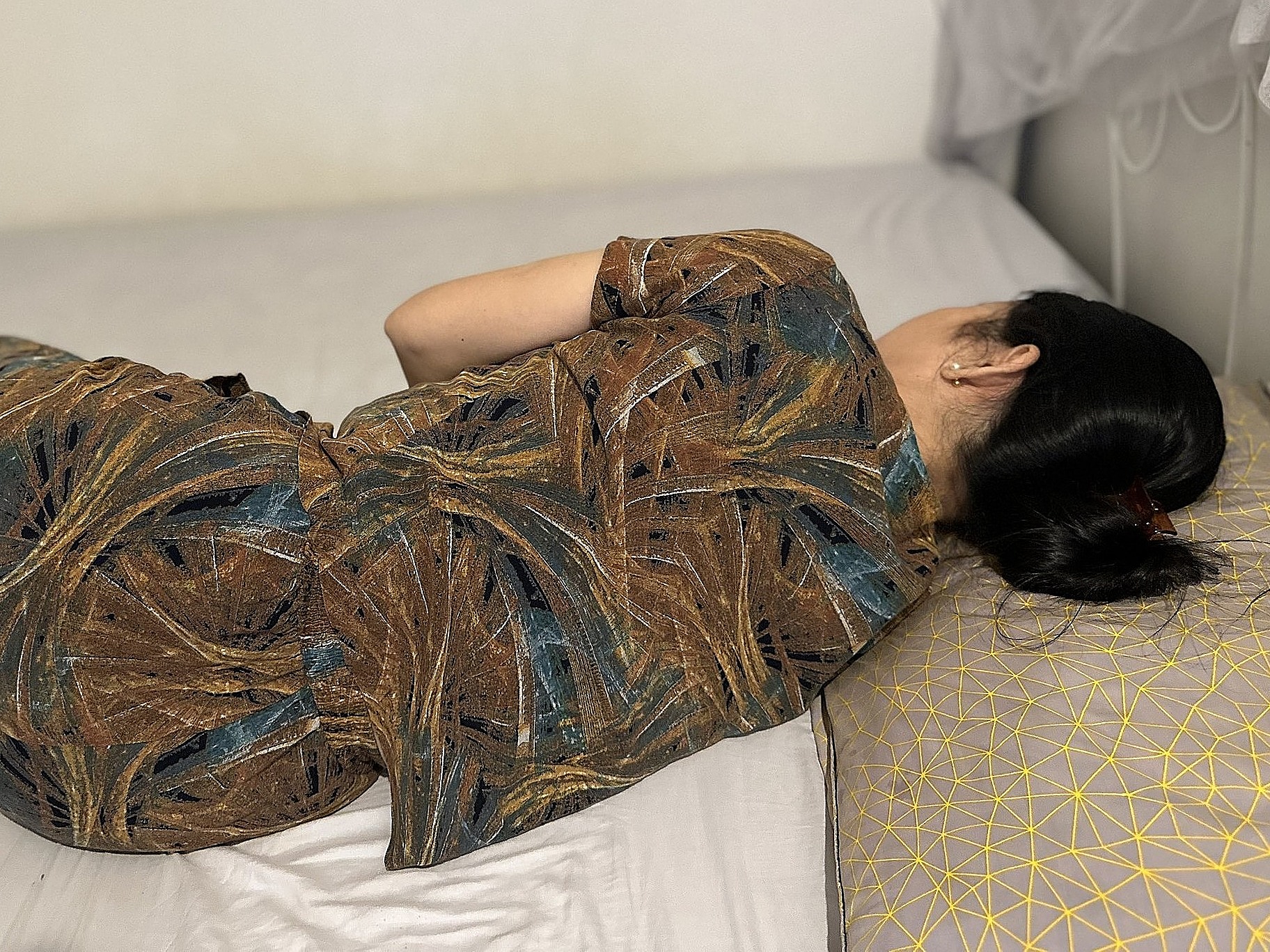 |
Good sleeping posture can reduce spinal aches and pains. *Illustration: Ngoc Pham* |
Here are the sleeping postures to avoid:
Stomach sleeping forces the head to turn to one side for extended periods to breathe, straining neck muscles and compressing nerves in this area. Prolonged misalignment can irritate nerves, increasing the risk or worsening cervical disc herniation if already present. This posture also causes abnormal spinal curvature, losing the natural physiological curve, and increasing back pain risk.
The fetal position, a side-sleeping style with legs curled towards the chest and a curved back, may offer temporary comfort. However, prolonged maintenance stretches the spine and strains back muscles, leading to lower back pain and spinal misalignment. This also affects neck muscles and joints, causing stiffness and aches.
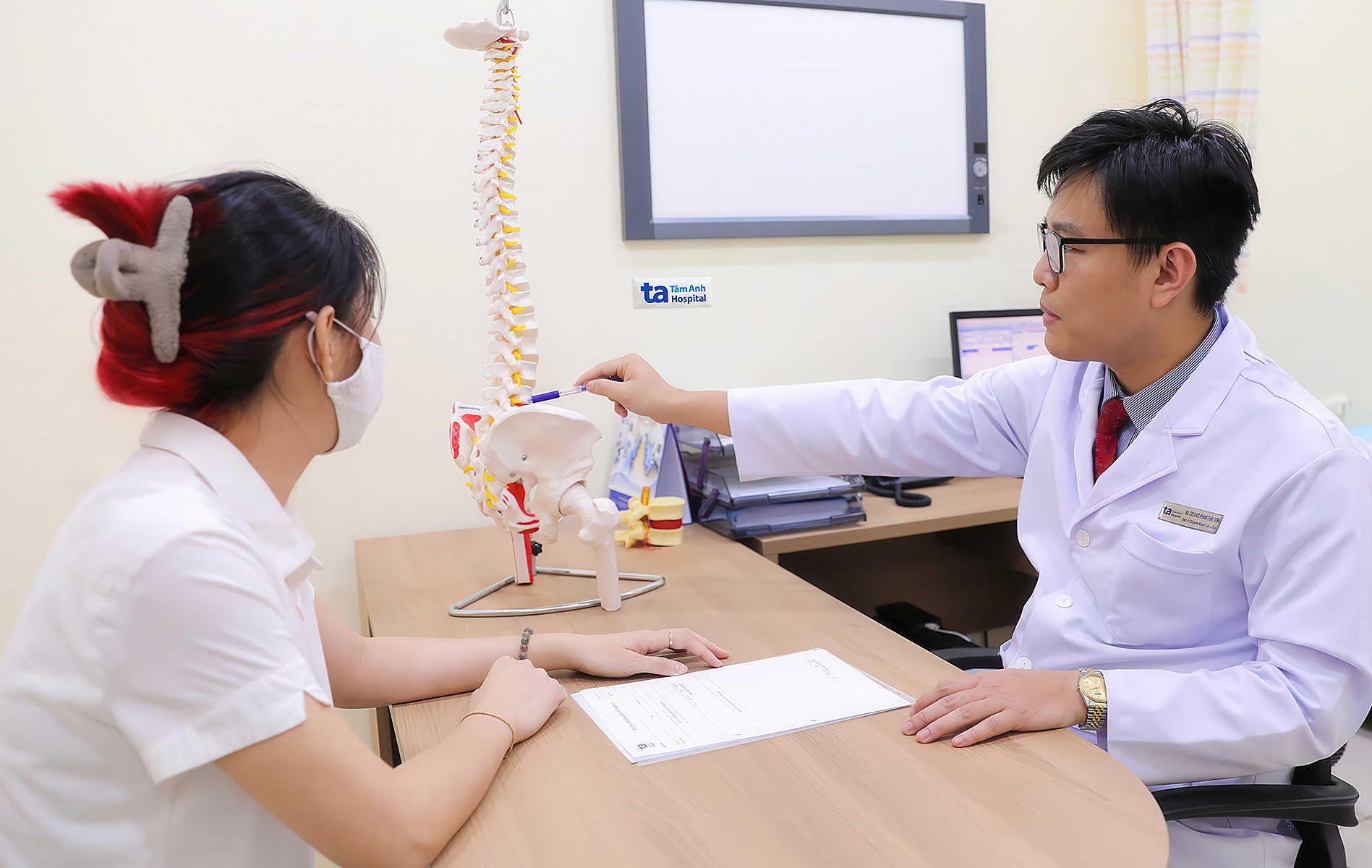 |
Dr. Son explains spinal function to a patient. *Illustration: Tam Anh General Clinic District 7* |
To support the spine, in addition to sleeping posture, Dr. Son advises attention to mattress quality. Opt for a medium-firm mattress, neither too hard nor too soft, to properly support the spine and maintain its natural physiological curve.
Patients should have regular health check-ups or seek medical attention immediately for abnormal signs such as back pain, pain radiating to limbs, or reduced mobility, to ensure timely detection and treatment of spinal conditions and prevent serious complications.
Phi Hong
| Readers can send questions about musculoskeletal conditions here for a doctor's response. |