In an official dispatch issued on 25/12, the Drug Administration of Vietnam, under the Ministry of Health, listed the recalled products, including popular items such as: Bigen Cream Tone hair dye (codes 7G, 6G, 4G), Hatomugi The Cleansing Oil makeup remover, Soft Stone Double deodorant, Hatomugi The Body Soap shower gel, Hatomugi The Hand Cream hand cream, and Hatomugi Reihaku Mist Lotion spray.
The reason for the recall stems from the Hanoi-based company's failure to provide a product information file (PIF) during an inspection by authorities. According to a representative from the Drug Administration of Vietnam, a PIF is a mandatory technical document that must be retained to demonstrate the quality, safety, and efficacy of cosmetic products. While businesses are not required to submit a PIF when announcing a product's circulation, they must present it immediately upon request during post-market surveillance. The absence of this file leads to the legal consequence of revoking the product announcement receipt number.
Japan Connection Company must accept returned products from agents and sales points, and proceed with the recall and destruction of the entire non-compliant batch. The company is required to submit a report on its implementation results to the Drug Administration of Vietnam by 5/1/2026. The Hanoi Department of Health will directly supervise this process.
Local health departments are responsible for informing businesses and consumers in their areas to immediately stop selling and using these items. Units that intentionally fail to implement the recall or continue to conduct business will face strict penalties according to regulations.
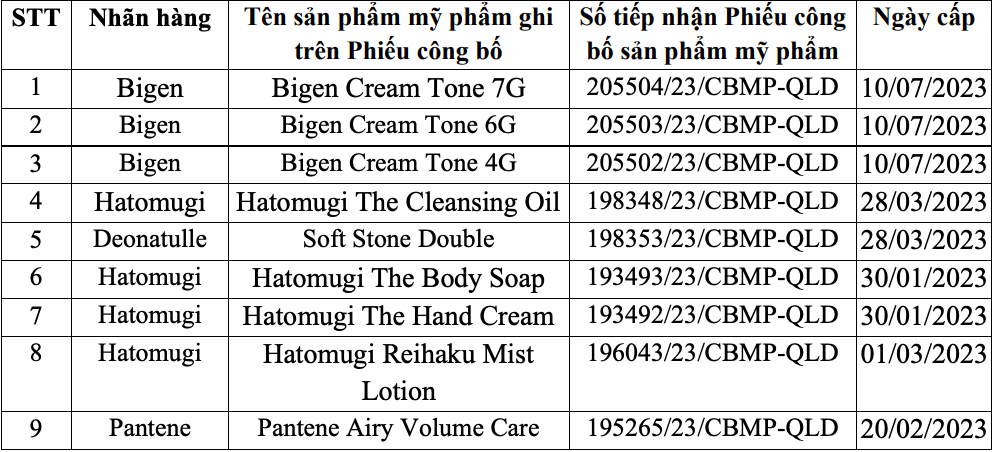 |
List of recalled and mandated for destruction products. Photo: *Drug Administration of Vietnam* |
This regulatory action occurs as Vietnam's cosmetic market expands rapidly, yet faces numerous challenges in quality control. The Drug Administration of Vietnam notes a rise in the sale of products with unclear origins and poor quality, alongside issues of counterfeit goods and misleading advertising.
Data from Statista indicates that the Vietnamese cosmetic market is estimated to reach over USD 2.4 billion in 2024, representing a 3.4% increase year-on-year, and is projected to hit USD 2.7 billion by 2027. Currently, 90% of the supply is imported. Consumer purchasing habits are significantly shifting towards e-commerce platforms and social media, although traditional retail channels still hold approximately 80% of the market share.
Le Nga