Hand, foot, and mouth disease (HFMD) is a common infectious illness in children under five years old. It tends to increase seasonally, with significant outbreaks from March to May and September to December each year. Most cases are mild and can be managed at home. However, many children still experience severe symptoms requiring hospitalization.
Doctor Nguyen Thi Hanh Trang, Deputy Head of Pediatrics at Tam Anh General Hospital Ho Chi Minh City, highlights common mistakes that can exacerbate HFMD in children.
**Underestimating the Illness**
Many parents dismiss HFMD as a mild, self-resolving illness, leading them to neglect monitoring their child's condition. They might overlook mild fever, a few spots on the hands and feet, or mouth sores. However, the disease can worsen within the first three to five days, often causing symptoms such as frequent startling, excessive crying, limb tremors, and vomiting. Early detection is crucial, as delayed recognition can lead to dangerous neurological and cardiovascular complications.
**Misdiagnosis as Other Conditions**
Mistaking HFMD for viral fever, mouth ulcers, or chickenpox often results in incorrect management. When a child develops oral sores, parents might assume they are common mouth ulcers and only provide vitamins. Similarly, parents might not thoroughly check the palms, soles, and buttocks for blisters—typical locations for HFMD—if they see scattered blisters elsewhere. Such misdiagnosis can prevent adequate monitoring and delay the identification of severe warning signs.
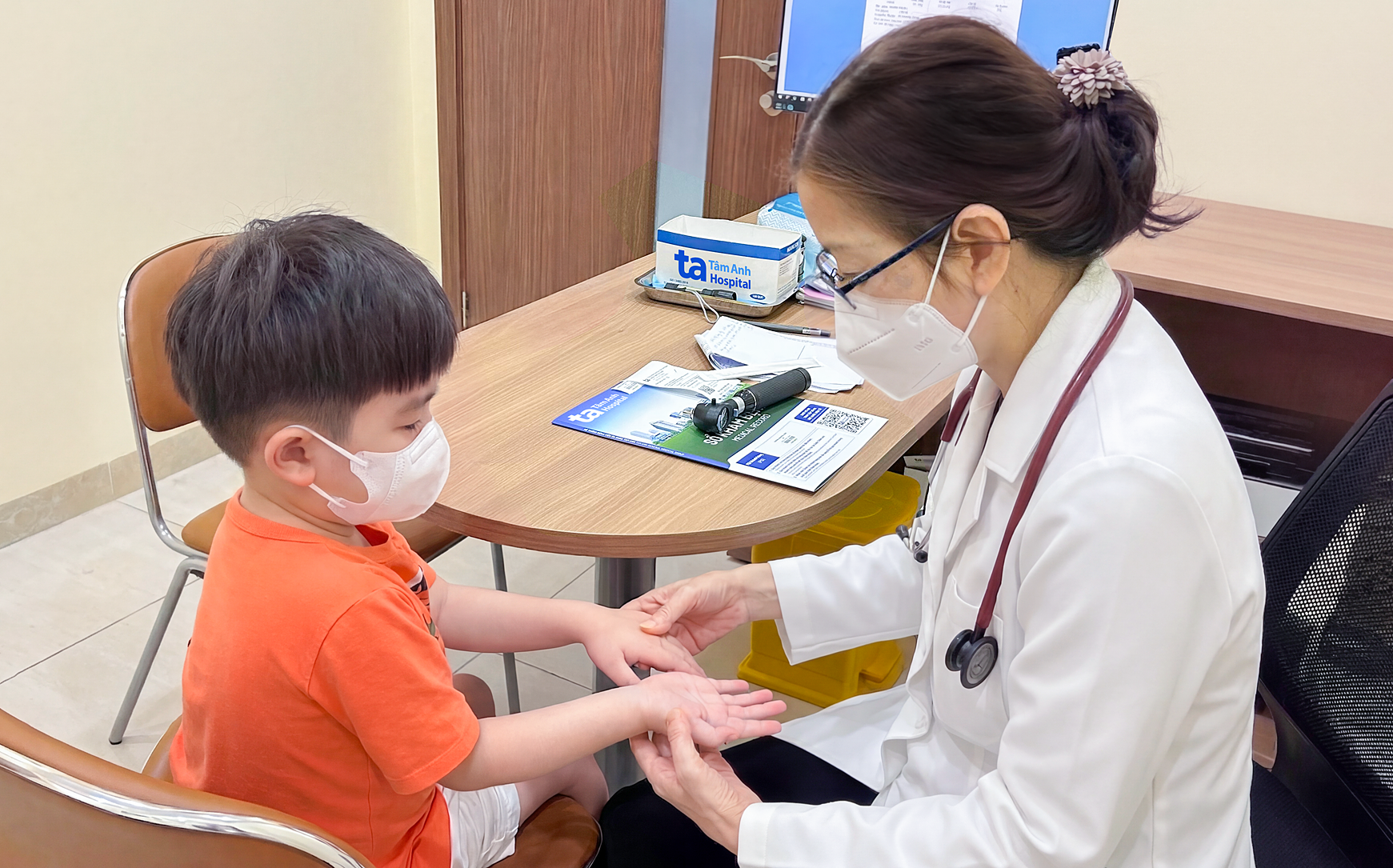 |
Doctor Trinh Thi Thanh Ngan examines a child with hand, foot, and mouth disease at Tam Anh General Clinic District 7. Photo: Minh Tam
**Self-Medication Without Medical Advice**
A common error is parents self-administering medication at home, particularly antibiotics, or overusing fever reducers and pain relievers, or applying topical medication to sores without medical guidance. Parents should consult a doctor before giving any medication to children to ensure safety, prevent symptoms from being masked, and avoid diagnostic difficulties.
**Ignoring Severe Warning Signs**
Parents often focus solely on fever and blisters, overlooking more critical signs such as frequent startling, lethargy, fatigue, excessive crying, repeated vomiting, unsteady gait, rapid breathing, or limb tremors. These symptoms signal severe complications and require immediate hospital attention.
**Inappropriate Feeding Practices**
HFMD causes painful mouth sores, making it difficult for children to eat. Forcing a child to eat can intensify the pain, leading to fear of food, vomiting, and dehydration. Conversely, overly restrictive diets can result in nutritional deficiencies and slow recovery.
Doctor Trang advises parents to offer children soft, cool, and easy-to-swallow foods like porridge, soup, or milk, dividing meals into smaller portions to minimize discomfort. Parents should encourage adequate fluid intake, and an electrolyte solution may be given as directed by a doctor to prevent dehydration. If a child refuses to eat, vomits frequently, or shows signs of fatigue, they should be examined promptly.
**Lack of Isolation Leading to Spread**
HFMD spreads via the fecal-oral route and direct contact. Infrequent handwashing, inadequate cleaning of toys, and failure to isolate sick children can facilitate the spread of the disease within families and communities. Sending children back to school before full recovery also increases the risk of outbreaks.
**Delayed Hospital Visits**
This is the most serious mistake. Many children are brought to the hospital only after their condition has become severe, exhibiting symptoms like persistent high fever, frequent startling, limb tremors, unusual crying, lethargy, excessive vomiting, or rapid/difficult breathing. Such delays make treatment more challenging.
Doctor Trang recommends that parents closely monitor children during the initial days, seek medical attention immediately for any unusual signs, and avoid self-medicating. Daily cleaning of doorknobs, tables, chairs, and floors with a chlorine-based solution is important. Toys should be washed with soap or disinfectant to limit spread. Children with HFMD should stay home from school, wash hands frequently, avoid crowded places, ensure proper nutrition and hydration, and follow up with medical appointments as advised.
Minh Tam