A 54-year-old man, Mr. Hung, initially dismissed a painless neck lump as inflammation. However, the lump grew, leading doctors to diagnose him with metastatic thyroid cancer. An ultrasound of Mr. Hung's thyroid at Tam Anh General Hospital Hanoi revealed multiple hypoechoic nodules, with a TIRADS 5 mass indicating an 80% malignancy risk. A subsequent biopsy confirmed papillary thyroid cancer with lymph node metastasis.
Dr. Tran Thai Son, a general surgeon, explained that papillary thyroid cancer is the most common form of thyroid cancer, accounting for approximately 80-85% of cases. This disease originates from follicular cells in the thyroid gland that produce thyroglobulin protein. It typically progresses slowly and often remains localized to one thyroid lobe.
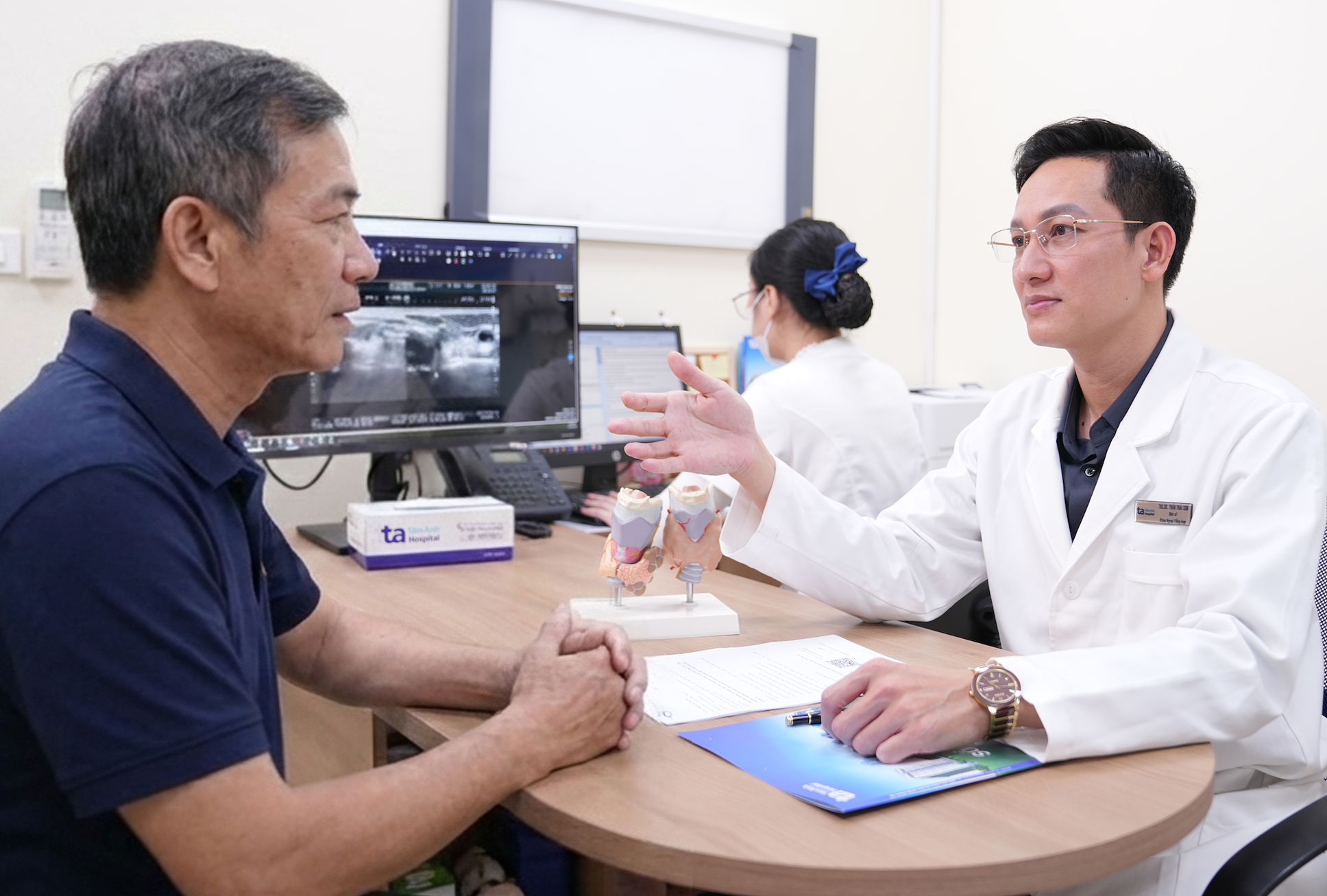 |
Dr. Son explains the patient's condition to Mr. Hung. *Photo: Tam Anh General Hospital*. |
Early detection of papillary thyroid cancer is possible through regular health check-ups. In its early stages, before metastasis, patients can undergo surgery to remove one thyroid lobe for complete eradication. Post-surgery, these patients typically do not require radioactive iodine treatment or daily hormone medication. Furthermore, they may have options for less invasive procedures, such as endoscopic surgery through the mouth, which reduces the risk of visible neck scars compared to open surgery.
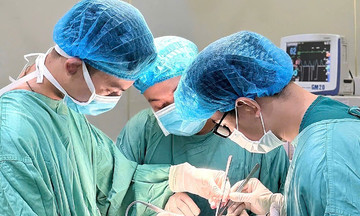
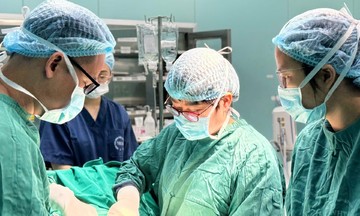
Unfortunately, Mr. Hung's disease was discovered at a late stage. He presented with multifocal thyroid cancer and extensive lymph node metastasis, necessitating extensive open surgery. The surgical team performed a total thyroidectomy and dissected 26 central and bilateral cervical lymph nodes. The metastatic cancer nodes had adhered to major blood vessels, nerves, and neck muscles, making the dissection particularly challenging.
Post-surgery, Mr. Hung recovered well and was discharged three days later. He now requires radioactive iodine (I-131) therapy to eliminate any remaining cancer cells and must take daily thyroid hormone medication. This highlights the stark difference in treatment and recovery between early and late-stage diagnoses.
Dr. Son emphasizes the importance of regular health check-ups to detect any thyroid abnormalities early, enabling timely intervention. He noted that thyroid cancer, and cancers in general, have a significantly higher 5-year survival prognosis when detected and treated in their early stages compared to late-stage diagnoses.
Thanh Long
| Readers can ask questions about cancer here for doctors to answer. |