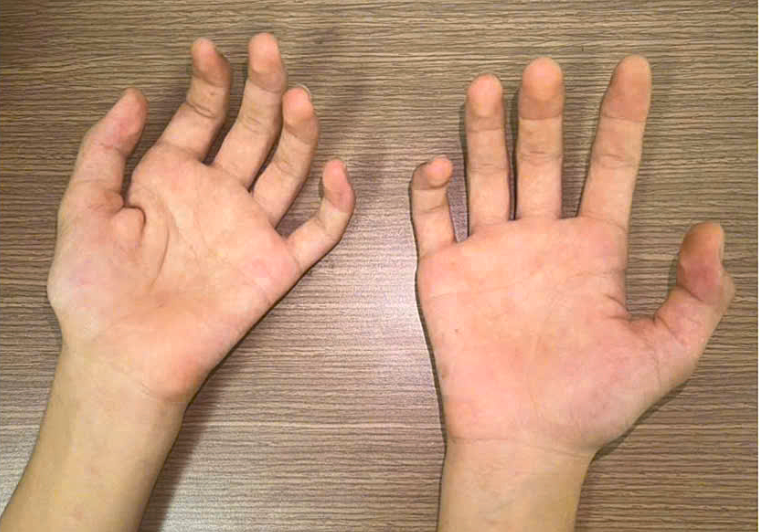
On 1/9, a representative from the National Hospital for Tropical Diseases reported that the patient was transferred to a provincial hospital and diagnosed with sepsis, pneumonia, acute kidney failure, liver damage, and severe shock. Due to her critical condition, increasing inflammatory markers, slow kidney function recovery, low urine output, and extensive lung damage, the patient was transferred to the Intensive Care Center at the National Hospital for Tropical Diseases.
Upon admission, the girl had a continuous fever, required mechanical ventilation with high oxygen support, was on vasopressor medication, and continued to receive dialysis. Doctors noted septic shock and multi-organ damage, including pneumonia, acute kidney failure, and liver damage.
During examination, doctors discovered a skin lesion suspected to be a mite bite in the sub-mammary area. Specialized tests confirmed Rickettsia infection, consistent with a diagnosis of scrub typhus. The girl continued to receive intensive care, mechanical ventilation, dialysis, and appropriate antibiotics. However, organ function recovered slowly, indicating a severe prognosis that required close monitoring and aggressive treatment.
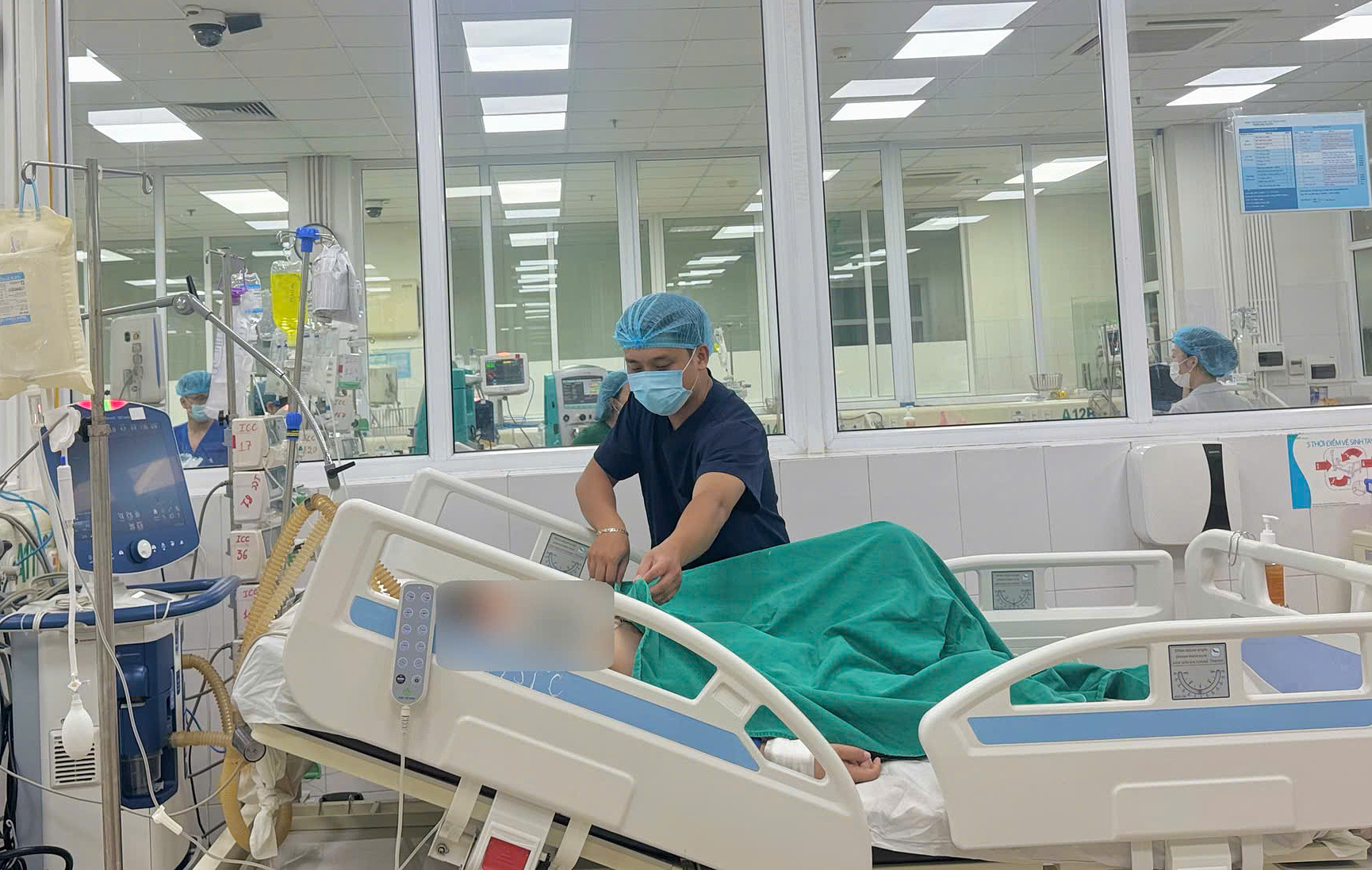 |
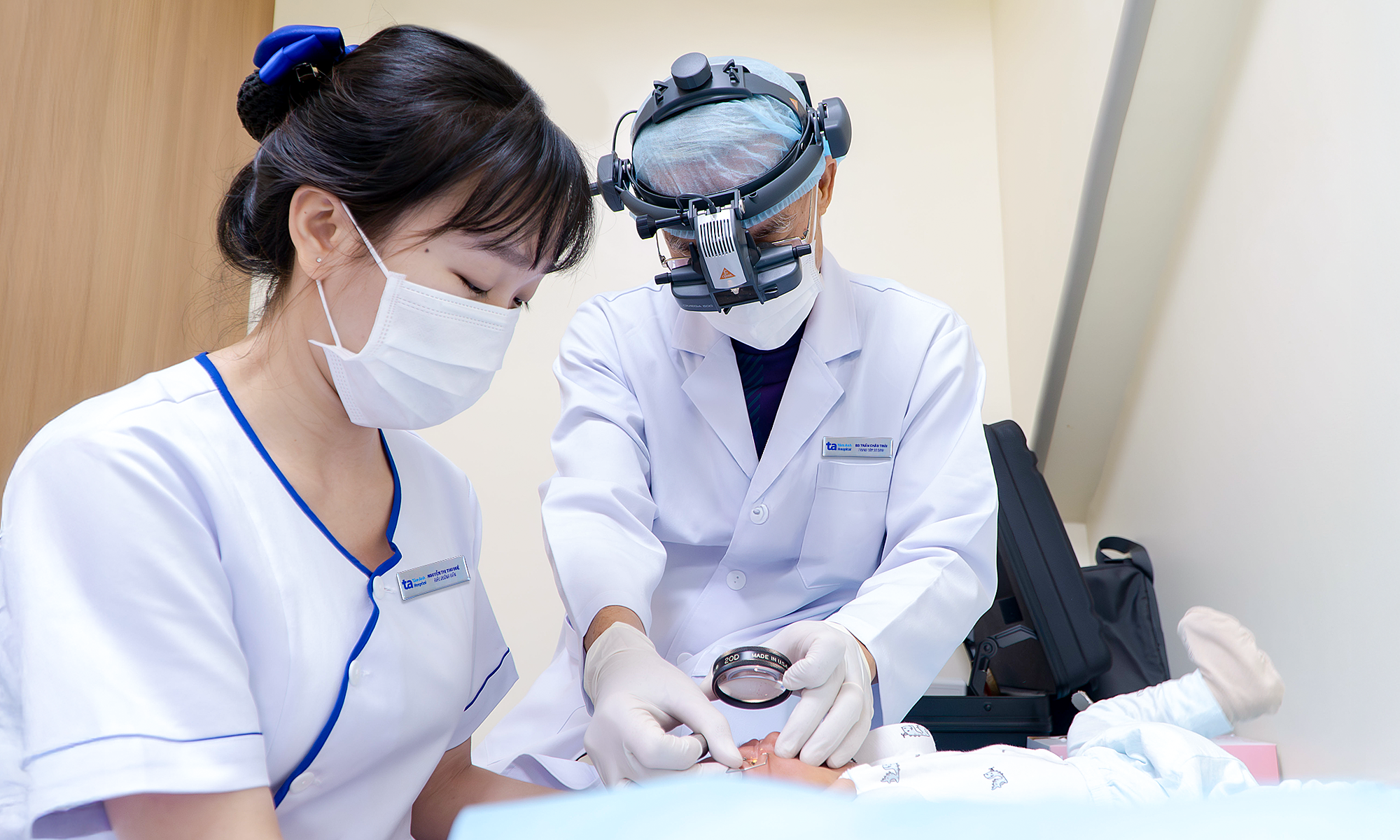
The doctor treating the patient. Photo: Hospital provided
Doctor Nguyen Hong Ky, from the Intensive Care Center, stated that scrub typhus is an infectious disease caused by the bacterium Orientia tsutsugamushi, transmitted to humans through the bite of infected mite larvae. Patients typically present with symptoms such as high fever, headache, fatigue, and body aches; some cases may also develop a rash.
A characteristic ulcer, known as an Eschar, may appear at the site of the mite bite. This lesion is often painless and can be found in concealed areas such as the armpits, groin, sub-mammary region, around the waist, or areas covered by clothing. Consequently, patients and their families may not notice it. In the 14-year-old patient's case, the lesion discovered in the sub-mammary area was a crucial clue that helped doctors guide the diagnosis and identify the cause of the illness.
Diagnosing scrub typhus is challenging in its early stages because the disease may only present with fever and non-specific symptoms, making it easily confused with many other infections. If epidemiological factors are not thoroughly investigated or the characteristic skin lesion is not found, the disease can be overlooked.
Doctor Ky explained that in severe cases, scrub typhus can cause damage to multiple organs, leading to pneumonia, respiratory failure, liver damage, kidney failure, coagulation disorders, thrombocytopenia, central nervous system damage, myocarditis, and shock. Severe cases can result in multi-organ failure, threatening the patient's life.
The case of the 14-year-old girl clearly illustrates this: from initial common symptoms of fever and sore throat, the disease rapidly progressed to septic shock and multi-organ failure, requiring mechanical ventilation, dialysis, and vasopressor medication simultaneously.
Scrub typhus has specific antibiotic treatment and responds well if identified and treated correctly and promptly. Conversely, delayed diagnosis can allow the disease to progress, increasing the risk of serious complications.
Therefore, when experiencing a prolonged high fever of unknown cause, especially for those with exposure factors such as going into forests, working in fields, gardening, sitting or lying on grass or bushes, or living in heavily vegetated areas, it is essential to provide full information to the doctor during examination. People should not only look for skin lesions in easily observable areas. Mite bites can be in concealed, less painful areas and are easily overlooked. A thorough full-body examination in cases of fever with an unclear cause is important for guiding diagnosis.
Doctors advise people not to be complacent about prolonged high fever, especially if accompanied by severe fatigue, rash, difficulty breathing, intense headache, altered consciousness, low urine output, bleeding, or other worsening general symptoms. Patients should seek medical attention for early assessment and avoid prolonged self-treatment at home.
Thuy Quynh
Go /e hello de dich ngay lap tuc!
Su dung lenh slash nhu /ja, /zh, /fr trong bat ky o nhap nao
— Zent Translate