Eng English
China 中国人

Eng English
China 中国人
  • News
  • World
  • Business
  • Entertainment
  • Sports
  • Law
  • Education
  • Health
  • Lifestyle
  • Travel
  • Science
  • Digital
  • Automobiles
  • Trở lại Thể thao
  • Health
Tuesday, 1/9/2026 | 08:09 GMT+7

Why do children experience recurrent middle ear infections after treatment?

My three-year-old child frequently experiences recurrent middle ear infections despite antibiotic treatment. What causes this, and how can it be improved? asks Trinh Ngo, 35, from Can Tho.

Otitis media is an infection of the middle ear (behind the eardrum) that causes swelling, pain, fever, and discharge. While it can affect all ages, it is most common in children aged 6 to 36 months.

Children are more prone to otitis media than adults due to their shorter, more horizontal eustachian tubes. This anatomical difference allows secretions from the nose and throat to easily accumulate and spread to the ear instead of draining normally into the throat. This creates an environment for bacteria and viruses from the nose and throat to enter the middle ear, causing inflammation.

A child's developing immune system has a weaker ability to fight off bacteria and viruses, increasing the risk of upper respiratory infections. After an acute episode of otitis media, fluid may persist in the middle ear even if symptoms subside. If a child contracts a new infection, the risk of recurrent otitis media is high.

Children attending school are exposed to many peers in enclosed spaces, increasing the likelihood of cross-infection with upper respiratory illnesses such as colds and pharyngitis. Each respiratory infection provides an opportunity for bacteria and viruses to attack.

In young children, adenoids (VA) are often large and prone to infection. Enlarged or chronically inflamed adenoids can compress and obstruct the eustachian tube's drainage function, leading to fluid buildup—a factor contributing to recurrent otitis media.
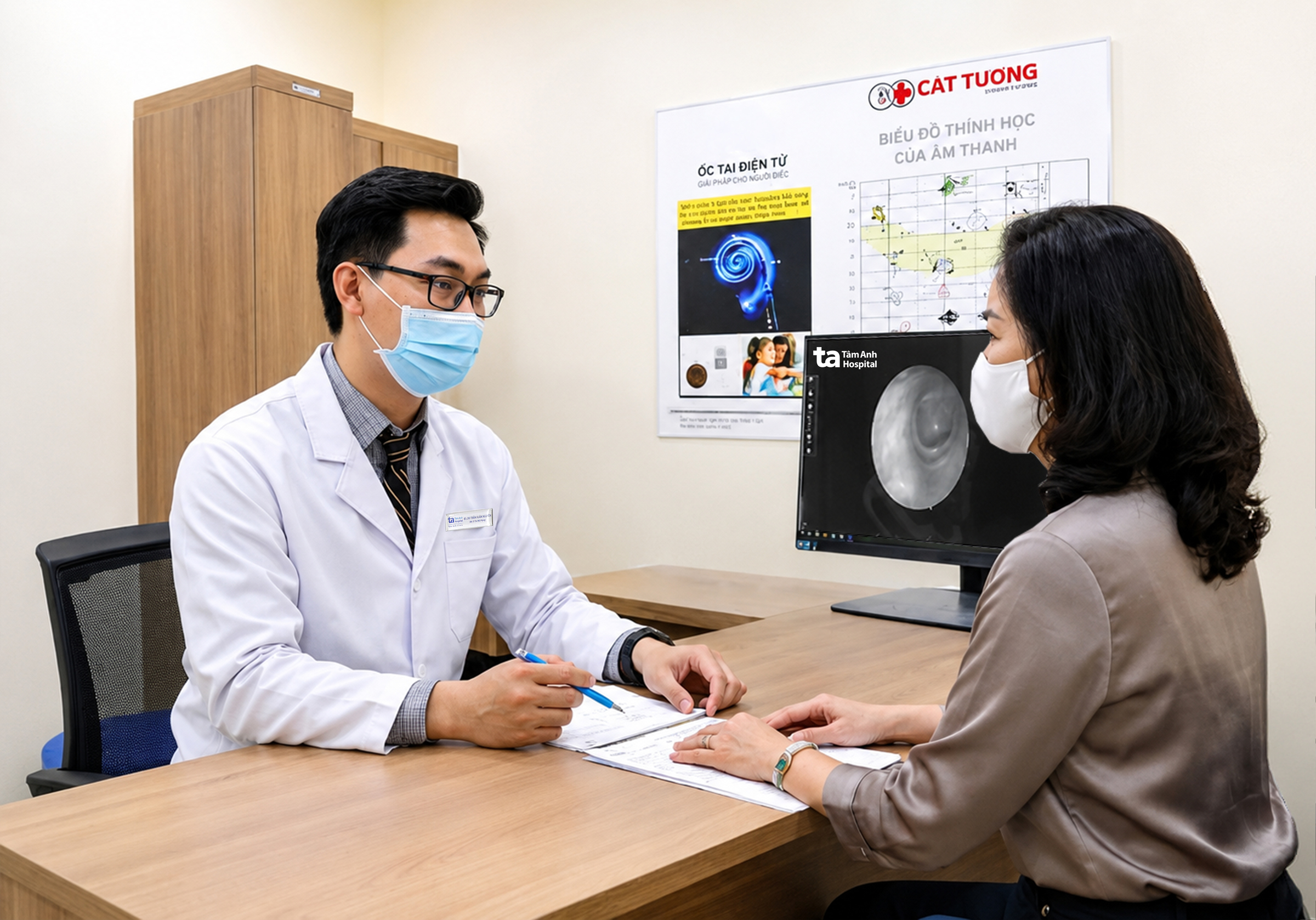
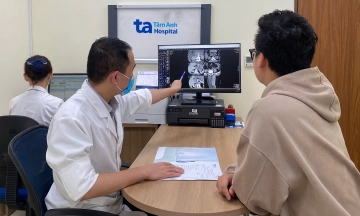
Dr. Nguyen consulting a parent. Photo: Tam Anh General Clinic, District 7.

Antibiotics only treat acute bacterial infections; they do not reduce enlarged adenoids, respiratory allergies, or affect the eustachian tube's anatomical structure. This is why your child's condition remains prone to recurrence despite antibiotic use. Additionally, not completing the full course of antibiotics prescribed by a doctor means bacteria may not be entirely eliminated, leading to early reinfection.

Frequent, untreated recurrent ear infections increase the risk of chronic otitis media. Chronic otitis media is more challenging to treat and can lead to complications such as hearing loss, impaired hearing, delayed speech, developmental delays, and communication difficulties.

To limit recurrence, parents should strictly follow the prescribed duration and dosage of antibiotics, avoid discontinuing medication prematurely, and attend follow-up appointments for a doctor's assessment. Parents must ensure the child avoids secondhand smoke, limit bottle feeding or drinking while lying on their back, ensure complete vaccination, and maintain daily nasal and throat hygiene. Proper nasal cleaning when the child has a runny nose prevents fluid buildup that can prolong the illness.

Dr. Tran Xuan Nguyen, First Degree Specialist

Ear, Nose, Throat Specialist

Tam Anh General Clinic, District 7

Readers can submit questions about ear, nose, and throat conditions here for a doctor's response.
By VnExpress: https://vnexpress.net/vi-sao-tre-viem-tai-giua-tai-phat-sau-dieu-tri-5114825.html
Tags: recurrent chronic otitis media otitis media

News in the same category

When should premature babies have eye exams?

When should premature babies have eye exams?

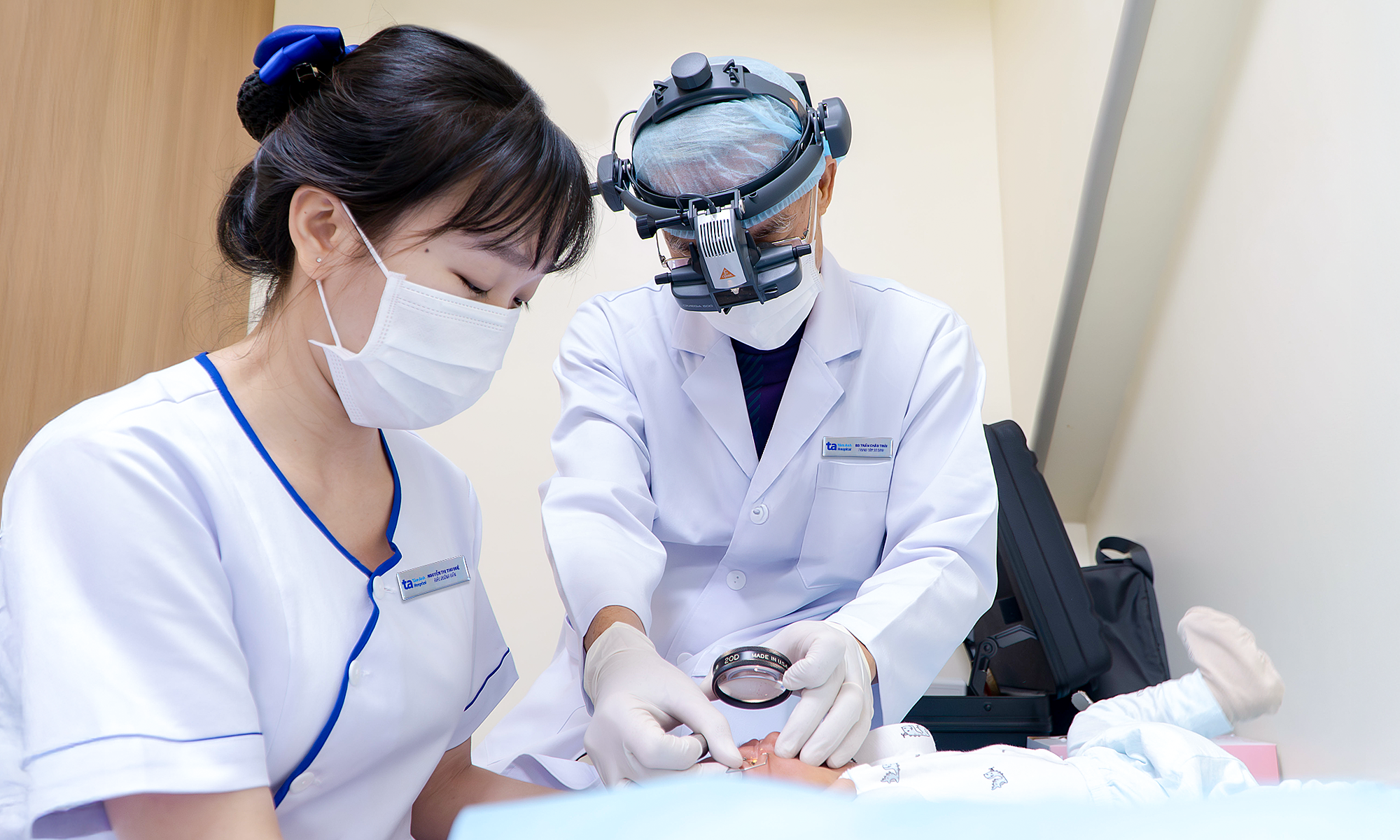
For a 31-week premature baby, when is retinopathy of prematurity (ROP) screening necessary? What does the examination process involve, and is it painful?

Daily sugary drink habit triples stomach cancer risk

Daily sugary drink habit triples stomach cancer risk

Individuals who consume one or more sugary drinks daily face a three-fold increased risk of stomach cancer compared to those who rarely use them.

Mite bite causes 14-year-old girl to undergo dialysis

Mite bite causes 14-year-old girl to undergo dialysis

A 14-year-old girl developed critical scrub typhus, requiring dialysis, after a mite bite led to high fever, persistent sore throat, low blood pressure, shock, and multi-organ damage.

How to protect your eyes on long journeys

How to protect your eyes on long journeys

Wearing appropriate glasses, resting your eyes, using artificial tears, and specialized nutrient care contribute to protecting your eyes during extended trips.

Tips for better sleep during holidays

Tips for better sleep during holidays

Relaxation techniques, mindful eating, and limiting screen time can help ensure restful sleep throughout holiday periods.

Signs of back pain caused by urinary tract diseases

Signs of back pain caused by urinary tract diseases

While back pain is often linked to muscles, bones, and joints, its occurrence with urinary abnormalities, fever, or pain radiating to the groin may indicate kidney and urinary tract diseases.

Do thyroid nodules require surgery?

Do thyroid nodules require surgery?

A patient from TP HCM, Vu Tung, discovered a 14 mm thyroid nodule during a health check-up and asks if surgery is necessary and what treatment options are available.

Teenager's hand muscle atrophy linked to neurological condition in young men

Teenager's hand muscle atrophy linked to neurological condition in young men

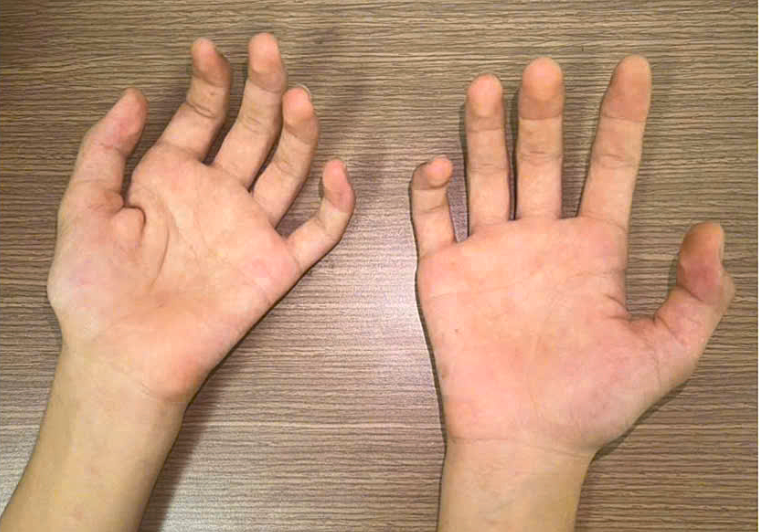
A 17-year-old male presented with progressive weakness and muscle atrophy in his left hand, leading doctors to diagnose Hirayama disease, a neurological condition typically affecting men aged 15 to 25.

Can ovarian cancer be treated with laparoscopic surgery?

Can ovarian cancer be treated with laparoscopic surgery?

My aunt has ovarian cancer and her health is weak after thyroid cancer treatment two years ago. Can people with ovarian cancer undergo laparoscopic surgery? (My Lan, 45)

Why does ectopic pregnancy still occur after in vitro fertilization embryo transfer?

Why does ectopic pregnancy still occur after in vitro fertilization embryo transfer?

I recently had an in vitro fertilization embryo transfer but experienced an ectopic pregnancy. Why does this still happen even after the embryo is placed in the uterus? (Thanh Hang, Ha Noi)

Eng English
China 中国人
  • News
  • World
  • Business
  • Entertainment
  • Sports
  • Law
  • Education
  • Health
  • Lifestyle
  • Travel
  • Science
  • Digital
  • Automobiles
FPT Tower, 10 Pham Van Bach Street, Dich Vong Ward,
Cau Giay District, Hanoi, Vietnam
Email: contacts@vnportal.net
Tel: 028 7300 9999 - Ext 8556
Advertise with us: 090 293 9644
Register
© Copyright 2026 vnnow.net. All rights reserved.
Terms of use Privacy policy Cookies