On 17/5, Doctor Nguyen Huu Quang, Deputy Head of the Department of Aesthetic Plastic Surgery and Rehabilitation, National Hospital of Dermatology and Venereology, stated that a biopsy revealed the tumor had deeply invaded, destroying nearly the entire base of the patient's right nasal ala and spreading to the nasal mucosa and cartilage. Doctors diagnosed the patient with basal cell carcinoma, a common type of skin cancer.
The principle of skin cancer treatment involves surgically removing the tumor along with a safe margin. However, the nasal ala is a central facial feature that defines overall facial harmony. Removing the tumor would leave a large defect, disrupting the nose's natural curve.
This patient's case was considered challenging because the cancerous mass had deeply infiltrated and completely destroyed the base of the right nasal ala. While surgically removing all cancerous tissue was complex, the greater challenge lay in reconstructing the nasal ala's structure after surgery, ensuring both respiratory function and natural facial aesthetics.
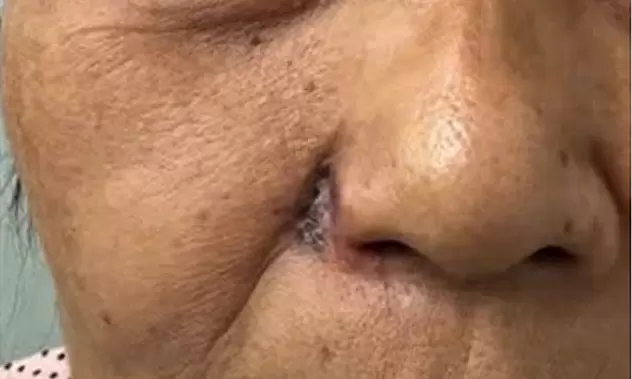 |
Mole on the nasal ala turned cancerous. *Photo: Courtesy of the doctor*. |
Annually, Australia and the US record over 4 million basal cell carcinoma cases. In Vietnam, the National Hospital of Dermatology and Venereology sees about 400-500 basal cell carcinoma patients for examination and treatment, a figure that has doubled in recent years. Over 95% of basal cell carcinoma patients achieve complete recovery through Mohs surgery. This method helps control the complete removal of cancer cells from the body, minimizing the recurrence rate.
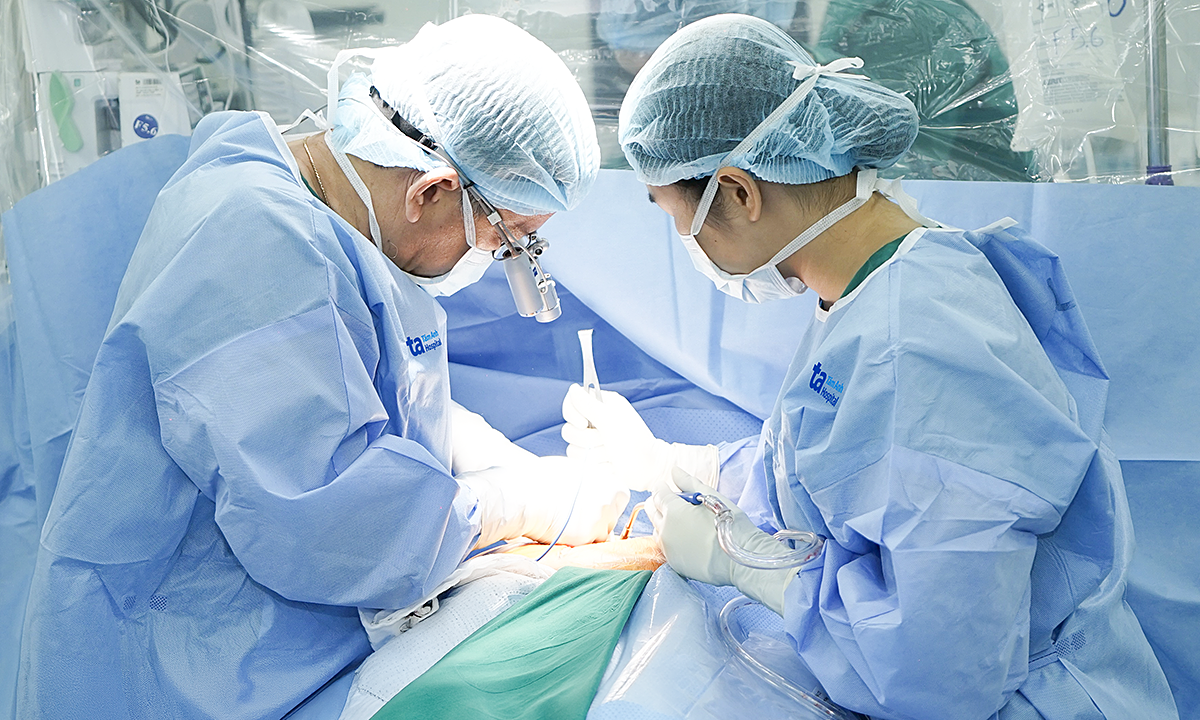
Doctors thoroughly addressed the challenge of nasal ala defect reconstruction once all malignant cells were removed. The patient underwent a local flap reconstruction technique, where skin tissue from the nasolabial fold was used to rebuild the nasal ala after the tumor's complete removal via Mohs surgery.
Doctor Quang noted that many skin cancer cases originate from minor lesions like moles changing color, non-healing ulcers, hyperpigmented papules, or prolonged bleeding skin areas. Early detection and timely treatment improve treatment effectiveness and reduce the risk of extensive facial defects.
Facial skin cancer is not a "dead end" for appearance or quality of life. With advancements in modern plastic surgery, many seemingly irreparable cases can be reconstructed functionally and aesthetically. Doctors advise against delaying early examination if you notice signs of a pigmented lesion on the face gradually increasing in size.
Le Nga