Answer:
Increased body temperature is a common physiological change during pregnancy. Pregnant women experience an increase in basal metabolism, sweat gland activity, subcutaneous fat layers, and hormone levels, especially progesterone. These changes often make many expectant mothers feel hot, sweat easily, and experience more discomfort in humid weather.
 |
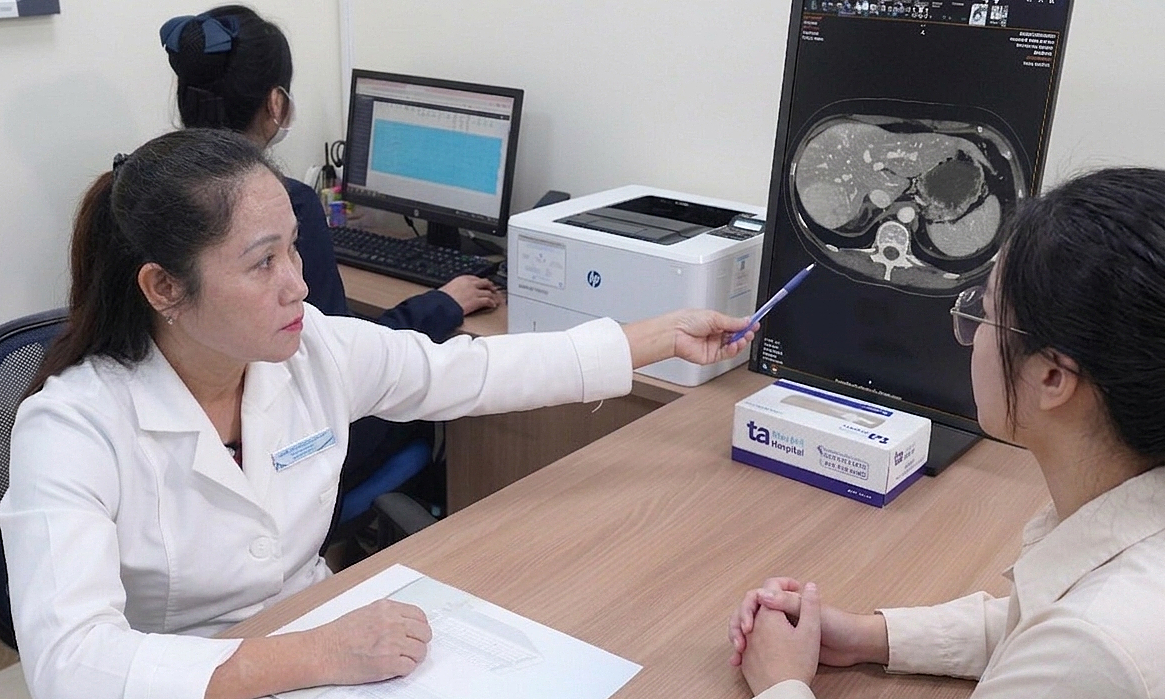
Doctor Cong examines a woman. Photo: Tam Anh Cau Giay General Clinic |
Pregnant women can use air conditioning to feel more comfortable, sleep better, and reduce fatigue. The fetus is not directly affected when the mother uses air conditioning.
However, expectant mothers should avoid setting the temperature too low. A suitable temperature range is typically around 26-28 degrees Celsius, depending on individual body type and room conditions. It is important to prevent a significant temperature difference between the room and the outdoors, as this can cause headaches, dizziness, or fatigue for the mother.
Mothers should not allow cold air to blow directly onto their face, head, neck, or abdomen for extended periods. This can lead to feeling cold, nasal congestion, dry throat, headaches, and difficulty sleeping. Excessively low room temperatures also create conditions for virus development, increasing the risk of illness. When using air conditioning at night, pregnant women can use a thin blanket and adjust the airflow to circulate evenly throughout the room.
Air in air-conditioned rooms is often dry. Therefore, pregnant women should drink 2-2.5 liters of water daily, unless there are specific contraindications. The room should also maintain an appropriate humidity level, around 40-60%, to prevent dry skin and dry nasal and throat mucous membranes.
If working all day in an air-conditioned room, pregnant women should avoid sitting in one position for too long. Stand up, walk gently, change posture, and move limbs to reduce fatigue and support circulation.
Individuals with allergic rhinitis, sinusitis, asthma, or those who are sensitive to cold need to adjust the temperature and fan speed moderately. Air conditioners also require regular cleaning to limit dust, mold, and respiratory irritants.
You should seek medical attention if you experience symptoms such as persistent headaches, exhaustion, dizziness, shortness of breath, nasal congestion, sore throat, or fever while using air conditioning. These symptoms may indicate other health issues.
Doctor Nguyen Van Cong, Level I Specialist
Obstetrics and Gynecology Unit
Tam Anh Cau Giay General Clinic
| Readers can send obstetrics and gynecology questions here for a doctor's answer |