Doctor Hoang Quyet Tien, from the Medical Information Center at Tam Anh General Hospital, TP HCM, explains that frequent exposure to high temperatures, coloring and bleaching chemicals, UV rays, and prolonged stress, combined with hormonal changes and nutritional deficiencies, weakens hair follicle stem cells. This affects the hair shaft's structure and growth. Early recognition of weak and damaged hair signs allows for more timely and effective care and restoration.
Dry hair, reduced shine
Dry hair occurs when strands lack sufficient natural oils for moisture or lose moisture. This makes hair stiff, rough, dull, prone to tangling, and breakage.
Frizzy, split ends
Hair ends are the most vulnerable and damaged part because they are older and furthest from the scalp, receiving insufficient nutrients. Split ends appear in various forms, such as splitting into two, three, or resembling a tree or candle flame, where the hair shaft separates into smaller strands, exposing the inner cortex. If left untreated, dry, frizzy, and split ends can lead to lifeless hair, hair loss, and even baldness.
Easily tangled, hard to style
Improper habits and lifestyle can damage the hair cuticle, making hair frizzy, prone to tangling, and difficult to manage.
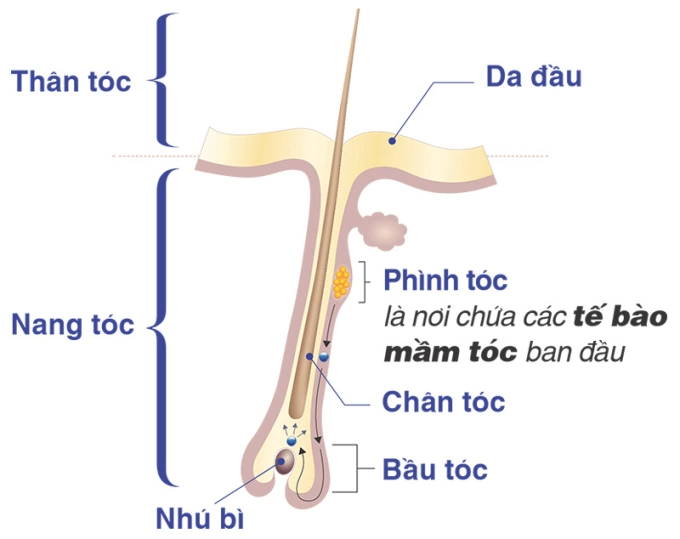 |
The hair strand structure includes the hair shaft and the hair follicle located under the scalp. Photo: Eco Pharmaceutical Joint Stock Company |
Dull hair
Oils secreted from the hair roots moisturize and provide shine and even color to the hair. Improper hair care, excessive heat, and chemical exposure can make hair dull, lack luster, fade easily after coloring, and appear lifeless.
Hair loss
Each hair strand has a life cycle of two to six years. When hair follicle stem cells weaken, the hair's life cycle becomes abnormal, and the growth and shedding processes often occur out of sync. Extensive and prolonged hair loss, coupled with insufficient new hair growth to replace what is lost, leads to thinning hair and even visible patches of scalp.
To address damaged hair, individuals should combine balanced nutrition, a scientific lifestyle, and appropriate hair care, while limiting perming, straightening, coloring, and heat styling.
Doctor Tien recommends supplementing with Cynatine and specific nutrients: horsetail and pumpkin seed for women, and saw palmetto, aged black garlic, and American ginseng for men. These nutrients nourish hair follicle stem cells, stimulate hair growth, reduce breakage, and support the recovery of damaged hair.
Dinh Dieu